


The ten-year challenge: how has the image of a new car changed in a decade?
January 23, 2026 | by EngineGeek Editorial
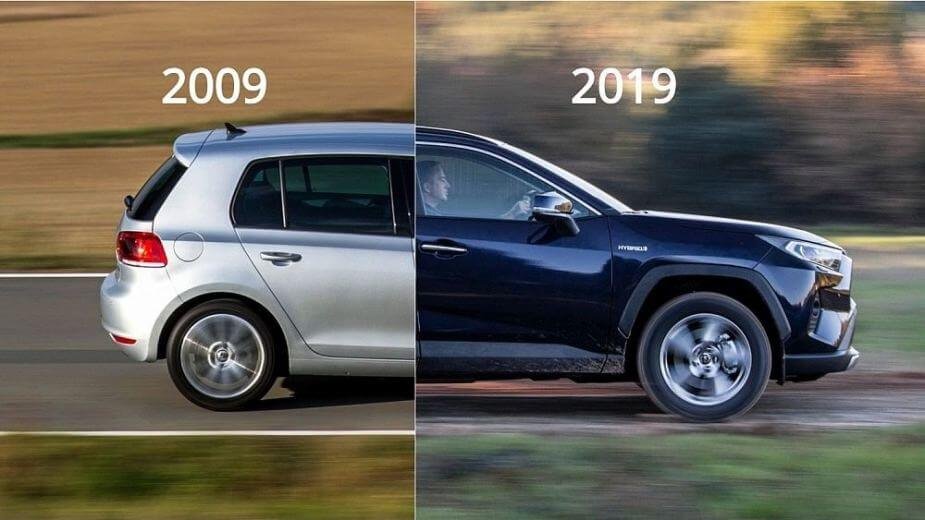
New forms have appeared
Ten years ago, new car popularity ratings were dominated by compact sedans, hatchbacks and mid-range station wagons. Today such cars are sold less and less, and new leaders are at the top of the most popular ones.
“The further you go, the more SUVs or crossovers are sold, these are cars with higher ground clearance. This is a global trend. Motorists are used to looking for the best possible compromise and the best combination of “a bit of everything” is offered by cars with an off-road body: they are practical and comfortable”, observes Matas Buzelis, communications manager of the advertising portal “Autoplius.lt”.
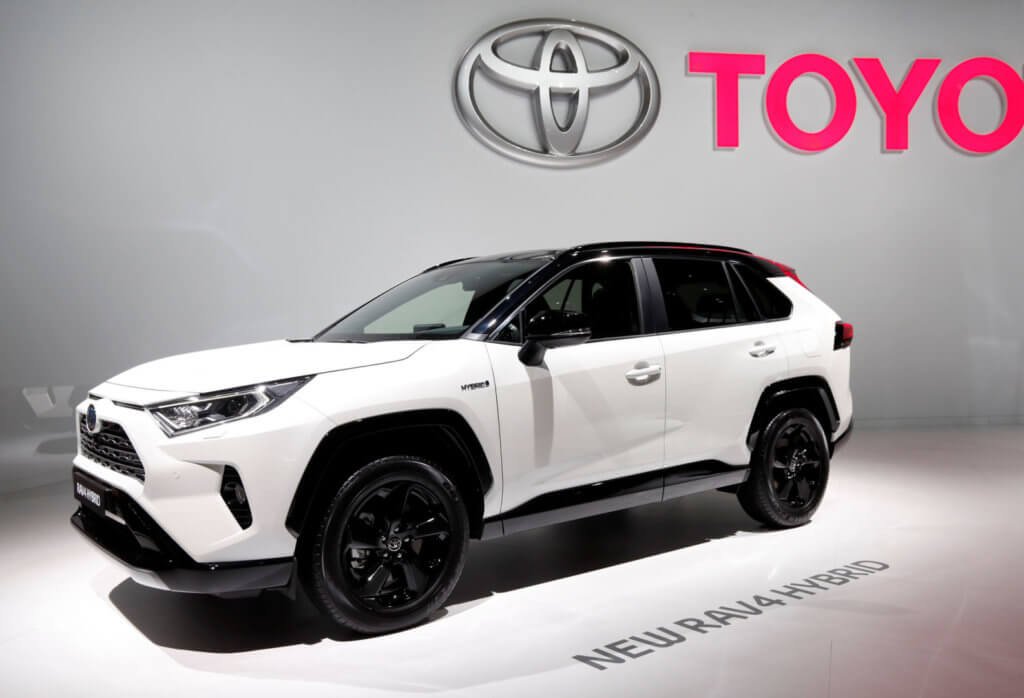
So, if ten years ago buyers mainly chose cars such as Volkswagen Golf or Toyota Avensis, now buyers are increasingly choosing, for example, Volkswagen Tiguan or Toyota RAV4.
This radically changes the profile of the new car: instead of compact and low, drivers prefer larger cars with greater ground clearance.
Reviewer Jurgis Papalaitis, who has tested many new cars and continues to do so, agrees that the appearance of a new car ten years ago and now is noticeably different.
“It is clear that traditional sedans and hatchbacks of the compact class have decreased significantly, and models with higher mileage are increasing. For example, in 2014, JATO Dynamics, which conducts automotive market research, published data that 24% of the new car market is occupied by cars with higher mileage. And the latest data shows that the market share of this type of car has increased to 34% and continues to grow. I think that cars with high height they will soon reach 50% of the market share,” J. Papalaitis tells LRT.lt.
The security revolution
Increasingly stringent safety requirements are also having a significant impact on the design of new cars. And in this case it’s not about the form, but about technologies that ten years ago seemed like science fiction.
“Nowadays, cars that drive semi-autonomously between lanes will not surprise anyone, even if in the past such technology seemed ‘out of space’. Rear cameras, automatic braking system and other similar technologies are just the beginning of what will be called smarter cars,” assures M. Buzelis
“Euro NCAP puts autonomous pedestrian detection to the test” J.Paplaitis considers the emergence of autonomous safety systems to be the most significant breakthrough of the decade. He points out that one of the biggest achievements is that such complex and advanced technologies can be found even in budget cars.
“Now, even a small car can brake on its own in front of an obstacle, maintain a constant speed and distance to another car, turn and drive in the right lane – all this can be found in many budget models,” notes J.Paplaitis.
He claims that not only the safety, but also the comfort technologies make an impression. Touch-sensitive screens, the ability to connect smart devices to the car system or even use the Internet – a great technological breakthrough, which ten years ago was only a feature of expensive and luxury cars, and now – automotive equipment within everyone’s reach.
Petrol replaces diesel
Ten years ago, when buying a new car, the seller could be almost certain that the buyer would choose a diesel engine. At that time, today’s trends have changed, and more and more people are choosing gasoline cars. However, this is not necessarily influenced by changing buyer habits, but by political decisions.
“I think that motorists who buy cars for personal use are now more often choosing a petrol engine. After all, it is possible that after buying a diesel car, in a year or two it will no longer be possible to drive it somewhere in Europe, because the authorities will simply ban it. However, it can be said that this has finally made buyers understand that they do not need diesel cars. After all, it has long been calculated that if you drive most of the time over short distances in the city, a diesel car does not pay off,” J.Paplaitis explains why buyers are increasingly choosing petrol cars.
Another trend also changed during the decade. If in 2009 most cars had manual gearboxes, motorists now prefer automatic ones.
“Today, even small cars are equipped with efficient and quick dual-clutch automatic transmissions, which often provide better fuel economy than manual transmissions,” says J.Paplaitis.
Price changes
“If we only look sideways, we can see that cars have become more expensive by about a tenth in ten years. However, there are new generation models that are sold today for less than when they were new ten years ago. Even if it seems that the current models are much more modern and advanced, globalization trends are also being felt in the automotive industry. Manufacturers come together, share platforms, units and technologies. And the more they share experiences,” says LRT.lt M. Buzelis.
He points out that the final price of a new car depends on where the car was assembled, as the process is carried out in less and less wealthy countries, while optimizing production and increasing efficiency help giants of the automotive industry significantly reduce vehicle production costs.
However, J.Paplaitis has a different opinion. According to him, new cars have become much more expensive, especially if we compare prices between ten years ago and today.
“I think car prices have increased by a third over the decade, and I would link this to technology and requirements. For example, there are requirements without which a new car will not be certified and will not drive on the roads. There are also pollution requirements and the like. All this requires investments and in the end the buyer pays for it. For example, today you can buy a well-equipped mid-range car for 25,000 euros. Converting this figure into litas, we would get about 90,000, even if before ten years ago we paid 50-60 thousand litas for a car of the same class in litas, it’s around 150 thousand and with that amount you could buy a luxury BMW 5 Series or an apartment”, compares J.Paplaitis.
RELATED POSTS
View all


Stellantis stops production due to lack of orders
December 16, 2025 | by EngineGeek Editorial

Intelligent tires will save fuel, ensure safety on the road and report their conditions
January 23, 2026 | by EngineGeek Editorial

the American market full of appetite
December 16, 2025 | by EngineGeek Editorial