Is powering electric cars in condominiums really an impossible mission?
January 23, 2026 | by EngineGeek Editorial
No matter how fast electric cars are improving – battery capacity, charging speed and distance traveled – living somewhere on the sixth floor of Šeškina in Vilnius or on the ninth floor of an apartment building in the Fabijoniškių microdistrict, using such a vehicle is almost as convenient as using a mobile phone, which only works in the Town Hall Square.
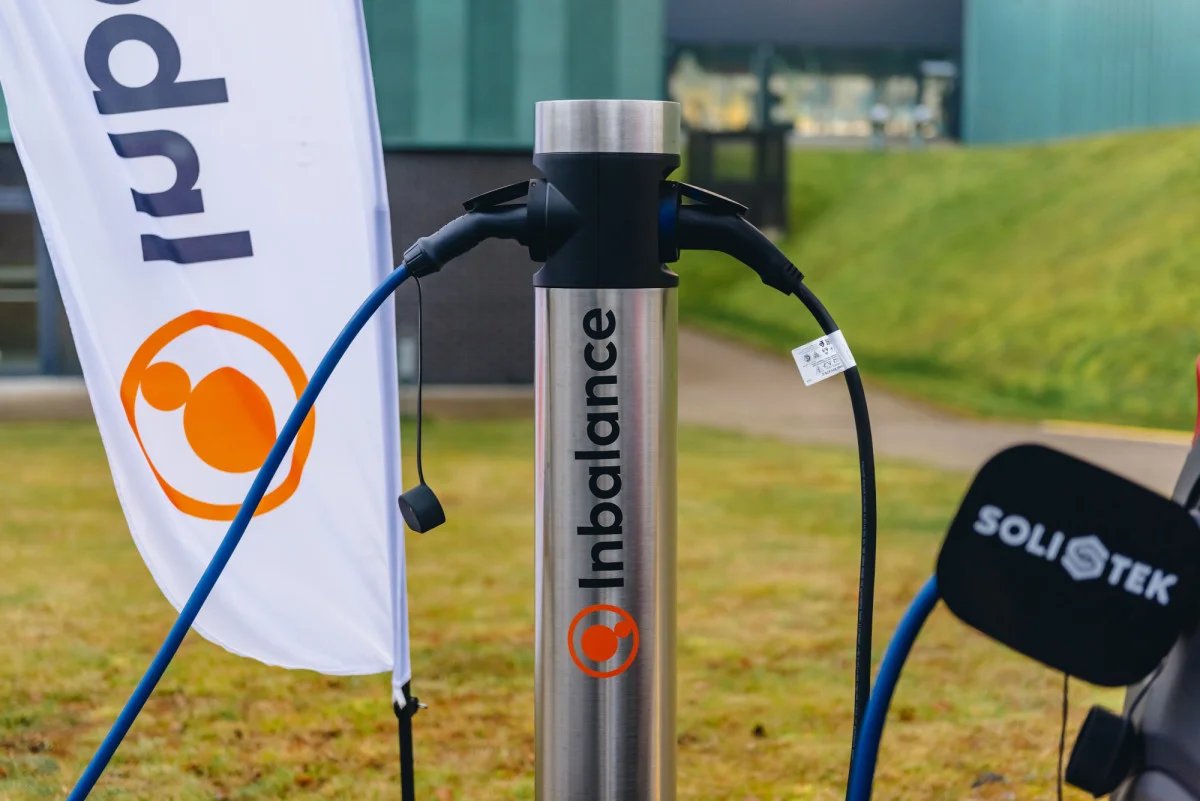
During the test marathon of the Lithuanian “Car of the Year 2022”, experts from the company “Inbalance” contributed to delving deeper into the peculiarities and possible evolutions of the Lithuanian infrastructure for electric vehicles. One of them, Arnoldas Dapkus, head of strategic cooperation, answered the most frequently asked questions.
How would you describe the current network of electric car charging stations in Lithuania?
Judging by the rapid increase in the number of electric cars, you might think that we are on the verge of a technological breakthrough in transportation. However, according to our company, things are much more complicated.
As is the case with the emergence of any new technology, a relatively small group of enthusiasts first tries everything on their own. The next stage is the early majority, while the third stage is the formation of a critical mass using electric cars.
It is obvious that the first majority is forming in Lithuania that can charge electric cars at home. I would say they can go up to 15%. Looking to the future, it is important to consider now what to do with the remaining 85%. It is not possible to separate these phases, because it is necessary to develop solutions that satisfy the capabilities of the distribution network already in the majority phase.
But when you present yourself to the motorists’ association, are you just emphasizing that you know the solutions to reach that 85%?
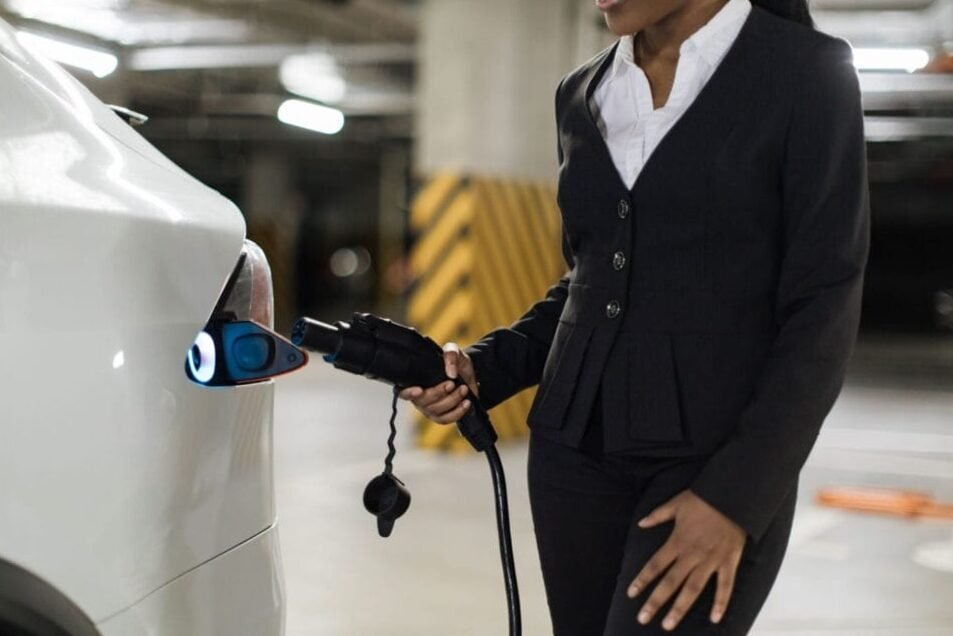
It really is. When talking about sustainable development of the network, we must first identify the fundamental difference between internal combustion engines and electric cars. Traditional cars are refueled where they drive: at petrol stations. And electric cars need to be powered where they spend most of their time: at home or at work.
We must follow the proportions declared by BMW in Berlin: one public fast charging station is equivalent to six slower public charging stations (in shops, leisure centers or similar places) and equal to over 50 slow charging stations at home and at work.
One of the simplest and most effective ways is to electrify the parking lots of shopping centers located in residential complexes. There are usually enough electrical outlets there, so charging electric cars at night would not be a problem.
The fact that fast charging stations can only partially perform the functions of traditional gas stations: if you have to plan your travel route taking into account the location of such points, you become a kind of hostage of the electric car. Such a technique is convenient to use when batteries are charged in places where people spend most of their time. Until now the focus was on main roads and places where European Commission experts recommended installing the appropriate infrastructure. Such fast charging points should be at least every 50-60 kilometers.
What are the current “fast” and “slow” charging stations?
Officially, “fast” charging is currently considered a 50 kW power plant, while any charging above 100 kW is considered ultrafast. True, the charging speed also depends on the battery of the electric car itself.
For now, small and slow energy users prevail, but things are changing rapidly in this sector. Charging connector standards are also evolving: in the production of new cars, CHAdeMO fast charging connectors are being abandoned and switched to the CCS standard.
Even in Lithuania, charging stations for electric cars are produced by several competing companies, and it is difficult to count the number of players present on the global market. How do they differ from each other?
The design of all charging stations is quite similar, but some differences lie in the software. Our uniqueness is the ability to use existing, relatively low-consumption electricity supply infrastructures with maximum efficiency, dynamically distributing electricity to multiple users and balancing the flows.
We have combined this with our original designed charging station. It stands out for its ability to remotely monitor and control around 200 charging-related processes. A Linux computer is installed inside it which allows the application of the Internet of Things principle. We hope that this will help both us and other manufacturers, should they choose our software, to avoid faults or charging problems with electric cars and, when this happens, we will know more precisely what the problem is.
We offer a charging infrastructure solution for electric cars which, thanks to the business model and the technologies used, is suitable for the mass adaptation of electric cars. Our cooperation models do not require large infrastructure costs from the company, because we invest ourselves and operate according to the principle of service: we offer installation of stations, management, maintenance and a service center.
Many companies working in other sectors are not yet familiar with the infrastructure for electric cars, which is why we give them the opportunity to adapt their buildings, premises or sales outlets and prepare for the mass phase of electric cars without emptying their pockets with tens of thousands of euros.
When assessing the market situation, it is worth paying attention to how much it costs to install charging stations from different manufacturers. Often the prices of the equipment themselves are similar, but for it to really work you need to introduce new, thick cables and reserve the corresponding power in distributed networks. Poorly assessed infrastructure and safety often means that the total cost of using a charging station is two or even three times higher than the cost of the station itself.
RELATED POSTS
View all