Special requirements for vehicles and their equipment
January 23, 2026 | by EngineGeek Editorial
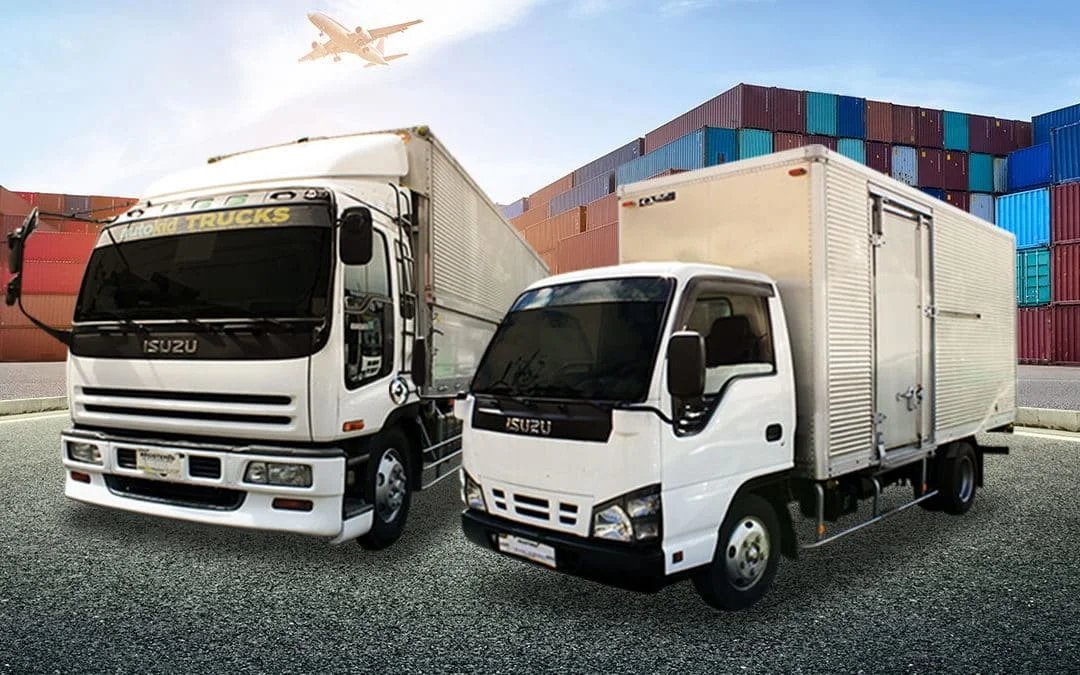
(1) A transport unit transporting dangerous substances may under no circumstances have more than one trailer or semi-trailer.
(2) Special requirements for vehicles used for the transport of certain dangerous goods are described in Part II of this supplement (see also CN on container transport, solid bulk transport, tank transport and tank transport).
2/ Printed by the International Maritime Organization (IMO), 4 Albert Embankment, London SE1 7SR.
3/ UIC cards are printed by the International Union of Railways (Union International des chemins de fer, Service Publication – 16 rue Jean Rey – F – 75015 Paris).
(3) Packages with containers made of moisture-sensitive materials must be loaded in closed or covered vehicles.
Tankers (fixed tanks), vehicle batteries and vehicles with a capacity not exceeding 3000 l used for the transport of dangerous goods in removable tanks or container tanks
NOTE
(a): Provisions for the construction, inspection, filling and use of fixed tanks, removable tanks and vehicle batteries and various provisions for tank wagons and their use are set out in Annex B.1a, provisions for fixed tanks, removable tanks and vehicle batteries intended for the carriage of supercooled liquefied gases of class 2 or those with a test pressure of at least 1 MPa (10 bar) are described in Annex B.1d (for recognition tank wagons see KN 10 282).
b) Construction of container tanks, equipment testing, official approval, marking, etc. the provisions are presented in Annex B.1b; The provisions for tank containers intended for the carriage of highly refrigerated liquefied gases of class 2 or those with a test pressure of at least 1 MPa (10 bar) are given in Annex B.1d.
c) Design provisions for fixed and removable reinforced plastic tanks are described in Annex B.1c.
d) The general provisions of Annex B.1 are described in KN 200,000.
e) For containers, see Supplement A.
(1) Protection of the rear of the vehicle. At the rear of the vehicle, a sufficiently impact-resistant bumper must be attached across the entire width of the tank. There must be a space of at least 100 mm between the rear wall of the tank and the bumper (this space is measured from the furthest point of the tank wall or from the point of the protruding reinforcement in contact with the transported material). The bumper is not required for vehicles equipped with a tipping tank, with discharge through the rear wall and intended for the transport of powdery or granular materials, provided that the rear reinforcement of the tank body ensures adequate protection of the bodywork as well as the bumper.
NOTE 1. This provision does not apply to vehicles carrying dangerous goods in container tanks.
NOTE 2. For protection of tanks against side impacts and overturning – see KN 211 127 (4) and (5) and 212 127 (4) and (5).
(2) Vehicles transporting liquids with a flash point up to 610°C or flammable materials of class 2 according to KN 2200 (5) and (7) must also meet the requirements described in Annex B.2 KN 220 532, 220 533 and 220 584.
Braking system
(1) Motor vehicles (tractors and solid chassis vehicles) with a mass exceeding 16 t, trailers (i.e. two-axle trailers, semi-trailers and centre-axle trailers) with a mass exceeding 10 t, as well as vehicles intended for towing such trailers, constitute the following types of transport units:
– tanker truck,
– battery vehicles with a capacity exceeding 1000 l,
– vehicles with removable tanks,
– vehicles carrying container tanks with a capacity exceeding 3000 l,
– Type III vehicles [žr. KN 11 204 (3)],
first registered after 1993 on 30 June, must be equipped with an anti-lock braking system (ABS) that meets the requirements of Appendix B.2 KN 220 520 and 220 521.
These provisions also apply to vehicles registered for the first time after 30 June 1995 and to towing the trailers previously described with a mass exceeding 10 t.
(2) Each transport unit assigned to one of the types specified in paragraph (1) and consisting of a motor vehicle with or without a trailer, in accordance with the provisions of paragraph (1), shall be equipped with a wear-resistant braking system that meets the requirements of Appendix B.2 KN 220 522 and 220 535.
When the transport unit consists of a motor vehicle and a trailer, these provisions apply if the passenger car was registered after 1993. 30 June
(3) Each transport unit assigned to one of the types referred to in paragraph (1) and put into service after 31 December 1999, shall be equipped with the equipment specified in paragraphs (1) and (2).
(4) Every vehicle (motor vehicle or trailer) which is part of a transport unit, the type of which is not specified in point (1), and which was first registered after 30 June 1997, must comply with all ECE regulations No. 134/technical requirements in the most recent and modified version, applicable during the reduction phase of the vehicle.
(5) The vehicle manufacturer must issue a certificate on the reliability of the braking system according to the requirements of KN 220 522. This certificate must be presented upon arrival for the first technical inspection according to KN 10 282 (1).
Fire safety measures
(1) Each transport unit transporting dangerous substances must be equipped with:
4/ ECE Regulation n. 13 (Uniform provisions for the approval of vehicles of categories M, N and O with respect to the braking system) (in its most recent version), supplementing the Agreement on common technical instructions for wheeled vehicles, equipment and parts which may be adapted and/or used for wheeled vehicles and the conditions for mutual recognition based on those instructions (1958 Agreement as amended). Alternatively, Directive no. 71/320/EEC (published in the Official Journal of the European Communities n. L 202 of 06.09.1971) which guarantees its integration with the latest Regulation n. Changes to Form 13 applicable to vehicles at the time of type approval.
(a) at least one portable fire extinguisher containing at least 2 kg of dry powder (or an equivalent quantity of other similar extinguishing material) suitable for extinguishing fires in the engine, in the cabin of the vehicle, for suppressing combustion and for preventing the spread of fire when extinguishing burning cargo; provided, however, that the vehicle is equipped with a fixed automatic or easily operated fire extinguisher capable of extinguishing fires in the engine, the portable fire extinguisher need not be adapted for this purpose;
(b) in addition to the measures referred to in point (a), at least one portable fire extinguisher containing at least 6 kg of dry powder (or an equivalent quantity of other similar extinguishing material) capable of extinguishing burning tyres, brakes or cargo, suppressing combustion and preventing the spread of fire in the event of a fire in the engine or cabin. Vehicles with a maximum permissible fully loaded weight of less than 3.5 t may be equipped with a portable fire extinguisher containing at least 2 kg of dry powder.
(2) The extinguishing materials contained in vehicle fire extinguishers must be such that they do not release toxic gases into the driver’s cab if exposed to flames or high temperatures during a fire.
(3) Portable fire extinguishers complying with the requirements of paragraph (1) must have a seal ensuring that they have not been previously used. Furthermore, they must be marked to a standard recognized by the competent authority and carry a note indicating the date of the next inspection.
Electrical equipment
The requirements for electrical equipment according to CN 220 511 of Annex B.2 apply to each transport unit transporting dangerous goods and requiring a certificate according to CN 10 282 (with the exception of type II transport units according to CN 11 204). The provisions of NC 220 512 – 220 516 of Annex B.2 apply exclusively to vehicles which:
a) transport units carrying fixed or removable tanks and container tanks with a capacity of more than 3,000 l, as well as battery-powered vehicles with a capacity of more than 1,000 l, transporting liquids with a flash point up to 61°C or flammable substances of class 2 according to KN 2 200 (5) and (7). However, transport units carrying fixed or removable tanks with diesel, gas oil or light stove fuel with identification number 1202, registered before 1 July 1995 and which do not comply with the provisions of this NC may be used;
(b) transport units intended for the transport of explosive materials and products must meet the requirements of KN 11 204(3) for type III transport units.
NOTE. For intermediate provisions see also NC 10 605.
Other means
Each transport unit transporting dangerous goods must have:
a) a set of tools for emergency car repairs.
b) at least one wheel bearing for each vehicle; furthermore, the wheel resistances must correspond to the weight of the vehicle and the diameter of the wheels.
c) two orange lights constantly lit or flashing. These lights must be independent of the vehicle’s electrical circuit and must be constructed in such a way that their use does not cause the load transported to catch fire.
d) the measures necessary to ensure safety, described in the written instructions KN 10 385, such as:
i) for the personal protection of the driver:
– a special brightly colored vest;
– suitable means for eye protection;
– an adequate protective respirator to protect against inhalation of dangerous particles;
– suitable protective gloves;
– adequate foot protection (e.g. boots);
– adequate body protection (e.g. apron);
– a portable lamp (see also NC 10 353);
– a bottle with liquid to wash the eyes;
(ii) for public protection:
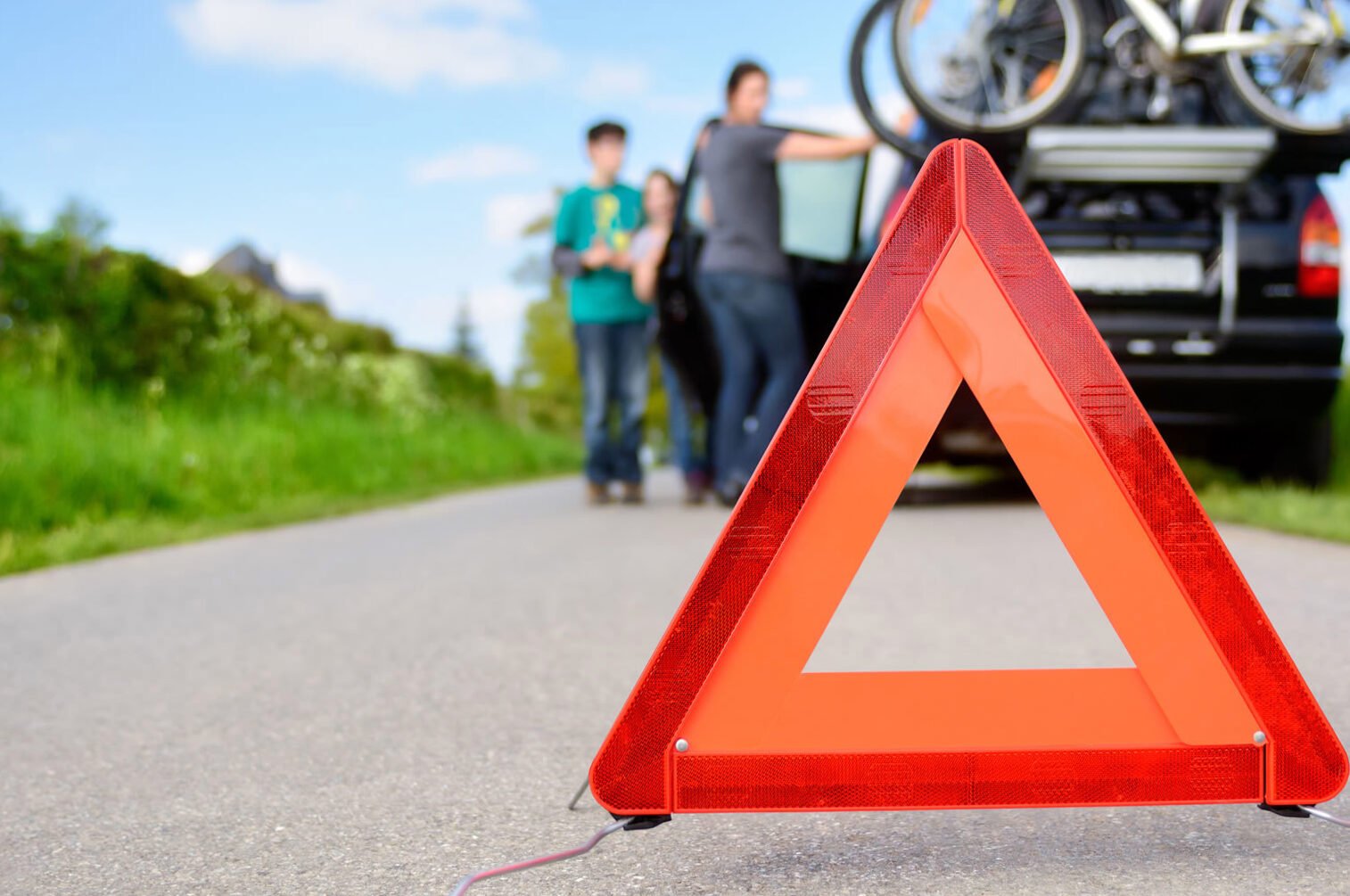
– four reflective signs are positioned (e.g. cone-shaped, triangle-shaped);
(iii) for environmental protection:
– a cover for the openings of the sewer and drainage collectors, resistant to the effects of the transported material;
– a suitable shovel;
– a broom;
– a suitable absorbent;
– a suitable collector (for small quantities only).
(1) Vehicles (tractors and rigid chassis vehicles) with a maximum mass exceeding 12 t and first registered after 1995 on 1 July, according to the requirements of Appendix B.2 KN 220 540, must be equipped with a speed limiter.
(2) The provisions of paragraph (1) also apply to vehicles with the same characteristics registered from 1 January 1988 to 1 July 1995, starting from 1 July 1996.
RELATED POSTS
View all


The 5 best motorcycle schools in Montpellier in 2025
December 15, 2025 | by EngineGeek Editorial

Which manufacturers’ tricks extend the range of electric cars?
January 23, 2026 | by EngineGeek Editorial