What will be more expensive to own: petrol or electric car?
January 23, 2026 | by EngineGeek Editorial
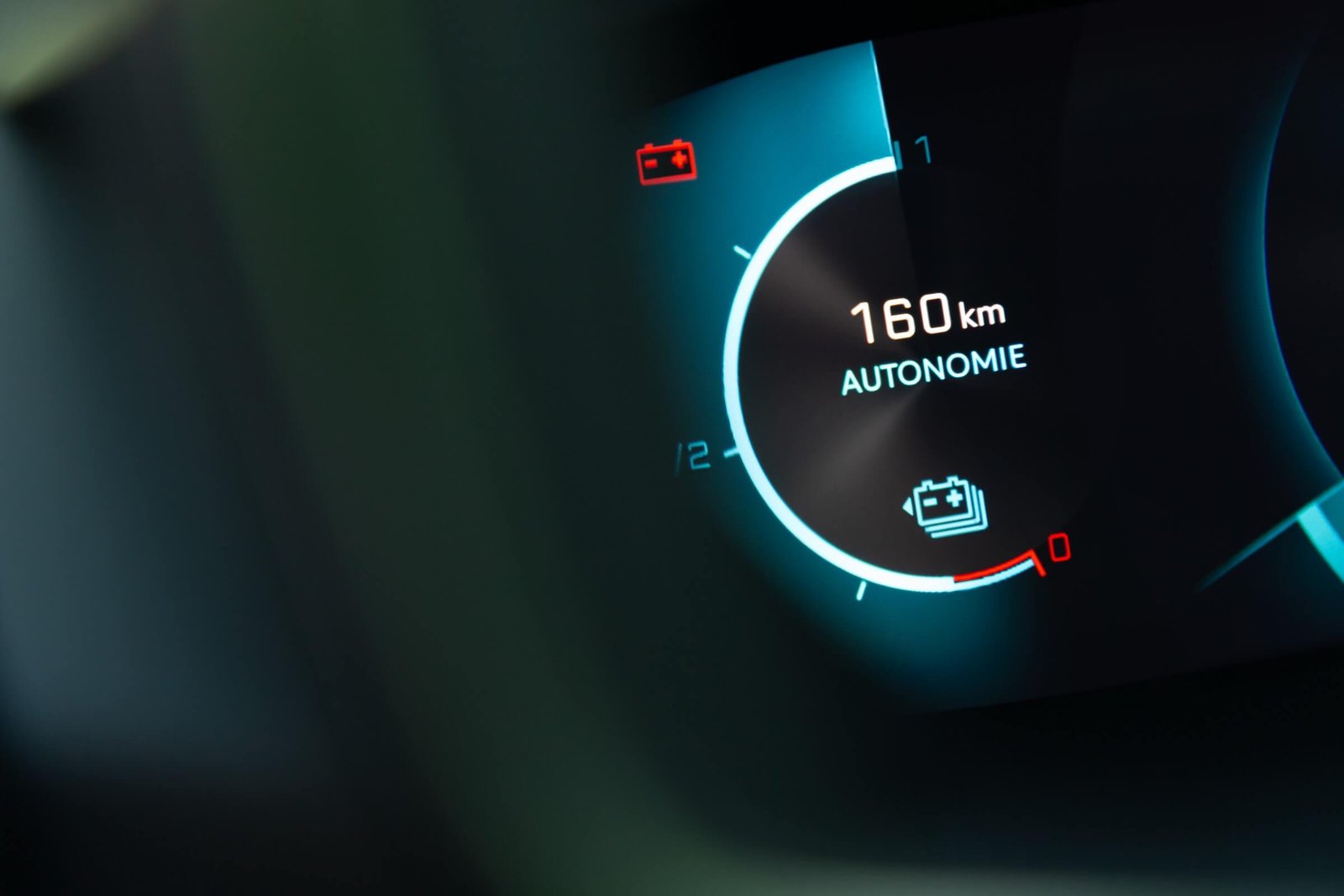
If you do not plan to keep the newly purchased car only in the garage, the operating costs cannot be avoided, so experts recommend calculating them too, and then comparing them, adding the final figures to the price of the purchased model. You may be surprised when you see the result.
Buy without support
Choosing clean transport in Lithuania is encouraged by the state itself: when buying a new electric car, you can apply for a subsidy of 5,000 euros distributed by the Environmental Project Management Agency (APVA) and thus significantly reduce the purchase price. For example, taking advantage of this subsidy, the Kia e-Niro electric city SUV, very popular in Lithuania, would cost starting from 34,990 euros, or 10,000 more than the petrol hybrid version of the similar model.
Due to the rapidly growing popularity of electric cars, it is expected to deploy 5 million of them from May 2021 to June this year. The support amount had already been distributed in January, so after redistributing the Climate Change Program funds, another million was allocated. euros to offset the costs of purchasing electric cars.

But Laurynas Boguševičius, director of the automotive trading company “Deals on Wheels”, says that even without this incentive, after calculating the costs of the entire period of operation, the numbers will often tip the arrow in favor of electric transport. Therefore, according to the specialist, subsidies are welcome, but motorists are usually interested in electric cars for other reasons.
“Lithuanians are very advanced and usually choose electric cars due to their technological leadership. Of course, when the subsidy is one tenth or more of the price of the car, this affects the choice, but it is not the most important criterion,” the expert notes.
Electric cars are still significantly more expensive than internal combustion engine models, but this gap is narrowing as technology advances and electric vehicle offerings grow.
For example, the new 277 kW all-wheel drive electric family car “Kia EV6” with 77.4 kWh battery and abundant equipment costs from 62,490 euros. And a well-equipped two-axle Volkswagen Tiguan of similar size with a 2-liter 180 kW petrol engine and an automatic transmission easily exceeds 50,000 euros.
For a clearer picture: more extensive calculations
According to L. Boguševičius, to get a complete picture, when considering options for a new car, you need to evaluate not only the purchase price, but at least six other factors. The first of these is the place of residence.
“Do you live in your own house, in a detached house or in an apartment building with underground parking? If all the answers are negative, the electric car is essentially no longer taken into consideration,” reveals the specialist.
Then, according to him, we move on to calculating the expected kilometers to travel. Most often, a new car in Lithuania is purchased for a period of five years, during which it is expected to exceed 100,000 km. km
“We estimate that an average petrol car actually consumes around 8 liters of fuel per 100 km. With today’s prices this would be equivalent to 12 euros, so over the entire expected driving period you would spend around 12,000 euros on fuel,” calculates the expert.
Calculating how much electricity will be used is more complicated, as electric vehicle owners still have many options for recharging their batteries at free public charging stations. But even if the battery was only charged at home and paid 0.2 euros per kilowatt hour, even driving uneconomically and with an average consumption of 20 kWh of energy per 100 km during all 100 thousand. km away would have to pay up to 4,000 euros for electricity.
Financing is more favorable for clean transportation
When you buy a car with a lease you will also have to calculate the annual interest rates established by the financial institution. And in most cases they are more favorable to those who purchase clean transport. According to calculations by L. Bogušević, for the purchase of a petrol car the percentage can reach 2.1%, for an electric car only 1.5%.
“If the price of the car is 65,000 euros, making a rough calculation, in five years you can save almost 2,000 euros just to pay the interest. It is also important to keep in mind that previously the depreciation of electric cars was calculated more conservatively, while now it is evaluated similarly to cars with internal combustion engines”, explains the interviewer.
A fourth significant comparative factor is the maintenance costs of a particular automobile. According to L. Boguševičius, the price of maintenance work is similar on the market, but electric cars have fewer components to replace after 100,000 miles. km
For example, thanks to the energy regeneration system, the braking system of electric cars is less loaded, so its discs or pads are replaced every 100 thousand times. You won’t even need to change the mileage. There are fewer parts in electric cars, so there is less material to break down.
According to the specialist, insurers apply similar conditions to electric cars as conventional cars, so to get exact numbers you should also look at the ratings of specific models in insurers’ calculators.
The only aspect that increases the cost of electric car insurance is linked to the fact that insurers evaluate the power of the car and its price in their formulas. And electric cars usually have a higher kilowatt number and a higher purchase price than internal combustion engine models.
The parking factor is not to be underestimated
The specialist points out that many of the advantages associated with the electric car are often not evaluated in financial terms, although it is possible to do so. The ability to charge batteries for free, free parking and driving in special lanes during traffic jams are just some of the advantages of electric cars.
“We can calculate how much time we save by traveling faster around the city and multiply it by our earnings. By working closer to the center of Vilnius, you can pay 3 euros a day just for parking, which is about 60 euros a month or 3,600 euros in five years. You wouldn’t have to pay them if you have an electric car,” emphasizes L. Boguševičius.
So, just considering the running costs of an electric car and a petrol car, you get a difference of 13,600 euros over five years. Of course, such calculations may vary depending on subjective conditions, but the most important thing is that every motorist can carry them out and accurately calculate the real cost of using his car.
RELATED POSTS
View all


In the new city – 2 kilometers of new cycle paths, pedestrian paths are being renovated
February 12, 2026 | by EngineGeek Editorial