


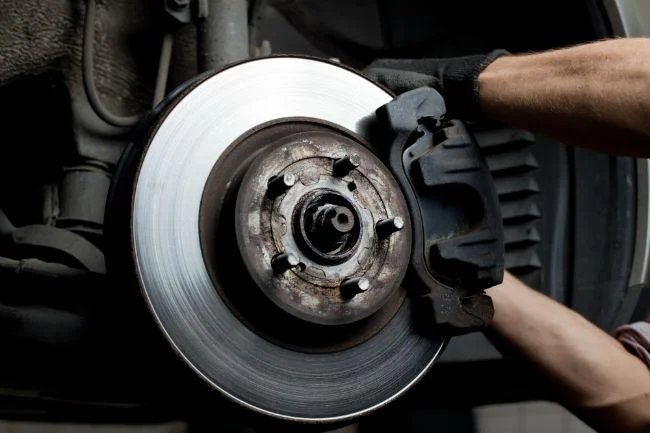
Car brakes are probably the main safety mechanism for the driver in the event of an accident. And one of the main elements of the entire braking system is brake fluid, which, if not properly maintained and replaced in time, can cause very unpleasant events on the road.
Disc brakes
First of all, to better understand the importance of brake fluid, you should familiarize yourself with the braking systems themselves.
Disc brakes are mounted at the front and work in conjunction with brake pads, which are pressed against cast iron discs that rotate with the wheel during braking. In the disc brake calipers, which are an integral part of the suspension, two pads are mounted for each wheel.
When you press the brake pedal, pressure is created in the hydraulic brake system, which pushes the cylinders out of the caliper and they press the brake pads against the discs.
The harder you press the brake pedal, the more force the brake pads are pressed against the discs until their friction stops the car.
Over time, brake pads wear out and, after a while, brake discs.
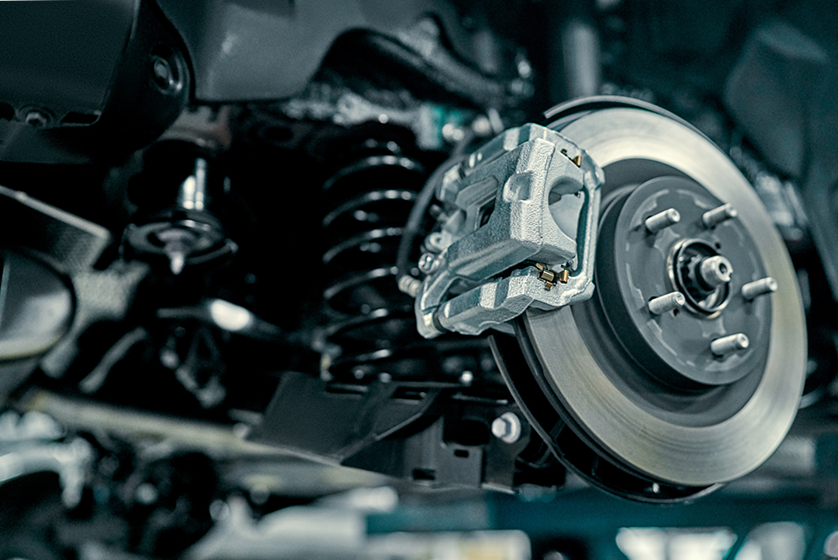
To ensure that the braked car remains stable, it is necessary to replace all 4 pads and/or 2 discs at the same time when changing the brake pads. By the way, disc brakes are usually installed in the rear of newer cars.
Drum brakes
They are drum-shaped and installed only at the rear. Drum brake pads are curved in a semicircle, have friction pads, and are pressed against the inner surface of the drum during braking.
In the drum braking system, which is an integral part of the suspension, two brake pads are installed for each wheel.
Pressing the brake pedal creates pressure in the hydraulic brake system, under which the wheel brake cylinder presses the pads against the inner surface of the drums until the car stops due to their friction.
The thickness of the friction lining of drum brake pads should be checked regularly.
Brake fluid
Brake fluid is a fluid with specific properties that is used to fill braking systems. Thanks to this fluid, braking occurs and its load is distributed to all four wheels.
When the driver presses the brake pedal, the master cylinder creates pressure, transmits that pressure through the brake fluid to the master cylinders, which apply pressure to the pads and slows the car.
The safety of the driver and passengers depends on the length of the car’s stopping distance. That’s why it’s important that your car’s brakes work as efficiently as possible. One of the factors on which the perfect and efficient functioning of the brakes depends is the correct brake fluid.
Brake fluid is hygroscopic. This means that it has the ability to absorb water vapor over time, which is always present in the air.
The boiling point of water absorbed by brake fluid drops sharply, so brake fluid can boil in the brake lines due to heat released during braking. This, in turn, reduces the effectiveness of the brakes, lengthens the stopping distance and can ultimately lead to brake system failure.
It should be noted that due to failure to timely replace the brake fluid, braking efficiency can decrease at the most inopportune moment, when the car needs to be stopped suddenly, at the shortest possible distance. This happens when a large amount of heat is released during braking and the brake fluid boils.
I need to change
All motorists know that engine oil needs to be changed at a certain time, as do filters. The brake system fluid is no less important. Usually, after 3 years of operation, the amount of water in the fluid reaches a critical limit, where the fluid can boil during extreme braking. When this happens, the brakes become ineffective.
Another, no less important, problem is that the brake cylinders are not protected from corrosion. In most cases, working cylinders begin to leak for this reason, so it is necessary to change not only the brake fluid, but also the cylinder itself.
Changing your brake fluid promptly is a simple procedure and prevents ineffective braking or even brake failure. It is recommended to change the brake fluid every two years.
If the brake fluid is not changed in time, braking efficiency may decrease at the most inopportune moment, when the car needs to be stopped suddenly, at the shortest possible distance.
RELATED POSTS
View all

Battery problems can turn into a major annoyance
February 12, 2026 | by EngineGeek Editorial
Small car failures that turn into very expensive problems
February 12, 2026 | by EngineGeek Editorial

Kaunas announces the start of the street cleaning season
January 23, 2026 | by EngineGeek Editorial