


Engine oil viscosity: the risks everyone should know
January 23, 2026 | by EngineGeek Editorial

Engine oil viscosity is one of the most important parameters that many motorists have heard about. However, today there is still a myth that oil of one or another viscosity is equally good for any engine: experts warn that this is not true and mention the risks that await if you do not comply with the requirements.
Higher fuel consumption
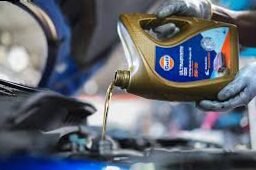
Engine oil viscosity is an indicator of the fluidity of engine oil at a specific temperature. Higher viscosity means greater internal resistance, resulting in slower oil flow. The viscosity of commercially available engine oils is measured according to the standards of the Society of Automotive Engineers (SAE). Engine oils are categorized as winter oils and summer oils: their label consists of two numbers, representing the oil’s viscosity.
The first number ends in the letter “W,” signifying “winter.” This number indicates the fluidity before the engine reaches operating temperature. The second number indicates the fluidity after the engine reaches operating temperature. A lower number indicates better fluidity. Therefore, when the engine is not at operating temperature, 5W-30 engine oil flows better than 10W-30 engine oil; however, once the engine reaches operating temperature, 10W-30 engine oil flows better than 10W-40 engine oil.
According to experts, these oil properties are very important, because when the temperature drops, engine oils thicken, and when they rise they become liquid: “Increasing viscosity increases the internal resistance of the engine, which can lead to a decrease in power and an increase in fuel consumption. In addition, oils with a higher viscosity cool the engine less well, which is very important in newer, high-performance engines,” says Andrzej Husiatynski, head of the technical department at Total Polska.
The expert gives an example: 5W-30 and 5W-40 oils are similar at first glance, but when the temperature of 100 °C is reached (this is the optimal temperature for the oil in the engine, so comparisons of viscosity parameters are carried out at this temperature), their viscosity properties will be completely different.
“If the engine manufacturer designed a lubrication system for oil with viscosity 5W-30, using 5W-40 oil, the working friction will be greater when the temperature reaches 100 °C. This will lead to higher fuel consumption or lower engine power. This change will be felt even more if the difference between the recommended oil and the actually used oil is even greater,” warns motorists A. Husiatynskis.
The operation of oil additives has been eliminated
The head of the technical department at Total Polska emphasizes that differences in oil performance become noticeable only after some time, when the temperature increases. As soon as the oil is poured into the engine, these differences are not noticeable, so at first you may have the impression that oil of one or another viscosity is equally good for a given engine, but this is not true.
“The higher the temperature, the faster the engine oil loses its properties (accelerated oxidation). Oxidation of the oil impairs the lubricating properties and suction of the oil. This process promotes the thickening of the oil and the increase in its acidity, resulting in the formation of sludge which can settle on engine components or in the oil channels. The latter phenomenon, in turn, contributes to the nitrification of the oil. This condition indicates that the oil is saturated with compounds of nitrogen oxide. The reaction of these substances with the hydrocarbons contained in the oil causes the formation of organic nitrates. This has a detrimental effect on the performance of the additives in the oil, up to their complete elimination. Therefore, it is very important to use oils with the quality and viscosity parameters provided by the car manufacturer,” warns the expert from Total Polska.
How to choose?
Currently the most popular on the market are universal oils suitable for both winter and summer use. This has the practical advantage of eliminating the need to change the oil every time the weather changes. In such products, the viscosity at low and high temperatures is selected in such a way that the oil perfectly protects the engine under all conditions.
“Universal motor oils have a higher viscosity index than seasonal oils. This means that the viscosity depends less on the ambient temperature, and the oil protects the engine longer and better. If the car is driven mainly in the city with frequent stops and is stored in unheated rooms (especially if you live in an environment with severe winters), it is better to choose an oil with the marking 0W or 5W. Meanwhile, if the car engine is worn and the gaps between when the friction pores are greater, it is better to choose a more viscous oil”, A. Husiatynskis provides practical advice.
RELATED POSTS
View all


Cars dangerously abandoned by offenders can be towed
January 23, 2026 | by EngineGeek Editorial

New automotive technologies: when to take a break from driving?
January 23, 2026 | by EngineGeek Editorial

An automotive “garage” with an unusual concept has opened its doors in the capital
January 23, 2026 | by EngineGeek Editorial