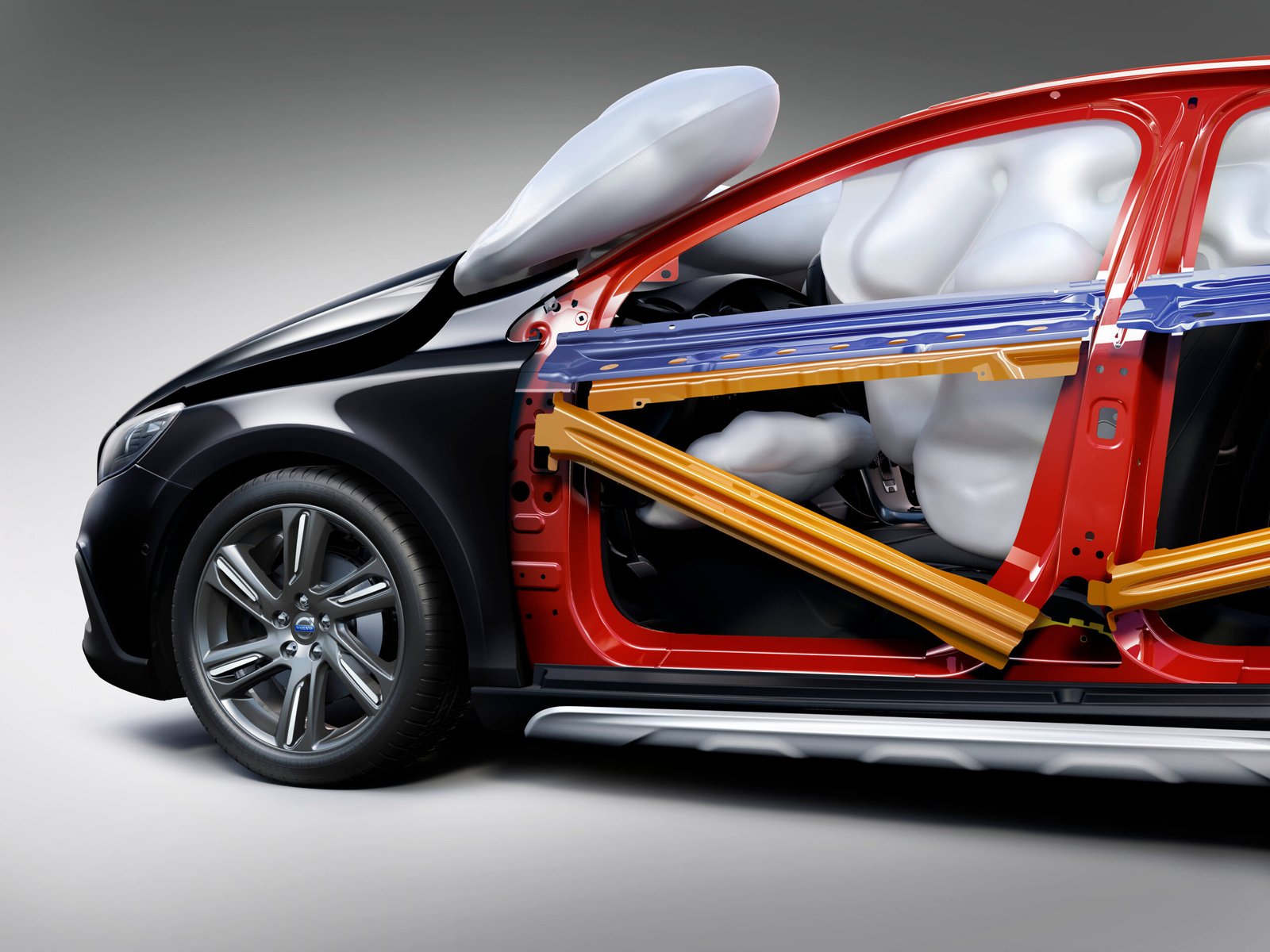
Similarly, a story recently came to light about a Volvo XC60 from a few months ago, in which none of the airbags deployed during the accident, despite the car having suffered two impacts. Thank God no one was killed in this accident. The editorial team and I personally received many questions: how could this happen? Why did this happen? And is it normal? Laurynas Boguševičius, the author of the portal 15min.lt, is looking for answers.
How did airbags originate?
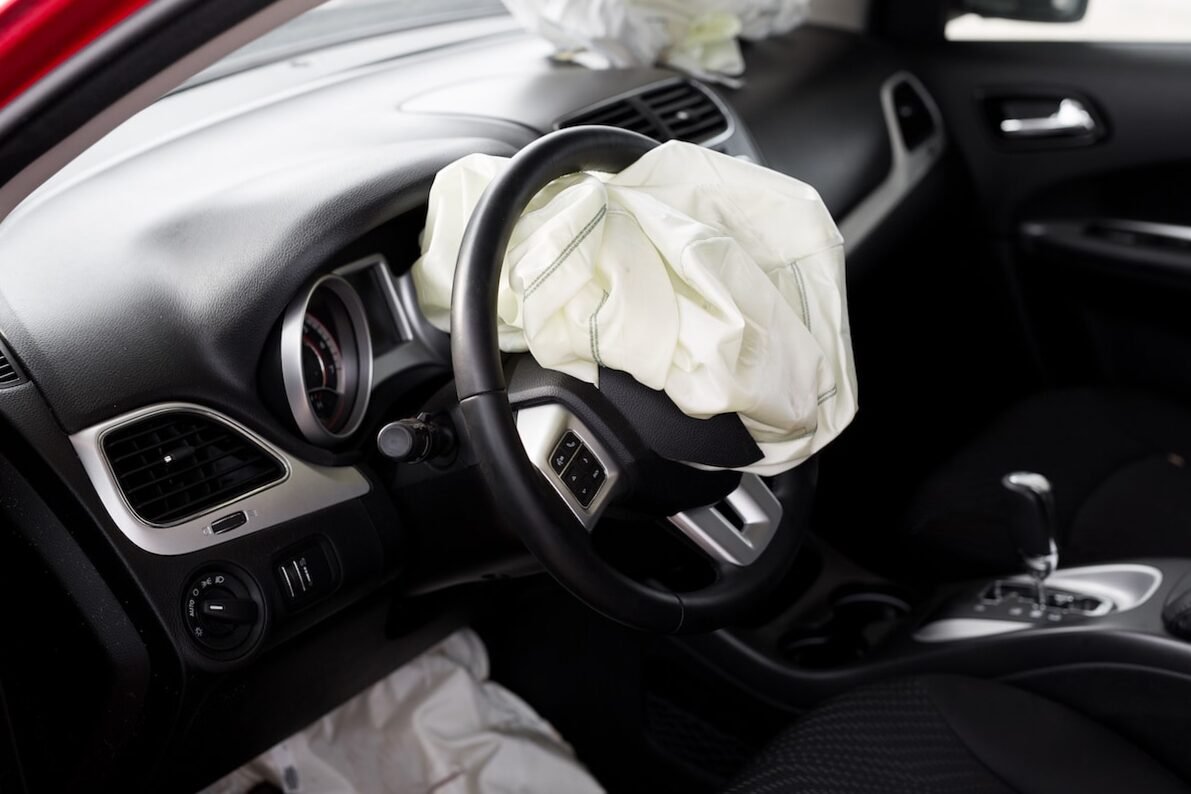
Automotive airbags were introduced in the United States around the mid-1970s. They were offered as a comfortable alternative to seat belts, offering a similar level of protection in the event of an accident. Ford introduced a test fleet of airbag-equipped cars in 1971. In 1973, General Motors and Chevrolet followed suit. However, due to several failures of test models equipped with airbags (several fatalities were suspected to have been caused by airbags), the automotive industry abandoned treating airbags as a substitute for seat belts and began treating them as a supplemental restraint system (SRS).
In 1980, Mercedes-Benz introduced an airbag in its S-Class model in Germany. In 1987 the Porsche 944 Turbo was the first car in the world to feature airbags for the driver and passenger as standard.
Since 1998, most countries have made it mandatory for all new cars to install airbags on the driver’s and passenger’s sides. A year later, this requirement was also introduced for light trucks.
Statistics show that since the adoption of this legislation, airbags have reduced the risk of fatal injuries by up to 30%. This percentage is expected to increase, as new safety systems with not two or four, but even six or eight airbags are already coming onto the market.
And now let’s move on to probability theory. Why do airbags sometimes simply not deploy?
The first theory. The type of car accident (impact type) can be one of the main reasons why airbags did not deploy. Depending on where the epicenter of the crash was, the airbag sensors may not even have been affected. Even in the event of an extremely strong impact or repeated impact this possibility remains. This means that in the case of both Toyota and Volvo, the shock absorbers were located precisely in those ungrateful places where the fuses were simply not touched.
Second. The airbag sensors were faulty, a question only experts can answer. However, if the impact during the car accident was such that the airbags simply had to be activated, the problem can be found in the sensor part.
In this case, neither Toyota nor Volvo dealers are responsible. The burden should be borne by the sensor company.
Third: cable. Experts around the world have repeatedly proven that many of these accidents could have been avoided if manufacturers had not attempted to route cables through inadequate and too narrow gaps in the car.
Fourth. Defect of the airbags themselves: Numerous similar situations around the world have ended with exactly this conclusion. In other words, a bug. In several cases in the United States, the fuses were shown to be working, but simply not firing due to faulty airbags. Is it the sellers’ fault? NO.
One case in a million
To concentrate as many opinions as possible on this text, we interviewed several representatives of premium brands. Everyone avoided speculating on the available information, but at the same time we all agree that the seller’s fault is difficult to see here. A considerable number of people are involved in the entire production process. Wherever there is a human being, there is also the possibility of human error.
All representatives also agreed that this terrible disaster will force not only sellers, but also many importers and manufacturers to re-examine the aspect that is already at the top of the priority list: safety.
Now some unpleasant aspects for participants of road accidents and questions that experts need to answer.
In both accidents were all passengers wearing seatbelts? Because if the seat belts are not fastened the airbags will not activate. So, not wearing a seat belt can have truly disastrous consequences. Experts will answer if they have been fixed.
Did the owners of both cars pay attention to any warning letters sent?
Manufacturers pay great attention to the quality of assembly of cars, so practically all of them, without exception, apply “random quality control” (randomly select cars for additional assembly quality control). Manufacturers, as soon as they see the PROBABILITY of the error, immediately select all POSSIBLY affected cars and send letters to the owners of the car according to the VIN code. The letter contains an invitation to come for a further check, and if an error is found during the check, it is removed FREE OF CHARGE and immediately.
It should be noted that manufacturers often send such letters before the car’s computer itself can detect any errors. This is another question that the experts will have to answer.
As I write this article, I honestly think that tragedies simply happened in both cases. Tragedies that cost a lot. I hope that no one launches into a “witch hunt”, but tries to discover the truth so that similar tragedies do not happen again. I believe there is a one in a million chance that the system simply doesn’t work. However, I also hope that Lithuanian sellers will thoroughly communicate and explain the situations that happened to both importers and manufacturers, and try to pay even more attention to safety.
RELATED POSTS
View all



Toyota has presented an ambitious plan: in less than a decade it will expand its electric car range to 30 models
February 12, 2026 | by EngineGeek Editorial