An international association fighting for a more transparent automotive market has been founded
January 23, 2026 | by EngineGeek Editorial
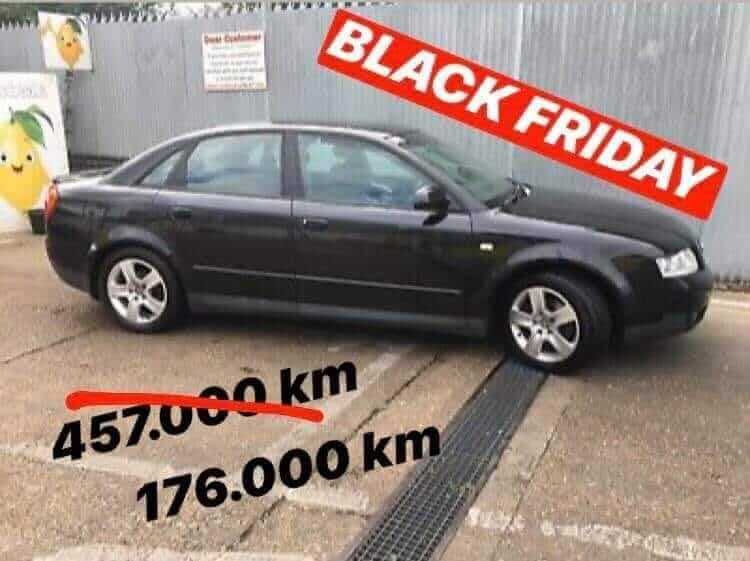
The Association of Automotive Intelligence (AAI) was founded to fight fraud. The organization will begin its transparency mission in five European countries: Lithuania, Czech Republic, Hungary, Poland and Romania. In these countries car buyers will be educated and a dialogue will be established with state institutions to put an end to criminal activities in the car trade.
An international initiative will enlighten car buyers
As the president of the association Matas Buzelis states, the idea of this non-profit organization is to help find solutions to transparency problems in the automotive market, using good practices and exemplary precedents.

“Many car buyers trust sellers too easily. They often do not disclose important facts about the vehicle, so buyers risk getting hurt. We see that not enough attention is paid to solving transparency problems at the state level, so we believe that by uniting companies and institutions that support a transparent market under the Association of Automotive Intelligence, we can speak louder than ever,” explains M. Buzelis.
It brings together different stakeholders
AAI (Association of Automotive Intelligence) is an organization that brings together all interested groups who see the importance of bringing greater transparency, clarity and trust to automotive markets around the world. Lithuanian state institutions, used car companies, data companies, startups and automotive-related companies are invited to join the organization.
M. Buzelis notes that the situation in the used vehicle markets may change after the merger and union of a group of companies and institutions with good reputation focused on car buyers. The new organization targets decision makers in global organizations. Greater buyer protection will be necessary.
Different countries see the same things differently
According to the president of the Association of Automotive Intelligence, not all countries are doing enough to reduce crime in the used car trade. According to a study by the University of Gdańsk in Poland, the problem of mileage falsification can affect up to 50% of drivers. cross-border automotive transactions. This invisible crime costs the European Union economy around 9 billion per year. euro.
According to an auto market expert, some states don’t even try to protect used car buyers. Paradoxically, despite belonging to a common organisation, the different members of the European Union interpret the protection of the public interest in their own way.
“The best in this context is the comparison between Sweden and Germany. Both countries belong to the European Union, but according to the transparency of the used car market, these countries are on different sides of the ring. The history of used cars imported from Sweden can be reconstructed, while the history of vehicles imported from Germany is almost inaccessible to the public. This means that the buyer of a car imported from Germany takes on a much greater risk,” says M. Buzelis.
In addition to the fact that Germany is the center of the European automotive industry, this market is also the largest exporter of used vehicles on the old continent. Therefore, according to the expert, this country should set an example and lead the protection of public interest.
It aims to protect the public interest
When buying a used car, owners are essentially gambling indirectly. All buyers are happy to complete the transaction, but if hidden defects or problematic vehicle histories are discovered later, reducing the vehicle’s resale value, that joy can quickly turn to disappointment.
Unlike buyers, used car sellers don’t have to worry: they bear no risk in the transaction. Nevertheless, in some states, sellers are still protected because Vehicle Identification Numbers (VINs) cannot reliably verify vehicle histories.
M. Buzelis emphasizes that the primary purpose of VINs is security and transparency. Fraud rates decrease once buyers are protected or can verify vehicle histories.
“Our goal is to protect the public interest. To achieve this, we need to collaborate with government agencies, sellers who value their reputation, and IT and data companies in the automotive industry. We invite advertising platforms, startups, and other companies that support transparent used car transactions to participate,” said Matas Buzelis, president of the AAI organization.
RELATED POSTS
View all


The kindness of (un)paid services masks a cunning business plan
January 23, 2026 | by EngineGeek Editorial