


The government’s plan: prepare a car tax, with a particular focus on diesel
January 23, 2026 | by EngineGeek Editorial
According to the law, measures to implement the provisions of the government program must be approved by March 13. Then 3 months will expire from the day the Seimas approved its program.
The Finance Minister talks about opportunities
Diesel cars generally have lower fuel consumption than petrol cars. Furthermore, at petrol stations, a liter of diesel costs 10-15 cents less than the more popular 95 petrol.
According to “Regitras”, 1.4 million were registered in Lithuania at the beginning of this year. vehicles, two thirds of which are diesel powered. 90% of vehicles are powered by this type of fuel. of the country’s buses and 96% of its freight cars.
By the way, many cars of state institutions are diesel. Among these, new police cars and, for example, 4 out of 5 cars of the Ministry of Finance were delivered on Monday. Finance Minister Vilius Šapoka, who himself drives an “economy diesel”, did not comment on the government’s plans to change car taxation, as they are still incomplete and subject to change.
However, he did not rule out that the European Commission’s proposals presented last week to expand the property and environmental tax base in Lithuania could be taken into consideration:
“As a comprehensive review of the tax system is planned, any new taxes could be considered after this analysis.”
Objective to reduce pollution
Vitalijus Auglys, director of the Pollution Prevention Department of the Ministry of the Environment, also explained that there is still no definitive plan for implementing the program’s measures, so it is not yet clear how diesel cars will be taxed.

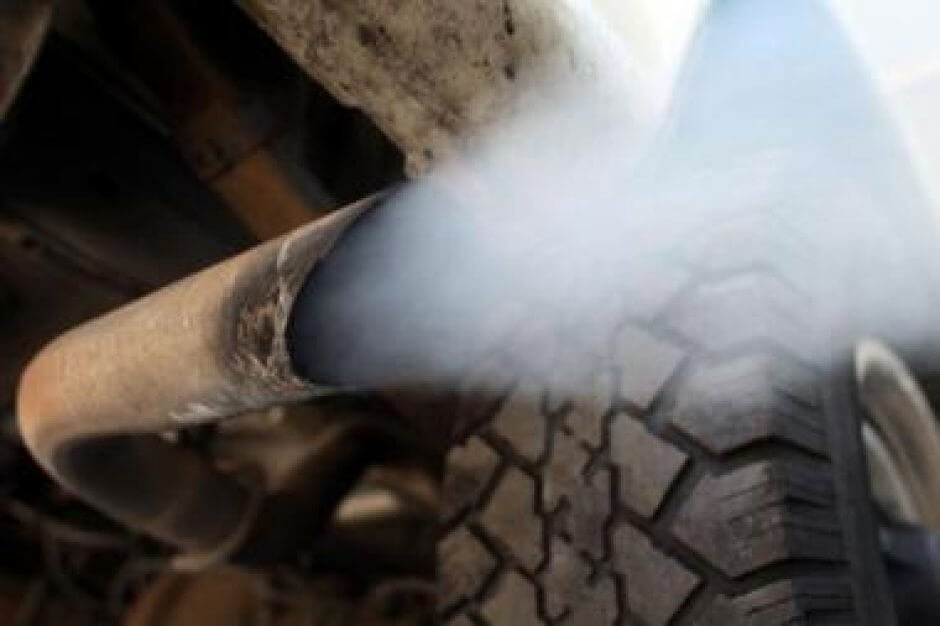
“I don’t know how these sentences will be put together in the end. But in principle we propose to return to this topic. To consider automotive transport as a polluting sector. Considering various aspects, whether through greenhouse gases, nitrogen oxides, solid particles, cars, the transport sector accounts for 1/4 of all pollution.
The government will probably say this, but in reality we should take a certain measure to gradually reduce the use of polluting vehicles or promote the use of non-polluting vehicles,” the director thought.
According to him, together with his colleagues from the Ministry of Transport and Communications, complex solutions are being sought by combining them with urban mobility plans – perhaps individual urban areas (town centres, old cities) would be regulated in a special way. In Oslo, for example, diesel traffic is limited or even banned on some days.
“Another thing, we have to look at the park that exists. It is very polluted and old. How should we manage it, how can we manage it? One of the measures is taxation. But without some incentive it would not work by itself. We will in fact have to sit down and discuss what the complex of these measures will be,” said V. Auglys.
Could it be a stimulus fund?
The representative of the Ministry of the Environment recalled that previously there were ideas to change something in this sector, because the car is always seen as a source of pollution, possibly linked to a tax based on its level of pollution.
“However there must also be a system of incentives. Perhaps there would be an incentive if we collected a certain fund from those possible taxes to encourage the purchase of less polluting electric or hybrid cars. Here too there is a discussion. We also have to discuss with the Ministry of Finance, etc. But we see the issue in a complex way. In the sense that it is not just the taxes, which are not popular, they are often discussed and it is not the carrot that ultimately solves everything. There must also be a carrot, or not? be incentives”, commented the director of the department.
According to him, it is necessary to encourage people to use public transport more safely, so that they are themselves attractive, so that cars crowd into the centers as little as possible, perhaps by charging entrance fees, making parking more expensive, reducing the number of parking spaces.
“There are all kinds of measures like that, once the world discovers them, there would be no need to invent a new bicycle, just see what is most acceptable. As for the tax, we argue that it should not be a simple tax and that’s it, but that it should encourage lifestyle changes <…> so that maybe people choose to live without a car.”
If tax issues arise, if a person cannot live without a car, then one should look at what kind of car it is. We all agree that diesel is much more polluting than petrol. An electric or hybrid car is less polluting than a petrol one. These gradations could depend on the year, the engine, its pollution, etc. Here too we cannot decide, but the whole world is moving in this direction.
But we must maintain the principle: the polluter pays, this is the civil principle. It should be implemented. The bigger the car, the more it pollutes. The smaller it is, the more technologically advanced it is, the less it pollutes”, explained V. Auglys underlining that the plan of measures is not yet definitive, it will be discussed.
In Europe: white crows
The European Commission’s report on Lithuania’s progress was presented last week. It is argued that broadening the tax base would help raise more revenue, doing less damage to economic development and addressing social inequality.
The commission noted that in Lithuania state budget revenues from property and environmental taxes are significantly lower than the EU average. In 2014, for example, environmental taxes amounted to 1.7%. of the country’s gross domestic product, when the EU average is 2.5%.
“These untapped resources, combined with improved tax collection, provide an opportunity to rebalance the tax system to support employment, promote income equality and improve the resilience of the tax system to shocks,” the report says.
The European Commission has welcomed the increase in tax-free income for lower income earners. However, he underlined that for this reason the budget will not make 140 million available. Income in euros. Only half of them will be covered by increases in excise and other taxes. “Lithuania also remains one of the few European countries that does not have car taxes or circulation taxes applied to private vehicles. Although a car tax has been publicly discussed, there are currently no concrete plans to introduce it,” the European Commission said.
RELATED POSTS
View all

Small car failures that turn into very expensive problems
February 12, 2026 | by EngineGeek Editorial


Specialists have debunked the myth that old cars are more reliable
January 23, 2026 | by EngineGeek Editorial