
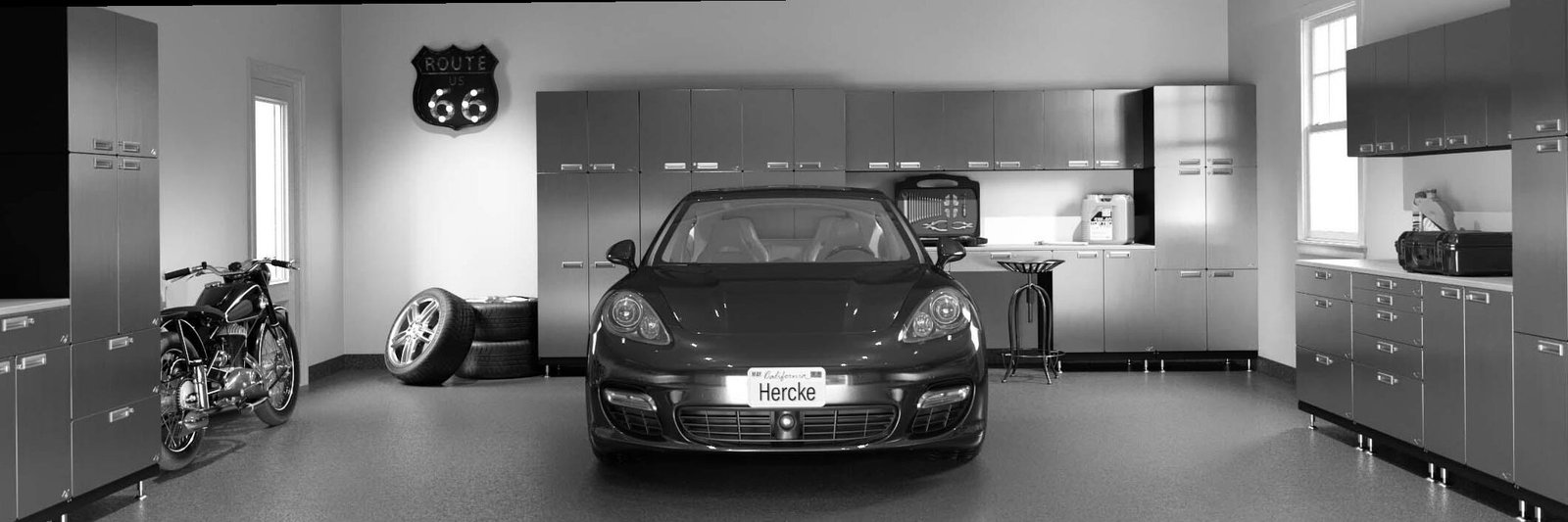
This is what many garage shelves look like. Cleaning out your garage is also an environmentally friendly practice. End-of-life vehicles are sent to car recycling centers or disposal plants.
Once you own a car, you might be surprised at how many bottles and jars accumulate in your basement or garage over time. But are all car care products shelf-life indefinite? Perhaps it’s time to clean out your garage. We offer some suggestions on what to throw away and what to keep.
Garages are ideal for storing various useful small items. But after a few years, it’s not uncommon for all the shelves to be crammed full. That’s when it’s time to clean out. The next question is: what can be thrown away, and what can still be used? We analyzed the items in a typical garage based on the shelf life and cold resistance of some products: not everyone parks their car in a heated garage.
Lubricants are relatively resistant products
The condition of engine oil stored for several years is usually the most questionable. Many fear that old oil can damage the engine. Is this fear justified? It all depends on the shelf life and storage conditions, but it can be said that lubricants are quite durable products, especially if stored in their original closed packaging. Under such conditions they can maintain their properties even after several years.
Worse, if the oils are stored in open or non-original packaging: Most automotive chemicals age due to exposure to air. The least resistant to poor storage conditions is brake fluid.
If the garage inspection shows that some products are no longer suitable for use, they should not be thrown away with other household waste. Oils, batteries or tires must be taken to a car scrapping center or a hazardous products disposal center.
Brake cleaner
Purpose: Brake cleaners remove grease and dirt deposits. They can also be used to clean engine elements. Highly flammable and toxic.
Durability: The package contents usually have almost no shelf life, but aerosol gases can evaporate.
Frost resistance: does not freeze.
Universal lubricant and cleaner
Purpose: lubricates the contacts of electrical connections and low-friction mechanical joints. The tool expels moisture, protects against corrosion, eliminates squeaks and squeals.
Shelf life: Most preparations do not have an expiry date. As with all sprays, the amount of aerosol gas may decrease.
Frost resistance: does not freeze.
- Waxes and polishes
- Purpose: maintenance of the paint layer and protection from harmful atmospheric agents.
- Durability: Most products can be used for 3-4 years. Products age much faster in open packaging.
- Frost resistance: at low temperatures it loses its properties and becomes unusable.
- Brake fluid
- Purpose: working fluid for the brake system and clutch control.
- Durability: in the original closed packaging all the properties of the liquid are preserved for at least 4 years. After opening the package, the shelf life is reduced to two years.
- Frost resistance: Brake fluid does not freeze.
Coolant
- Purpose: to fill the engine cooling system. Unlike water, it does not freeze or cause corrosion of engine elements.
- Durability: Standard products in closed packaging do not lose their properties for 4 years.
- Frost resistance: it does not freeze, on the contrary, it protects from frost.
- Windows
cleaning liquid - Purpose: to clean the windows without damaging the paint layer.
- Duration: after three years the effectiveness of detergents and other active ingredients may decrease. Lower-quality products eventually lose some components, which can clog windshield washer nozzles.
- Frost resistance: depends on the type of liquid. Summer liquid freezes immediately, winter liquid – in extreme cold.
- Engine oil
Purpose: engine lubrication, cooling and corrosion protection.
- Shelf life: Depending on the type of oil, it can be stored for 3-5 years or even longer in the original unopened packaging. Synthetic oil is more durable than mineral oil.
- Frost resistance: Oil (especially mineral oil) thickens but does not freeze.
- Tyres
- Purpose: Despite the fact that the Highway Code allows the use of tires with a tread depth of only 1.6 mm, you should say goodbye to a worn tire first.
- Durability: Tires can theoretically be stored for up to 10 years. Practice shows that they need to be disposed of after 7-8 years.
- Cold resistance: Tires lose grip over time if stored in the cold. Winter tires are more resistant to the cold than summer tires.
- Drums
- Purpose: accumulation of the energy necessary for engine operation. Disconnected from the car’s electrical system it also loses 1%. your daily expenses.
- Lifespan: A completely discharged car battery can only be thrown away. The charge lasts approximately 4 months.
Cold resistance: A discharged battery is not cold resistant at all.
- Distilled water
- Purpose: topping up the battery electrolytes or diluting the coolant.
- Shelf life: in sealed packaging, the period of use is unlimited.
- Frost resistance: Water, of course, freezes and can cause the package to explode. However, even after freezing, its properties do not change.
- Car shampoo
- Purpose: wash cars, soften water, dissolve dirt. May contain glossy and water-repellent additives.
- Shelf life: There is a risk that the properties of the shampoo, like window cleaning liquids, will deteriorate after three years.
- Frost resistance: Shampoos are water-based, so they freeze and can cause the packaging to explode.
- Fuel in cans
Usage: Emergency fuel reserve or fuel for lawnmowers, saws, etc.
Durability: Modern fuels are not very durable, contain many biocomponents and lose their properties very quickly (within a few months). It is recommended to use the fuel within a maximum of one year.
Cold Resistance: In extreme cold conditions, summer diesel fuel may thicken.
Anti-corrosion agents
Purpose: protection of metal from corrosion. As a rule, the surface must be properly prepared (degreased and cleaned) before use.
Durability: Anti-corrosion paints stored in their original closed packaging can be stored for many years. After opening the package the product ages rapidly. Water-based emulsions are even less durable.
Frost resistance: Many instruments are not frost resistant.
Spray paint
Purpose: fine and aesthetic removal of defects in the paint layer and protection of elements from corrosion. Before use, the vial should be warmed to room temperature and shaken well.
Shelf life: Unused spray paint can usually be stored for 2-3 years, but after opening the package it will deteriorate within a few months. Nozzles become clogged, sometimes aerosol gases evaporate.
Frost resistance: Not frost resistant.
Solvents
Purpose: cleaning of details, surfaces and brushes, dilution of paint. They are usually flammable and toxic.
Shelf life: the period of use of the original packaging is unlimited. Problems arise when pouring into other containers, which may react with the contents. For example, solvent bottles should be stored upright, as the solvent may dissolve the plastic cap when placed.