


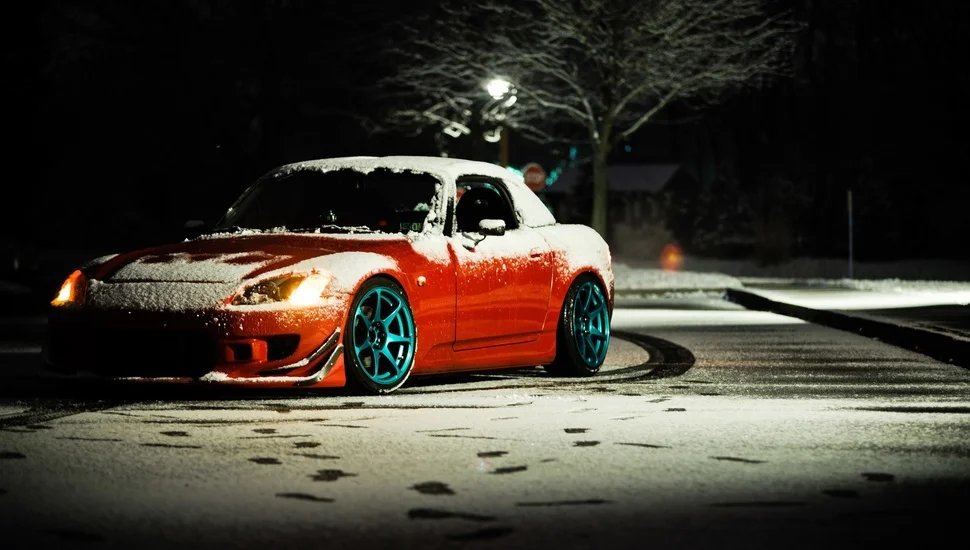
Not all cars have to end up like this Golf. Unfortunately, ice and snow wear out our cars. We notice it every morning when the cold begins to be felt. The car starts kicking harder and driving harder. An even greater source of evil is salt spread on the streets. If it is not removed in time, it accumulates in the cracks and successfully corrodes the metal when winter is long forgotten. What dangers hide in your car in the cold season and how to avoid them, read our following tips.
Choosing the wrong oil in winter is dangerous
REAL. Especially in winter it is necessary to follow the instructions given in the manufacturer’s instructions. Viscous oil makes it difficult to operate a cold engine. If it is possible to choose different quality oil, it is better to stick with a thinner one. Therefore, 5W 40 is a better choice than 15W 40. Important: You must strictly adhere to the oil change intervals. Condensation or fuel buildup in the oil can kill your engine.
Diesel is more resistant to cold than petrol
NOT TRUE. Summer diesel can become viscous even at temperatures below freezing. For this reason, since November, only winter diesel has been sold. At very low temperatures, summer diesel becomes gelatinous. This will not happen with gasoline because it does not thicken at low temperatures.
Washing your car when it’s cold is useless
NOT TRUE. In winter the rule applies: the thicker the better. Spread salt and the resulting mud are the biggest poisons in the can and must be washed away. Regular car washing removes harmful dirt and protects body paint and machinery. Important: before entering the car wash, remove ice and dirt with a jet of water, otherwise scratches will appear on the bodywork. Don’t forget the wheel arches and sills.
Short distances in winter are poison for the engine
REAL. When you start driving in cold weather, all the moving parts of the car wear out more. The generator struggles to fully charge the battery again. Every time it starts it loses its vitality, until finally it can no longer turn the starter. First aid: Turn off unnecessary energy consumption, such as seat heating, when traveling short distances.
The radiator cannot freeze
NOT TRUE. This will definitely happen if the wrong coolant is poured into the cooling system. In this case, it is not only the radiator that is at risk, but also the engine can freeze. Under no circumstances should you try to start a frozen engine, you need to wait for it to thaw again. Turning the ignition key can damage the engine. It is recommended to change the coolant every 2-3 years.
The battery discharges faster in the cold
REAL. Battery life is significantly reduced at low temperatures. At zero temperature it reaches only 80%, but the starter motor requires 150. The reason: viscous oil and a cold crankcase, which increase resistance inside the engine. A good battery helps in this case. Tip: Check the wiring and battery contacts.
Ice on wings is harmful to machinery
REAL. In winter, the most dangerous temperature is around 0 C. Then dirty snow accumulates on the wings, which can freeze hard. If this ice buildup builds up in the frame or presses on the pond, it can cause serious malfunctions. Therefore it is necessary to regularly clean the wheel arches of ice and accumulations of dirty snow.
Engine heating is harmful
REAL. At low rpm, oil pressure is low. Additionally, starting a cold engine injects more fuel, which can wash away the oil film. A sufficient oil film is not formed between the piston and the cylinders, the rings are not optimally lubricated. Therefore, after starting the engine, you should immediately start moving from a place at medium speed.
Doors and seals can freeze
REAL. On cold, humid days, moisture can seep between the door and rubber seals and freeze at subzero temperatures. To keep your doors open in the cold, apply sealant to the seals, tape your locks before washing your car, and keep your lock defroster with you, such as in your bag, rather than in your car.
Spilled salt compromises brake performance
REAL. Salt and water trapped between brake discs and pads can lengthen stopping distances. For this reason, many modern cars have a dry braking function: if the rain sensor detects moisture, the linings easily press against the brake discs, pushing the water down.
Snow on the car scratches the protective layer of paint
REAL. At least when it is roughly scraped from the car. Snow contains small particles of dirt that scratch the protective paint layer. Tip: Don’t remove all the snow. The rest will disappear during driving as the car warms up.
Spread salt damages the can
REAL. The mixture of salt and water is extremely harmful. Damaged painted areas of the bodywork and bare sheet metal are the most affected. There is a high risk of rust in those areas. In this case, effective protection will be a new layer of protective wax.
Homeowners are responsible for falling icicles
REAL. The same goes for snow falling from the roof. Therefore, the owner must remove snow and icicles from the roof of his house so as not to endanger others. If he is late to do so, his behavior can be characterized as negligence. However, if the imminent danger was visible, the perpetrators of the accident could also be recognized as those who suffered the damage. The loss suffered is then divided in half.
RELATED POSTS
View all


The underpass installed on the Vilnius-Kaunas highway
January 23, 2026 | by EngineGeek Editorial
Most Lithuanians drive with unsuitable tyres
January 23, 2026 | by EngineGeek Editorial

The complete guide to a successful sale
December 15, 2025 | by EngineGeek Editorial