
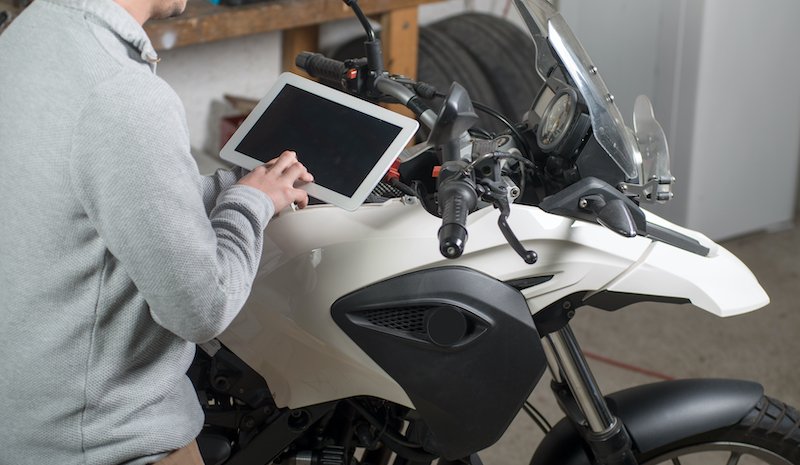
Since April 15, 2024France introduced a mandatory technical inspection for motorcycles and other two, three and four wheel motor vehicles. This measure aims to improve the road safety and reduce the environmental impact of motor vehicles. Understand this news regulation it is essential for all two-wheeler owners, as it affects not only the daily management of their vehicles, but also their legal compliance.
Vehicles affected
The technical inspection applies to a wide range of vehicles classified in the L category, which includes:
- Motorcycle
- Scooter
- Motorized tricycles
- Quadricycles
Exceptions to the rule:
Some exceptions are provided for in the regulations, where some vehicles are exempt from technical inspectionin particular:
- Collectible vehicles : Vehicles with collectible registration documents, especially those dating back to before 1960.
- Competition vehicles : Two-wheeled vehicles used exclusively in sports competitions and belonging to license holders of a sports federation.
Schedule and frequency of checks
The implementation of technical inspection for motorcycles and similar vehicles is scheduled progressively, depending on the year of registration of the vehicle. Here is a summary table of important deadlines:
| Year of registration | Date of the first technical check | Observations |
| Forward 2017 | By December 31, 2024 | For those registered before April 15, 2024 |
| Between 2017 and 2019 | In 2025 | Check to be carried out during the year |
| Between 2020 and 2021 | In 2026 | Check to be carried out during the year |
| After 2022 | 4-5 years after registration | Initial inspection then every three years |
Renewal frequency:
- The first check must be carried out within the six months preceding the fifth anniversary of the registration of the vehicle.
- Subsequently, a technical inspection is required every three years.
- In case of sale of the vehicle, an inspection of less than six months must be presented together with the registration document at the time of the transaction.
Cost of technical inspection motorcycle
The cost of a motorcycle technical inspection can vary considerably depending on the center chosen. However, observed prices are generally set from approximately 50 to 85 euros. It is important for homeowners to compare offers to find the best value for money.
Factors influencing the price:
- Test Center Location: Prices may vary by region.
- Local competition: In areas with multiple centers, prices may be more competitive.
To make your choice easier, here are some suggestions:
- Compare prices online and see reviews from previous customers.
- Check the center’s accreditations to guarantee the quality of the service.
Main checkpoints
The technical inspection of motorcycles and other motorized two-wheeled vehicles focuses on some essential aspects to ensure safety and respect for the environment. Here are the main checkpoints:
- Vehicle identification: verification of compliance with the registration document, condition and size of the license plate.
- Braking system: condition of the brakes and their effectiveness.
- Steering: functionality and safety of steering components.
- Visibility: condition of mirrors, clarity of windows (if applicable).
- Lights and reflective devices: operation of headlights, direction indicators and position lights.
- Axles, wheels, tires, suspension: tire condition, wheel alignment and suspension condition.
- Frame and accessories: integrity of the frame and accessories such as luggage racks.
- Disturbances: noise and exhaust emissions, control of liquid leaks.
Fault categories:
Faults detected during the technical inspection are classified into three levels of severity:
- Minor fault: does not require an immediate second inspection but must be monitored.
- Serious fault: requires repair followed by a second inspection.
- Critical fault: involves the immediate immobilization of the vehicle until repairs.
To know all the checkpoints of the CT Mototo consult:
legifrance.gouv.fr (from page 13)
Control procedure
The technical inspection procedure must be carried out in an authorized center. The typical sequence is as follows:
- Make an appointment : Plan your visit in advance, especially during periods of high demand.
- Vehicle preparation : Make sure your motorcycle is in good condition and clean, making inspection easier.
- Submission of the necessary documents : Bring the vehicle registration document and, if available, the vehicle maintenance booklet with you.
- Vehicle inspection : The inspector checks the points listed, with the possibility for the owner to be present at the check to facilitate the maneuverability of the vehicle.
Check the location of the sticker:
- If the motorcycle is equipped with a windshield, the inspection sticker is glued to the lower right part.
- For vehicles without a windshield or collection, the sticker is rendered unusable after the inspection and archived together with the copy of the report.
Consequences of non-compliance
Compliance with the new regulations on technical controls is essential not only for safety, but also to avoid legal sanctions. Here are the consequences of failure to comply with the technical control:
- Fines : Owners of non-compliant vehicles risk fines of up to 750 euros. Typically, the fixed fine is 135 euros for failure to present an updated technical inspection certificate during a roadside check.
- Vehicle immobilization : In case of a critical fault detected or if the vehicle is checked without a valid roadworthiness test, the authorities may decide to immobilize it. The owner is then given a document certifying the obligation to carry out a technical inspection within a certain deadline.
Maintained in good condition:
- It is important to note that even after passing the technical inspection, the owner has a legal obligation to keep the vehicle in good condition as required by law Traffic Laws. This includes regular maintenance and repairs necessary to ensure safety and environmental compliance.
The introduction in France of mandatory roadworthiness testing for motorcycles and other two, three and four-wheeled vehicles marks an important step towards improved road safety and a reduction in environmental impact. This regulation helps to ensure that all motor vehicles circulate in optimal safety and environmentally friendly conditions.
In the same topic:
– https://parlonsmoto.fr/equipements-obligatoire-moto/
– https://parlonsmoto.fr/quelles-motos-peut-on-conduire-avec-permis-b/
–