Road transport represents 75%. of carbon dioxide (CO2) emissions released into the environment by the transport industry (aircraft – 10%) and creates 21% of CO2 emissions in the world.
Are electric vehicles the best way to reduce global emissions and achieve zero pollution? The answer would be yes and no, writes newseu.cgtn.com. It is clear that electric vehicles are significantly less polluting than petrol and diesel cars over their entire life cycle, but less pollution does not mean no pollution and electric cars do not pollute the environment either.
A typical vehicle has an internal combustion engine that burns fossil fuels to produce energy to move the car. Petrol and diesel cars emit CO2 into the environment, i.e. they emit greenhouse gases that affect climate change. Not only that, toxic fumes in the air can penetrate deep into people’s lungs and even cause diseases such as cancer. An electric car’s battery stores electricity that powers the electric motor. Electric vehicles do not emit exhaust while driving, but greenhouse gas emissions are generated in other parts of the production of these vehicles.
When do electric cars damage the environment?
Electric vehicles are perhaps the most criticized because they require 1.5 times more energy to produce than conventional cars. Before drawing conclusions, however, it is important to evaluate the entire life cycle of an electric vehicle and the total emissions during its life, i.e. evaluating factors such as resource extraction, the recycling of raw materials and, finally, the carbon footprint of the production of the vehicle itself.
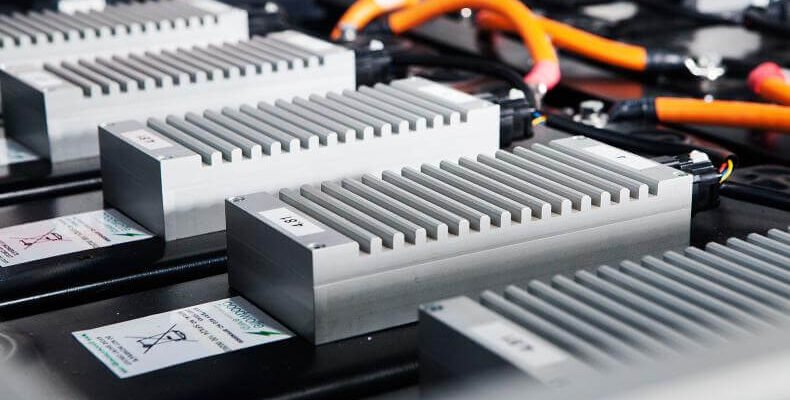
The production of lithium-ion batteries for electric cars requires many rare fossil raw materials, such as lithium, nickel and cobalt, which, after mining, must be refined and only then used in battery production. This process is extremely energy-intensive due to water, heat and sterile conditions. Furthermore, most of these materials are mined outside the European Union, making it difficult to ensure that materials such as cobalt are mined ethically, safely and without harming the environment.
Countries like China, Japan and South Korea, where much of the battery manufacturing takes place, rely heavily on coal for electricity production, which increases CO2 emissions from battery production. A recent report from the Swedish Environmental Research Institute IVL showed that during production, one kilowatt-hour of lithium-ion batteries emits on average 61 to 106 kilograms of CO2 equivalent. This means that both the battery assembly line and the entire electric vehicle emit greenhouse gases during production.
The amount of emissions also depends on the country in which the electric vehicle is used and charged. The more a country uses clean energy, such as renewable energy instead of fossil fuels, the fewer emissions will be produced when charging an electric car and the more environmentally friendly it will be.
End of the operation
However, the end of life of an electric vehicle has the least impact on overall emissions. Furthermore, there are good opportunities to reduce climate impact. Why?
First, recycling used battery metals reduces the need for new raw materials. Cobalt, nickel and copper are currently recycled relatively efficiently in Europe, unlike lithium, which is not widely recycled due to high processing costs, relatively low raw material prices and small volumes of collected batteries, the Swedish report finds.
According to the world’s largest environmental network “Friends of the Earth Europe”, only 5% is collected on the European market. lithium, and the rest has been incinerated or thrown into landfills, which harms the environment.
“However, the growing popularity of electric vehicles and new technologies for better reuse and recycling of car batteries and components can help reduce the environmental impact of extracting new raw materials. On the other hand, the European Commission (EC) aims to collect and fully recycle industrial, car or electric vehicle batteries to extract valuable materials such as cobalt, lithium, nickel and lead and thus save natural resources,” says Aplinkos Alfredas Skinulis, director of the safety institute, which created a website dedicated to electric transport www.elv.lt.
The EC predicts that demand for batteries will increase 14-fold by 2030, mainly due to electric transport.
latest posts published
Citroën ë-Jumpy won the prestigious Millésime Trophy

The purpose and function of the stabilizer

Maintenance of vehicles (transporting dangerous goods)
The Lithuanian jubilee elections for “Car of the Year” have begun
Volkswagen presented the updated T-Roc

An intelligent wildlife warning system for motorists
Features of electric car charging with a simple click
Four ways to identify a sunken car

In the new city – 2 kilometers of new cycle paths, pedestrian paths are being renovated