The new generation of electric cars had to wait
The first electric cars were distinguished by their appearance, but their greatest advantages were revealed when new generation models built on special platforms appeared. It took time, because the development of the new type of gears and the technologies associated with them required considerable investments and thousands of hours of work.
The automotive giant Volkswagen also took time to prepare the ID.3 model, introduced in 2019. At that time, General Motors already had an improved platform for electric vehicles, which was soon joined by veterans Tesla and Nissan, Hyundai and Mercedes-Benz.
Many electric car manufacturers still use universal or not only electric, but also hybrid adapted platforms. Most of them, however, have already revealed the launch dates of the dedicated platforms.
Jonas Vanagas, associate professor at the Faculty of Electricity and Electronics at Kaunas University of Technology (KTU), notes that electric car technologies have developed extremely rapidly in recent years. According to the scientist, a good example of this is the Nissan Leaf. In the first generation models the synchronous electric motor and the power converter were installed separately, while in the new electric cars everything is integrated into a single unit.
“Repairing a car can be more complicated, but considering the reliability of electric drive, such a solution was a huge step forward. Furthermore, communication between different units improved, there were many more sensors, which made the control more accurate,” comments the interviewer.
The design is adapted to electric traction
According to J. Vanag, the design of automobiles inevitably had to change, because the platforms used to date were adapted to internal combustion engines, transmission and fuel tanks. The most important part of electric cars is the battery mounted underneath, which required changing everything, including the proportions of the body.
“Not only engineers or body designers, but also specialists in material science have done significant work in the development of electric cars. Furthermore, the contribution of electrical and electronic engineers and specialists in other fields has been very important. It is very nice that some parts of electric cars are also produced in Lithuania,” – says the scientist regarding technological progress.
Electric vehicle platforms completely eliminate the central tunnel and move the engine compartment significantly forward, thus dramatically increasing interior space. Volkswagen engineers cleverly utilized this advantage to develop the first-generation ID.3 sedan, while the modern Ioniq 5 is perhaps the best example of efficient space planning.
“On the one hand, engineers and designers have greater freedom; on the other hand, they must optimize the layout of the body panels and accommodate all components. Electric vehicles must be shock-resistant, pressure-resistant, and able to withstand various overloads. Each situation requires a specific solution,” explained J. Vanagas.
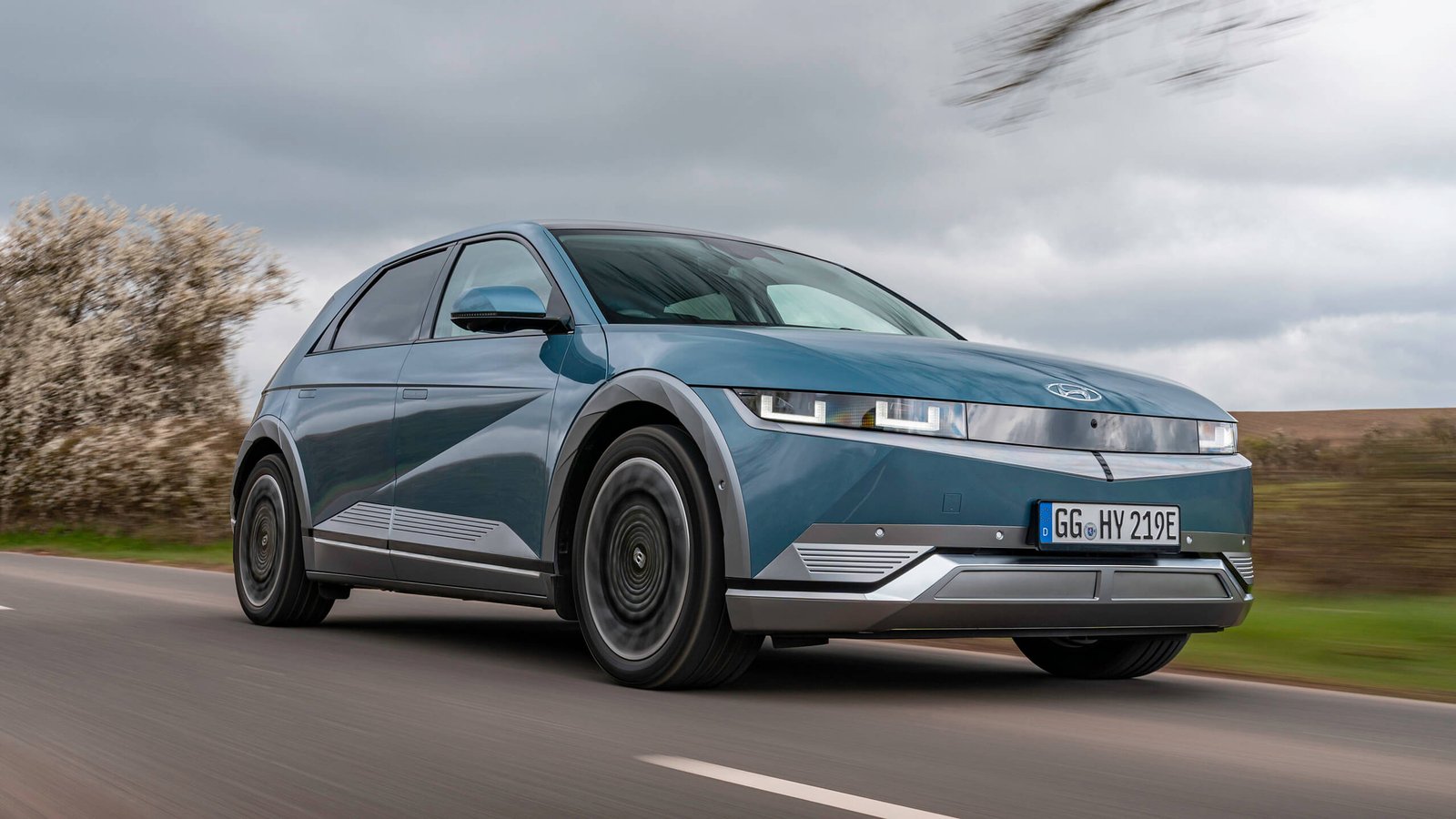
One of the most notable changes in electric car platforms is the return to rear-wheel drive. Due to the high torque of the electric motor, the front wheels tend to spin very quickly when starting from a standing start. A sudden start loads the rear axle more, so by transferring torque to the rear wheels instead of the front, the problem can be solved without additional measures.
It is no coincidence that most new generation electric cars are rear-wheel drive, including models such as the Hyundai Ioniq 5, Kia EV6 or Honda e.
Uses recycled and composite materials
Due to the installed batteries, the bottom of the car also changed: it acquired an almost regular rectangular shape. Seen from below, the new electric cars resemble skateboards. Such a simple setup makes it easy to change the number of battery cells.
A secure structure can only be created with relatively large investments. This is also reflected in the slightly higher price of electric cars compared to conventional models: although the design has moved into the digital space, additional costs are inevitable. J. Vanagas recalls the safety tests of the first Chinese electric cars, the results of which were particularly disappointing.
“Those models were completely dangerous. Even now one should choose a Chinese electric car with extreme caution. Of course, such cars are much cheaper, but in many cases it gives rise to suspicions that manufacturers are only interested in quick profits. The approach of companies in the USA, Japan, South Korea or European countries is completely different: they pay special attention to safety,” notes the associate professor.
The scientist adds that electric car platforms help implement the circular economy model. This means using more recycled raw materials, various composites and materials from renewable sources.
“Several composites also replace steel alloys, but their properties are very similar. They are plastic like metals, but also stronger, so they do not break in the event of an accident. Different composites of carbon fiber, Kevlar and other materials are being used more and more often, which for a long time were truly exotic,” explains the specialist about progress in a less visible field.
Fast charging has brought new possibilities
The biggest advantage when looking at the interior of the new generation of electric cars is the flat interior floor. The electric motor is usually mounted at the rear, so that the front axle is pushed forward as much as possible. This allows you to significantly increase the cabin space.
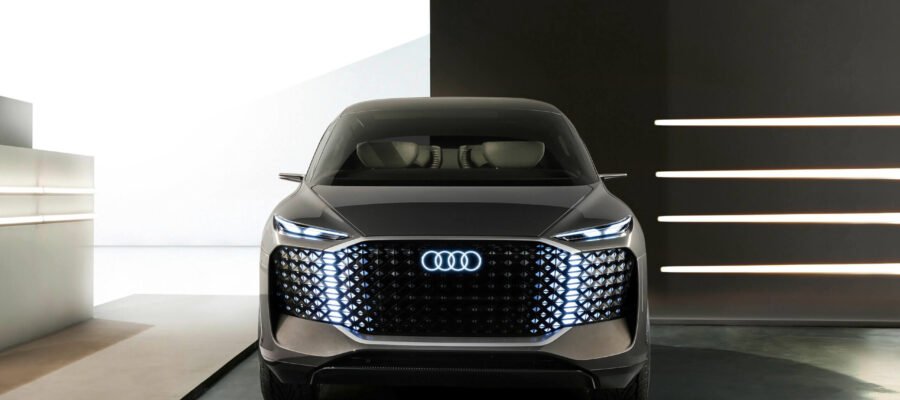
In this respect, electric cars are superior to models with internal combustion engines or hybrid propulsion. Among medium-sized family cars, the Tesla Model 3, Hyundai Ioniq 5 or Audi Q4 e-tron stand out in terms of interior space. All these electric cars are produced on special platforms.
New generation electric car platforms are also distinguished by advanced charging methods. With an output of up to 250 kW, Tesla’s electric cars have long been unbeatable in this field, but the advanced 800-volt systems used by Audi, Porsche, Kia and Hyundai have changed the established order. For example, the battery of the new Hyundai Ioniq 5 can be charged from 10 to 80%. can be charged in just 18 minutes.
“Modern technologies make it possible to charge the energy required for 100 km in two minutes. However, such charging with a current of up to 500 A represents additional stress on the battery, since the number of charging cycles decreases. So you have to choose between charging speed and battery longevity,” explains J. Vanagas.
He predicts that hydrogen technology will be a major focus in the future. KTU researchers also work side by side. Electric motors also turn the wheels of fuel cell cars, but hydrogen tanks are installed instead of batteries. In the fuel cell, hydrogen combines with air to produce electricity, which is supplied to the electric motor.
“The natural resources used for battery production are limited or not yet discovered, and green hydrogen production technologies via electrolysis are inexhaustible,” the interviewer emphasizes.
latest posts published
Citroën ë-Jumpy won the prestigious Millésime Trophy

The purpose and function of the stabilizer

Maintenance of vehicles (transporting dangerous goods)
The Lithuanian jubilee elections for “Car of the Year” have begun
Volkswagen presented the updated T-Roc

An intelligent wildlife warning system for motorists
Features of electric car charging with a simple click

Four ways to identify a sunken car

In the new city – 2 kilometers of new cycle paths, pedestrian paths are being renovated