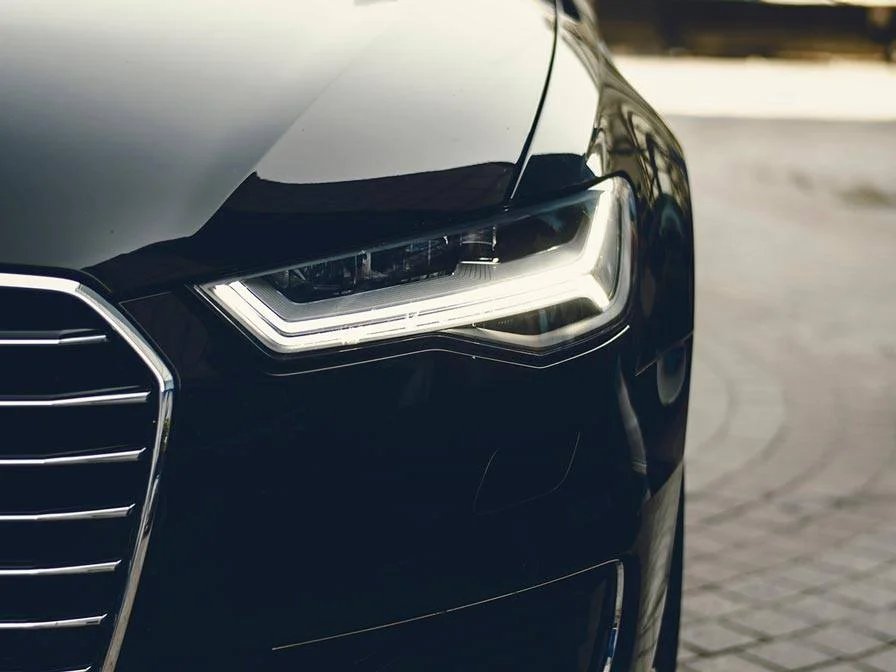
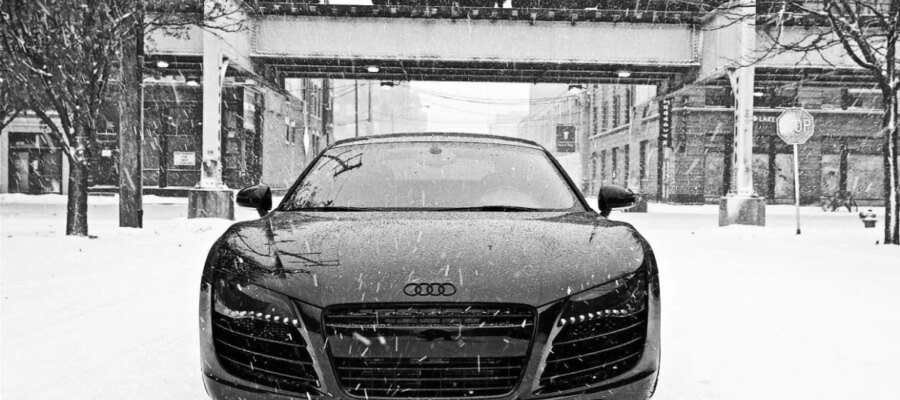
Before winter arrives, melting snow or icy conditions after sleet have already turned many roads into dangerous skating rinks. Sharp bends become dangerous, braking distances increase imperceptibly, and speed limits are drastically reduced, forcing drivers to undergo a “driving test” almost daily. Motorsport veteran and coach Jonas Dereškevičius offers advice on special considerations for winter driving and how to best deal with potential problems.
1. When driving in winter conditions, always remember that while the term “slippery” describes all situations where roads are covered with loose snow, mud, or wet snow, not all of these natural phenomena are equally dangerous.
It is safer to drive when the roads are covered in snow that has already settled a little,
but not been polished off. However, it should be remembered that in some places the snow can cover the ice. The less experienced driver often does not have time to react to sudden changes in driving conditions and loses control of the car. If the car goes straight and is not affected by any centrifugal force, nothing will happen, but even a small turn, braking, overtaking another car, a strong gust of wind – you can start sliding sideways in an instant. The same can happen if the geometry of the car’s wheels is not adjusted and the car is “pulled” to one side.
2. If for some reason the car starts to slide, you should avoid both braking aggressively and trying to correct it by pressing the accelerator pedal hard. The most effective way to stabilize the car is to set the engine to a mode where it only keeps the car moving at a constant speed, but does not slow down or speed up the movement.
Maintaining optimal wheel rotation without skidding and slipping when braking is very difficult. It can be done accurately only after many attempts. It’s a good idea to try to apply the brake gently with your left foot so that the pads stick well to the brake discs and prevent the wheels from slipping. Such experiments should not be conducted on public roads where other cars are circulating.
If, however, the car starts to slide and you see that it will not be possible to stop in front of the obstacle, you should try to turn the car towards the curb and brake by leaning on the curb. The impact and losses will be less painful if you fall with straight wheels rather than crooked ones.
3. While driving on winter roads, you have noticed that the steering wheel has become very “light”, which means that the grip is poor and the only way to avoid unwanted skidding of the car is not to make sudden movements. When driving on a winding road, in no case should you try to downshift in the middle of a bend – this should be done before you start operating the steering wheel. You should engage in the gear you plan to exit the corner in.
Adventurous drivers should also avoid the habit of diving from one lane to another while overtaking slower road users. Even if you are a good driver, such maneuvers can disturb those who drive worse or do not have good tires and cause an emergency situation.
4. It should be remembered that some structural features of the car
have a great influence on safe driving. Drivers of cars with all four-wheel drive have the greatest advantage on a slippery road. Front-wheel drive cars ski a little less and owners of rear-wheel drive cars are forced to drive more delicately. It is important to note that different cars lose traction for different reasons and different maneuvers are required to try to stabilize them. In all cases, a general rule applies: in traffic flow it is necessary to maintain much greater distances between cars moving in the same direction. However, a rear-wheel drive BMW and a Porsche will behave differently on a slippery road due to their different overall mass and different centers of gravity.
It is not possible to give universal advice on how to behave in every case, so each driver is advised to find a place, study the behavior of the car and feel the limits of sliding. It is advisable to find out how the car behaves in emergency situations during sudden acceleration and braking, what happens when operating the steering wheel. To start from a standstill, you should try to release the clutch pedal while the engine is idling, and only when the wheels start to slip, lightly press the accelerator. Doing this too fast will cause the car to skid on the spot.
The second most important exercise is braking.
Ideal deceleration is considered complete when the vehicle comes to a stop without the wheels locking up. If the brake pedal is fully depressed, the vehicle will slide in the direction it was traveling in, and the steering wheel will not respond. Even if the vehicle is equipped with ABS, practice is recommended because braking distances increase significantly in winter.
It is crucial to remember that the most important prerequisite for safe driving is choosing and using appropriate winter tires. Using inferior summer tires or all-season tires often leaves the driver with virtually no chance to avoid an accident in an emergency.
latest posts published
Citroën ë-Jumpy won the prestigious Millésime Trophy

The purpose and function of the stabilizer

Maintenance of vehicles (transporting dangerous goods)

The Lithuanian jubilee elections for “Car of the Year” have begun
Volkswagen presented the updated T-Roc
An intelligent wildlife warning system for motorists
Features of electric car charging with a simple click
Four ways to identify a sunken car

In the new city – 2 kilometers of new cycle paths, pedestrian paths are being renovated