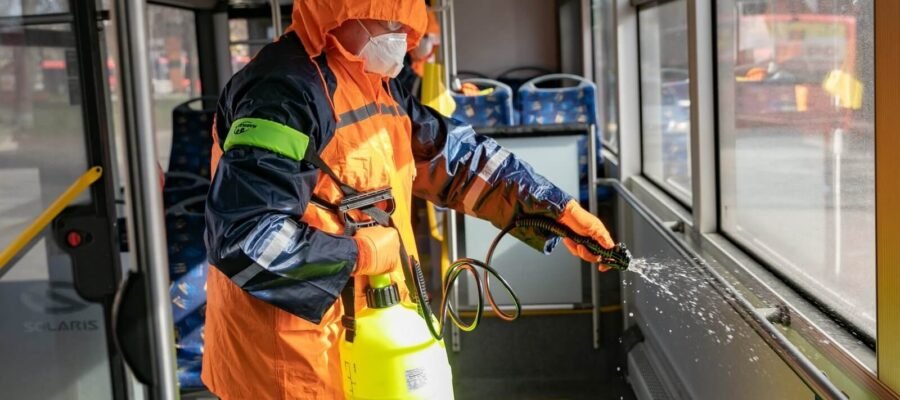
Taking these measures is a wise move if someone infected with COVID-19 has ridden in your car or been in contact with an infected person. Although Lithuania has currently recorded 34 cases and over 40,000 people are under observation, the number of infections is likely to rise in the coming days. Therefore, it’s never too late to take preventative measures.
Consumer Reports spokesperson Jennifer Stockberg warned that certain surfaces should be cleaned if someone exhibiting symptoms has ridden in your car.
The expert advised: “You should clean all frequently touched surfaces: the steering wheel, door handles, gearshift, all buttons, touchscreen, windshield wipers and turn signal stalks, seat adjusters, door storage pockets, center armrest, and interior door handles.”
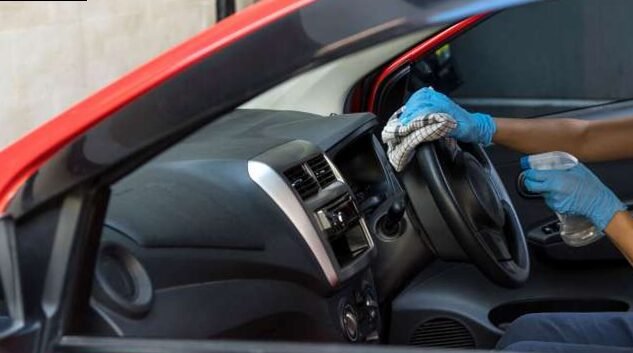
According to her, this information is especially important for those who use their own cars to transport passengers, work in taxi or shuttle companies.
How to disinfect a car?
However, unlike domestic surfaces, many elements of the car are much more sensitive and less resistant, such as the kitchen table or the sink. Despite this, experts say, most household cleaners are actually suitable for fighting the coronavirus.
As Egidijus Steponavičius, representative of the Grinda company, which started providing disinfection services in Vilnius, explains, the simplest means, for example disinfectant liquid, are usually the most effective. According to him, before disinfecting the car, it is necessary to take care of disposable gloves, disposable napkins and, if possible, wear protective glasses. When cleaning your car it is advisable to move from the least contaminated surfaces to the most contaminated ones. After cleaning, disposable items should be placed in a bag and disposed of in a way that excludes the risk of infection. and disinfect reusable media. Finally, don’t forget to properly and thoroughly wash your hands with soap or disinfect them.
Where to start disinfection?
According to E. Steponavičius, hard surfaces of the car should be cleaned with disinfectant liquid: steering wheel, handles, glass. Other surfaces, such as the interior, should be disinfected using a household sprayer. After this procedure, the car should be left for at least a few hours, if possible, overnight. Finally, when you get to your car in the morning, you need to air it out after disinfection.
Which tools to choose?
The European Center for Disease Prevention and Control points out that non-sensitive surfaces can also be cleaned with household bleach with a chlorine concentration of 0.5%. (diluted 1:50 with water). However, the surface must first be cleaned with simple soap or detergent with water and only then disinfected with bleach. However, it is good to know that bleach is only suitable for certain parts of the car’s exterior.
Liquids containing at least 70% are also suitable for disinfection. of ethanol. Additionally, Jeff Stout, executive director of global innovation at Yanfeng Automotive Interiors, points out that almost all car surfaces can be disinfected using isopropyl alcohol. The latter is easily found in most auto supply stores.
Mr. Stott’s company also uses this liquid to clean parts in their factory. The expert stated that while isopropyl alcohol can also be used to wipe textile parts inside cars, he cautioned against using bleach or hydrogen peroxide to disinfect car interiors, as these substances are likely to damage the surfaces they come into contact with. Furthermore, he advised against using ammonia-containing products on touchscreens, as this could impair their anti-reflective and anti-fingerprint properties. He believes that even ordinary soap and water are sufficient for car disinfection, as they are well-suited for textile and leather surfaces.
Mr. Stott pointed out that while thorough disinfection is the only effective way to kill viruses, it is not absolutely necessary, but over-disinfecting should also be avoided. This is especially important when leather seats are already cracked. Finally, it is crucial to remember that personal hygiene and protective measures should not be neglected after car disinfection. No matter how clean you wash your car, if you forget to wash your hands with soap and use disinfectant, all your efforts will be wasted.
Conclusion
Taking preventive measures to disinfect your vehicle is a responsible and practical decision, especially if someone infected with COVID-19 has recently been inside your car or if you have been in close contact with an infected person. Even though the number of confirmed cases in Lithuania currently stands at 34, with more than 40,000 people under observation, the situation remains dynamic and the risk of further spread cannot be ignored. Acting early and consistently is far more effective than responding after exposure has already led to wider transmission.
Vehicles are enclosed spaces where viruses can linger on frequently touched surfaces. Steering wheels, door handles, seatbelt buckles, gear shifts, touchscreens, and dashboard controls are all high-contact areas that may harbor germs. As emphasized by Consumer Reports spokesperson Jennifer Stockberg, cleaning and disinfecting these surfaces is essential if a symptomatic individual has been inside the vehicle. Proper hygiene practices can significantly reduce the risk of indirect transmission through contaminated surfaces.
Using appropriate disinfectants that are safe for automotive materials is also important. Alcohol-based solutions with at least 70% alcohol content are generally effective for hard, non-porous surfaces. At the same time, care should be taken not to damage leather, plastics, or electronic components. Regular ventilation of the cabin further decreases potential viral concentration inside the vehicle.
Ultimately, prevention remains the most powerful tool in controlling the spread of infection. Simple actions such as cleaning, disinfecting, and maintaining good hygiene habits can protect not only the driver but also family members and other passengers. In uncertain times, proactive responsibility contributes to both personal safety and public health.
latest posts published
Citroën ë-Jumpy won the prestigious Millésime Trophy

The purpose and function of the stabilizer

Maintenance of vehicles (transporting dangerous goods)
The Lithuanian jubilee elections for “Car of the Year” have begun
Volkswagen presented the updated T-Roc

An intelligent wildlife warning system for motorists
Features of electric car charging with a simple click
Four ways to identify a sunken car

In the new city – 2 kilometers of new cycle paths, pedestrian paths are being renovated