
If you don’t want to know too many details, choose an automatic charger with a capacity of at least 10 amp-hours (Ah). The charger should automatically shut off when charging is complete. Consider whether you need a charger with a boost function; this is especially useful if the battery is completely depleted. Car chargers operate at 12V.
Now let’s get to the details. Charging a battery isn’t easy. Therefore, the following five points are particularly important when choosing a charger:
1. Determine your battery type. Why is this important? It’s recommended to use different voltages for different types of batteries, as excessively high voltages can damage them. Lead-acid batteries come in two categories:
A. Standard liquid electrolyte (WET). They are filled with electrolyte and some models can be filled with distilled water. These are cheaper, longer-lasting batteries that require more maintenance.
B. Another group has several names, they can be called maintenance-free (MF – maintenance-free), closed-type or simply VRLA (valve-regulated lead-acid battery). They contain much less electrolyte, do not need to add distilled water and can be charged using a higher voltage. These models are more expensive and charge faster. There are two types of VRLA batteries:
- AGM containing glass fibre.
- Gel (GEL) containing silicic acid.
2. Look at the battery capacity in ampere-hours (Ah). The capacity of car batteries varies from approximately 35 Ah to 235 Ah. The description of each charger indicates the capacity of the batteries for which it is suitable. If your battery is 60Ah and your charger has a maximum charging capacity of 30Ah, ignore it.
3. Select the type of charger. They can be divided into 2 types:
A. Standard charger.
B. Charger with boost function. Such a charger also serves as a separate power source if you need to jump start a vehicle with a completely discharged battery.
4. Decide on the power of the charger: look at the charging current (A). It is recommended to charge the battery with a current not exceeding 10% of the battery capacity. So, if your battery has a capacity of 60 Ah, you will need a charging current of 6 A. If the battery overheats and reaches the limit of 40 – 45 ˚C degrees, it is recommended to reduce the current. The battery overheat protection function is very useful in this case.
5. Decide on the loading method: automatic or manual. Automatic battery chargers, depending on the model, have different charging phases. The automatic charger will charge the battery up to 100% in just a few steps and maintain a constant charge level of 95-100%. These phases must be personally supervised during mechanical loading. There are 3 main loading phases:
A. Main charging, when the battery is charged to 80% capacity. All chargers perform this function. During charging, the charger supplies a constant current (A) until the maximum allowable voltage (V) of the battery is reached. Depending on the type of battery and the ambient temperature, this voltage can be up to 13.8 – 14.4 V. If you do not know the exact voltage allowed for your battery model, limit yourself to 13.8 V – this is a safe limit for all types of batteries.
B. Deep charging is required to charge the battery to 100%. During this charging, the voltage (V) must be kept constant and the current (A) is gradually reduced based on the battery temperature. Depending on the type of battery, different voltages are used for deep charging. This is worth knowing if your charger does not have an automatic function and you need to manually set the voltage:
- Liquid electrolyte: 14.2V – 14.4V, the exact voltage depends on the battery model.
- AGM: 14.4V – 15V, exact voltage depends on battery model.
- GEL: 14V – 14.2V, the exact voltage depends on the battery model.
C. Pulse charging maintains maximum battery power at 95-100% charge level. If the charge level drops below this limit, the battery receives a boost of energy and the charge level is restored again. Not all chargers have this feature. Depending on the battery type, different voltages are used for pulse support. This is worth knowing if your charger does not have an automatic function and you need to manually set the voltage:
- Liquid electrolyte approximately 13.9 V at 20 °C. The exact voltage depends on the battery model and the ambient temperature.
- AGM approximately 13.5 V at 20 °C. The exact voltage depends on the battery model and the ambient temperature.
- GEL approx. 13.4 V at 20 °C. The exact voltage depends on the battery model and the ambient temperature.
A charger with automatic charging function will automatically perform all these modes. If there is no automatic function, you will have to adjust these modes yourself. With cheaper devices you will have to monitor the voltage (V) and wattage (A) yourself.
Consider what additional functions the charger needs to perform:
- Automatic shutdown after charging: Thanks to this function, the charger will not charge the battery more than the allowable voltage (V). This is a recommended feature because it is very easy to damage the battery if the charging process is not supervised.
- Automatic protection against overheating.
- Protection against incorrect connections. This function prevents pole swapping.
- Possibility of charging both the connected and disconnected battery.
- Quick charging function. During fast charging, the battery is charged with a current greater than 10% of its capacity. This charges it faster, but this charging method shortens battery life and is not recommended.
Worth knowing:
- Overcharged and undercharged batteries reduce their life several times.
- It is impossible to charge a completely discharged battery in a car. Requires stationary charging.
- Store in a well-ventilated area.
- The slower you charge, the longer the battery will last.
- How long will it charge? The time is calculated according to a simple formula: (battery capacity, Ah) divided by (charging current, A). You will get enough time to charge the battery to around 80%. Depending on the type of battery, it may take the same number of hours to charge to 100%.
latest posts published
Citroën ë-Jumpy won the prestigious Millésime Trophy

The purpose and function of the stabilizer

Maintenance of vehicles (transporting dangerous goods)

The Lithuanian jubilee elections for “Car of the Year” have begun
Volkswagen presented the updated T-Roc

An intelligent wildlife warning system for motorists
Features of electric car charging with a simple click
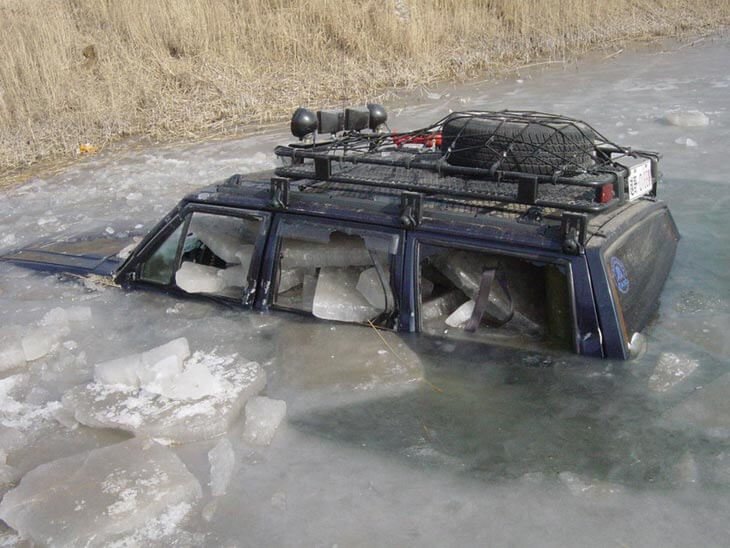
Four ways to identify a sunken car

In the new city – 2 kilometers of new cycle paths, pedestrian paths are being renovated