Personalizing a motorcycle isn’t just about aesthetics; it’s a way to express your individuality. Whether you want to add personal touches or protect the original paint, a motorcycle cover is a practical and stylish choice. However, before actually installing the cover, a mock installation is crucial to better preview the final result. This guide will walk you through the steps of successfully simulating a motorcycle cover installation and provide some practical tips to help you achieve the perfect effect.
1. Why choose motorcycle cover?
Motorcycle wrapping is a technique that consists of applying a special adhesive film to the bodywork of the motorbike. Unlike permanent paint, the wrap is reversible, meaning you can remove the film without damaging the original paint. Here are some of the main benefits of coverage:
- Protection : The film protects the original paintwork from scratches, UV rays and daily wear.
- Customization : You can choose from a wide range of colours, models and finishes to make your motorbike unique.
- Reduced cost : Wrapping generally costs less than a complete painting and offers more flexibility.
2. What is a motorcycle cover simulation?
Wrap simulation is a process that allows you to visualize your chosen design on a virtual representation of your motorcycle. Using specialized software or applications, you can test different colors, patterns and textures before investing in decal film. This process helps you avoid costly mistakes and ensures that the end result is exactly what you expected.
Find out more in this article : How to customize your motorcycle helmet
3. Steps to create a motorcycle cover simulation
A) Prepare your project
Before jumping into the simulation, it is important to define your goals. Ask yourself the right questions:
- What is the purpose of the coverage? (aesthetics, protection or both)
- What style are you looking for? (minimalist, bold, sporty)
- What is your favorite color palette?
B) Choose the right simulation tool
There are several tools to simulate a motorcycle cover. Here are some popular options:
- Professional software : Adobe Photoshop or CorelDRAW are great for complex projects, but require some experience.
- Free online apps : Tools like WrapStyle or 3D Tuning offer an intuitive interface and allow you to quickly simulate projects.
- Simulators from adhesive film manufacturers : Brands like 3M or Avery Dennison offer dedicated tools to test their product ranges.
C) Upload an image of your bike
For a realistic simulation, it is crucial to work on an image of your exact model. If the tool offers 3D motorcycle models, make sure yours is included in their library.
D) Experiment with drawings
Add your ideas:
- Try different finishes: matte, glossy, carbon, chrome, etc.
- Experiment with patterns: lines, camouflage or custom graphics.
- Play with colors to create contrast or visual harmony.
And) View the result from every angle
A good simulation must offer a 360° vision. Check every detail, especially curved or hard-to-cover areas like the fuel tank and fenders.
F) Save and compare your projects
Once you have finished your simulations, save them for comparison. This will help you narrow down your choice and opt for the most suitable design.
4. Common mistakes to avoid
- Ignore technical constraints : Some patterns or textures may be difficult to apply to complex surfaces.
- Disregarding the quality of the film : Investing in poor quality film can lead to disappointing results or rapid deterioration.
- Underestimate costs : Highly detailed designs or premium materials increase the final price.
5. Call a professional for coating
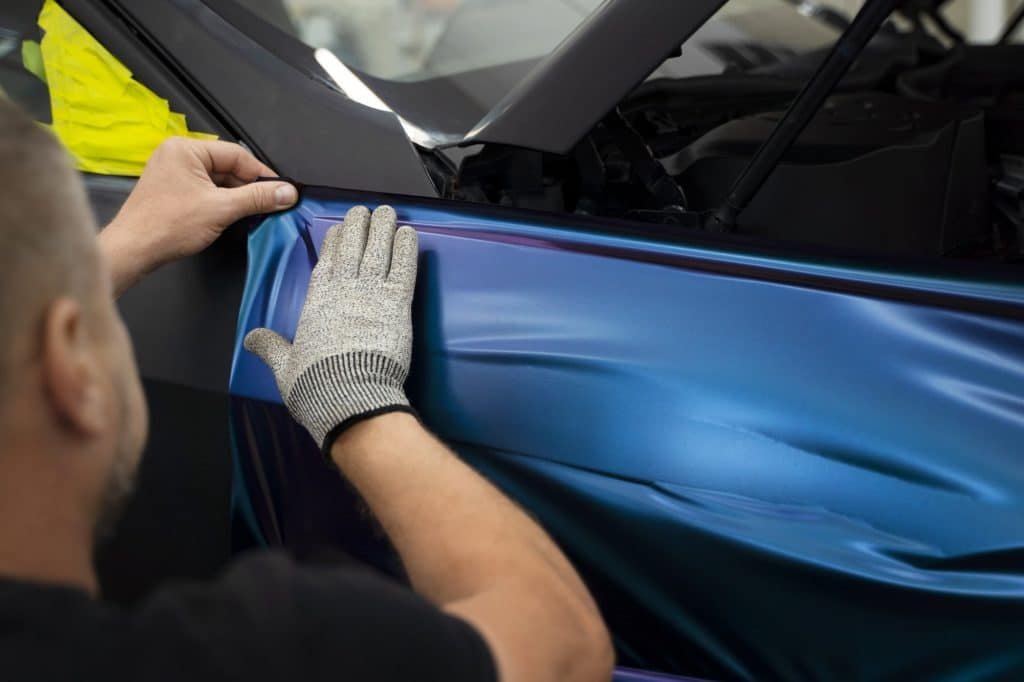
While simulation is a critical step, applying the film is equally important. Calling a professional ensures an installation without bubbles or creases. An expert will also be able to advise you on the materials and finishes best suited to your motorbike.
6. Average cost and duration of a motorcycle cover
The price of coverage varies based on several factors:
- Materials : Standard films cost between 20 and 30 euros per square meter, while premium finishes such as carbon or chrome can exceed 50 euros per square meter.
- Workforce : The professional application generally costs between 300 and 600 euros.
- All my life : A well applied and maintained coating can last 3 to 5 years.
Find out more in this article : Everything you need to know about the new ECE 22.06 regulation for motorcycle helmets
7. Online simulation: advantages and limitations
Advantages:
- Low Costs: Most online tools are free or affordable.
- Save time: You can test multiple projects in just a few clicks.
- No technical skills are required: these tools are accessible even to beginners.
Limits:
- Realism: Digital renderings may differ slightly from the final result.
- Compatibility: Not all motorcycle models are always available in simulators.
8. Tips for successful hedging
- Prepare the surface : Before applying the film, clean the motorcycle thoroughly to avoid bubbles or wrinkles.
- Keep the film : Wash your motorcycle regularly with non-abrasive products to prolong the life of the upholstery.
- Think about legality : Some models or colors may be subject to regulations, especially for motorcycles used on public roads.
A motorcycle cover, a tailor-made transformation
Motorcycle cover simulation is an essential step to succeed in your customization project. It allows you to explore an infinite number of possibilities and ensure a result that meets your expectations. Whether you opt for a subtle or bold design, take the time to test your ideas and, if necessary, hire a professional for the application. With the right tools and a little creativity, your motorcycle will become a true moving work of art.
latest posts published
Citroën ë-Jumpy won the prestigious Millésime Trophy
The purpose and function of the stabilizer

Maintenance of vehicles (transporting dangerous goods)
The Lithuanian jubilee elections for “Car of the Year” have begun
Volkswagen presented the updated T-Roc

An intelligent wildlife warning system for motorists

Features of electric car charging with a simple click
Four ways to identify a sunken car
In the new city – 2 kilometers of new cycle paths, pedestrian paths are being renovated