Aiming to become segment leader
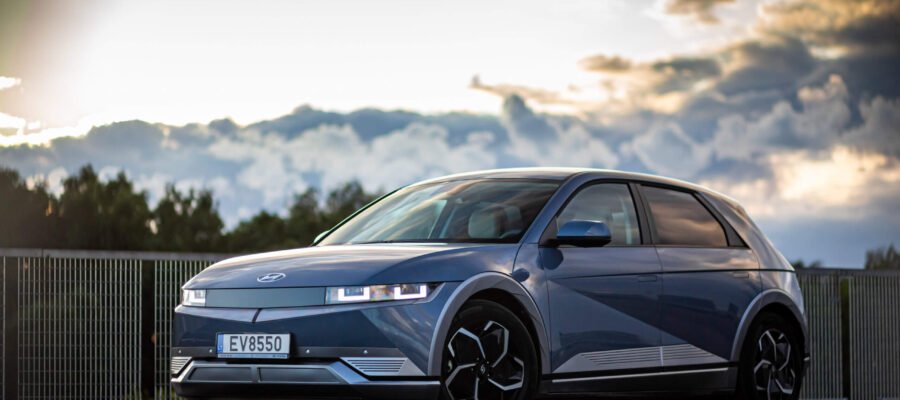
Maintaining the shape of a sedan but growing to the size of an SUV, this model competes with electric cars such as the Volkswagen ID4 or the Tesla Model 3. The new “IONIQ 5” is offered with a 73 kWh battery and two engines of different power: you can choose 217 or 305 HP versions. The weakest version is rear-wheel drive, the most powerful is four-wheel. The 305 horsepower version can accelerate to 100 km/h in 5.2 seconds and the “HTRAC” intelligent all-wheel drive system allows you to get where the road ends.
The IONIQ 5 also has one of the best charging and battery life features on the market. The 800-volt technology allows you to charge electricity for a trip of up to 111 kilometers in 5 minutes at super-fast charging stations (220-350 kW), and it will take about 18 minutes to charge the battery from 10 to 80%. When charging in 50 kW power plants, the electricity reserve for 28 kilometers can be filled in 5 minutes and from 10 to 80% in just an hour. The IONIQ 5 can travel 481 kilometers on a single charge in mixed mode and also up to 686 kilometers in city driving alone. The Tesla Model 3 has a range of just under 500km on a single charge, while the longest-range Volkswagen ID4 version has a range of up to 520km. True, the latter model does not have the ability to charge very quickly.
The modern Hyundai electric car also has another feature not found in other models: the ability to charge other electric devices or even electric cars using “Vehicle-to-load” technology. This system can provide up to 3.6 kW of power and can charge everything from cameras to electric scooters to camping equipment using a standard wall outlet. One socket is installed in the passenger compartment of the car, the other can be connected to an external charging socket via a converter.
Ecological solutions and a large space inside
The new electric car from the Korean manufacturer is built on the E-GMP platform developed specifically for electric vehicles. This special platform allows you to charge faster, increase driving distance, enjoy more interior space and better handling. The position of the battery in the wheelbase ensures ideal weight distribution between front and rear and a low center of gravity for better handling.
There will be enough space for those sitting both front and back, regardless of height, and the reclining seats will also allow you to comfortably stretch out to rest. Perfectly suited for family trips, the electric car also has a large boot: the 527-litre space can be expanded to almost 1,600 liters by folding the rear seats. Small items can also be stored in the additional 57-litre boot under the front bonnet.
The IONIQ 5 makes extensive use of environmentally friendly materials such as eco-treated leather and recycled yarns. For example, raw materials extracted from sugar cane are used for ceiling coverings, carpets and seat covers. The innovative use of natural materials is another contribution to sustainability in automotive manufacturing processes, representing another step towards making cars as dependent on petroleum products as possible. Each model uses 730g of sugarcane and corn blend, 294g of wool, 200g of linseed oil and up to 32 recycled PET bottles.
Stand out from the crowd
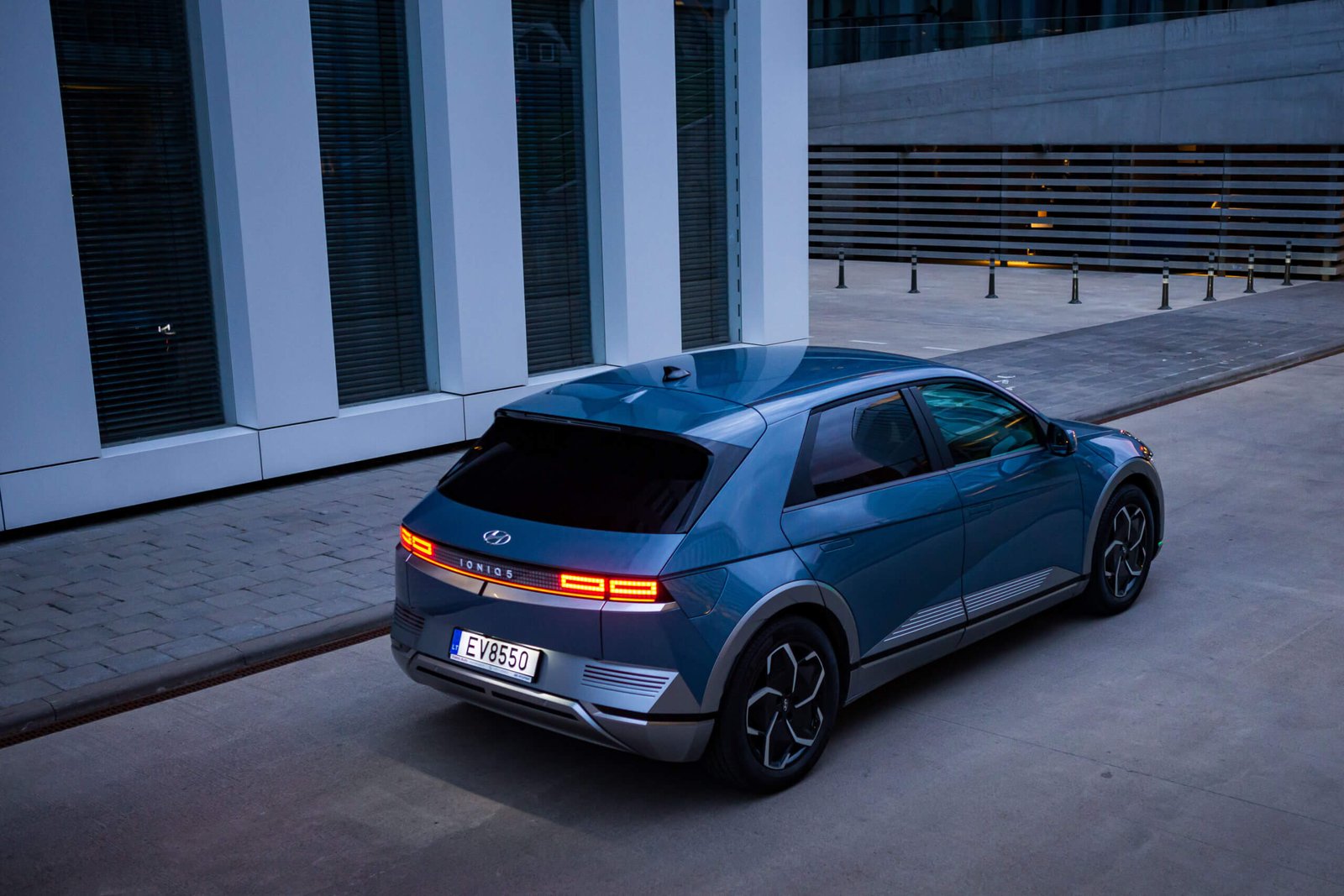
Perhaps the most obvious innovation of this car is the exterior design. Hyundai designers together with engineers were not afraid of non-standard solutions and presented the world with a model with never-before-seen lines, the design of which was inspired by the Concept 45 EV conceptual model presented previously. The symmetrical lines and minimalist body design are complemented by hundreds of individual LED pixels that create futuristic-style front and rear lights.
True, such a project was not created by chance, and many solutions here help to achieve greater efficiency. An active air damper integrated into the front bumper improves energy efficiency when closed, and the damper opens when more cooling is needed. The recessed door handles serve both the design of the car and improved aerodynamics.
You can also order a solar roof, which stores energy and transfers it to the battery. This prevents the 12V battery from discharging, and charging the high-voltage battery extends the driving distance. Battery charging and solar energy flow on the roof can be monitored in real time on the integrated display in the cabin.
The price of the IONIQ 5 starts at 49,990 euros, while state support for the new electric car reaches up to 5,000 euros. This model can be tested at the “Fakto Auto” showroom in Vilnius, Laisvės pr. 3A.
latest posts published
Citroën ë-Jumpy won the prestigious Millésime Trophy

The purpose and function of the stabilizer

Maintenance of vehicles (transporting dangerous goods)
The Lithuanian jubilee elections for “Car of the Year” have begun
Volkswagen presented the updated T-Roc

An intelligent wildlife warning system for motorists
Features of electric car charging with a simple click

Four ways to identify a sunken car

In the new city – 2 kilometers of new cycle paths, pedestrian paths are being renovated