
“The most polluting cars are the old ones, diesel or petrol with large liters,” said D. Jurgutis.
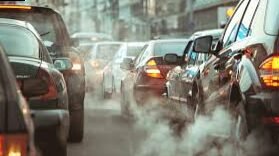
Matas Buzelis, head of development of automotive advertising Autoplius.lt, doubts that payments can have a significant impact on the automotive market.
“If we consider that the payment could reach around 500 euros, it would affect around 60,000 beneficiaries, around 5% of the Lithuanian car park. The question the Ministry of Defense is aiming at is whether to reduce the amount of polluting cars by at least a small percentage, or whether it is looking for ways to inefficiently use those 30 million euros,” said M. Buzelis.
He believes this figure could make a much bigger difference and suggests that more polluting cars should be taxed better.
ELTA recalls that the EU aims to reduce the amount of greenhouse gas emissions by at least 40% by 2030 compared to the 1990 level. Cars are among the largest sources of pollution.
Member countries will need to develop plans to achieve this goal. Lithuania is also preparing one. It is true that last July, when the Ministry of Defense presented the first draft of the National Air Pollution Reduction Plan, which was not coordinated with other institutions, there was indignation among both public opinion and politicians. Prime Minister Saulius Skvernelis called the project “complete air”. He said that “as it stands now, the plan will definitely not get to the government” and is not coordinated with it. Environment Minister Kęstutis Navickas himself said he agreed with the criticism expressed by S. Skvernelis. According to K. Navickos the plan should have been better coordinated.
The initial plan of measures included several impact measures
including the preparation of a pollution tax for cars, encouraging citizens to purchase less polluting vehicles, as well as proposals to limit the circulation of diesel cars in large municipal cities and to apply a higher excise duty on diesel fuel, which is currently one of the lowest in EU countries.
On March 1 this year, the Ministry of Defense submitted an updated draft of the Pollution Reduction Plan to the Government for consideration. It replaced some of the previous version’s bans with incentives.
In the updated project, according to the Ministry of Defense, much attention was paid to financial promotion measures, much of which are focused on residents. One of these is to create an incentive mechanism so that individuals who return an old car pay for public transport services or buy a less polluting car.
According to the Ministry of the Interior, transport plays a particularly important role in reducing air pollution and improving its quality, which is why financial incentives are provided for municipalities that purchase public transport vehicles powered by electricity, natural gas or hydrogen. A separate promotion is planned for the implementation of sustainable mobility measures for municipalities that attract the greatest number of vehicles and have implemented traffic limitation systems for diesel vehicles.
It was decided to first test the effectiveness of some of the measures proposed in previous drafts of the plan with pilot projects, for example, testing the mobile system for remote monitoring of vehicle emissions, the possibility of monitoring vehicles that emit a lot of smoke on the roads. Evaluating the effectiveness of such measures would determine whether to implement them on a large scale.
The national air pollution reduction plan must be approved and presented to the European Commission by April 1st. It will need to be reviewed at least every four years and may be adjusted or supplemented, including additional measures to reduce air pollution as necessary.
latest posts published
Citroën ë-Jumpy won the prestigious Millésime Trophy
The purpose and function of the stabilizer

Maintenance of vehicles (transporting dangerous goods)
The Lithuanian jubilee elections for “Car of the Year” have begun
Volkswagen presented the updated T-Roc
An intelligent wildlife warning system for motorists
Features of electric car charging with a simple click
Four ways to identify a sunken car
In the new city – 2 kilometers of new cycle paths, pedestrian paths are being renovated