New automotive technologies: when to take a break from driving?
“Driving an old car is certainly fun, but long journeys quickly become a burden without the new technologies we’ve become accustomed to. Driving a new car on a straight, speed-limited road is also becoming tedious: various systems can reduce your driving burden, provide relative safety, and give you greater freedom,” said Vitoldas Milius, editor-in-chief of Auto Bild Lietuva, when discussing adapting to and reusing new technologies.
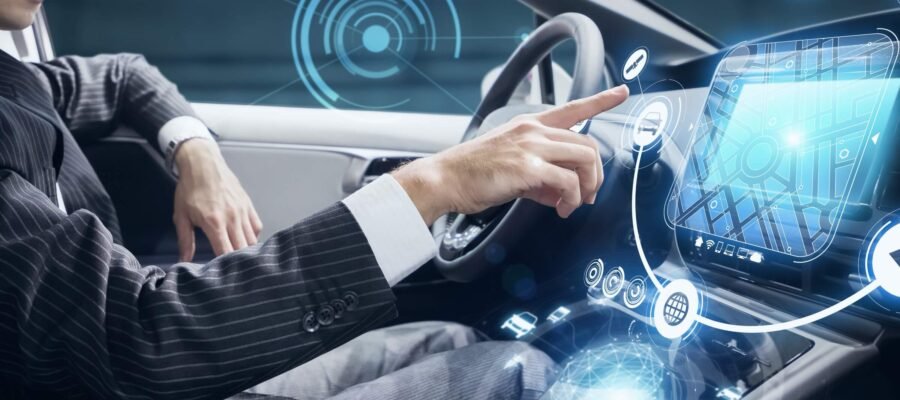
Various technologies make driving easier. Adaptive cruise control is particularly important in new models, as it can automatically brake and maintain a safe distance from the vehicle in front. Many cars can automatically stay within their lane and automatically recognize speed limit signs on traffic signs.
Models from the “premium” segment once offered maximum autonomy: Audi, BMW, Mercedes-Benz, although they are also sometimes chased by mid-range pioneers, for example Kia, which installed level 3 autonomous driving functionality in its electric flagship EV9.
“Technology advances very quickly, so it should not be said that more expensive cars do anything better than cheaper ones. Sometimes an older system from a premium manufacturer can perform worse than a newer technology from an average manufacturer, and vice versa,” comments V. Milius.
What can new driverless cars do?
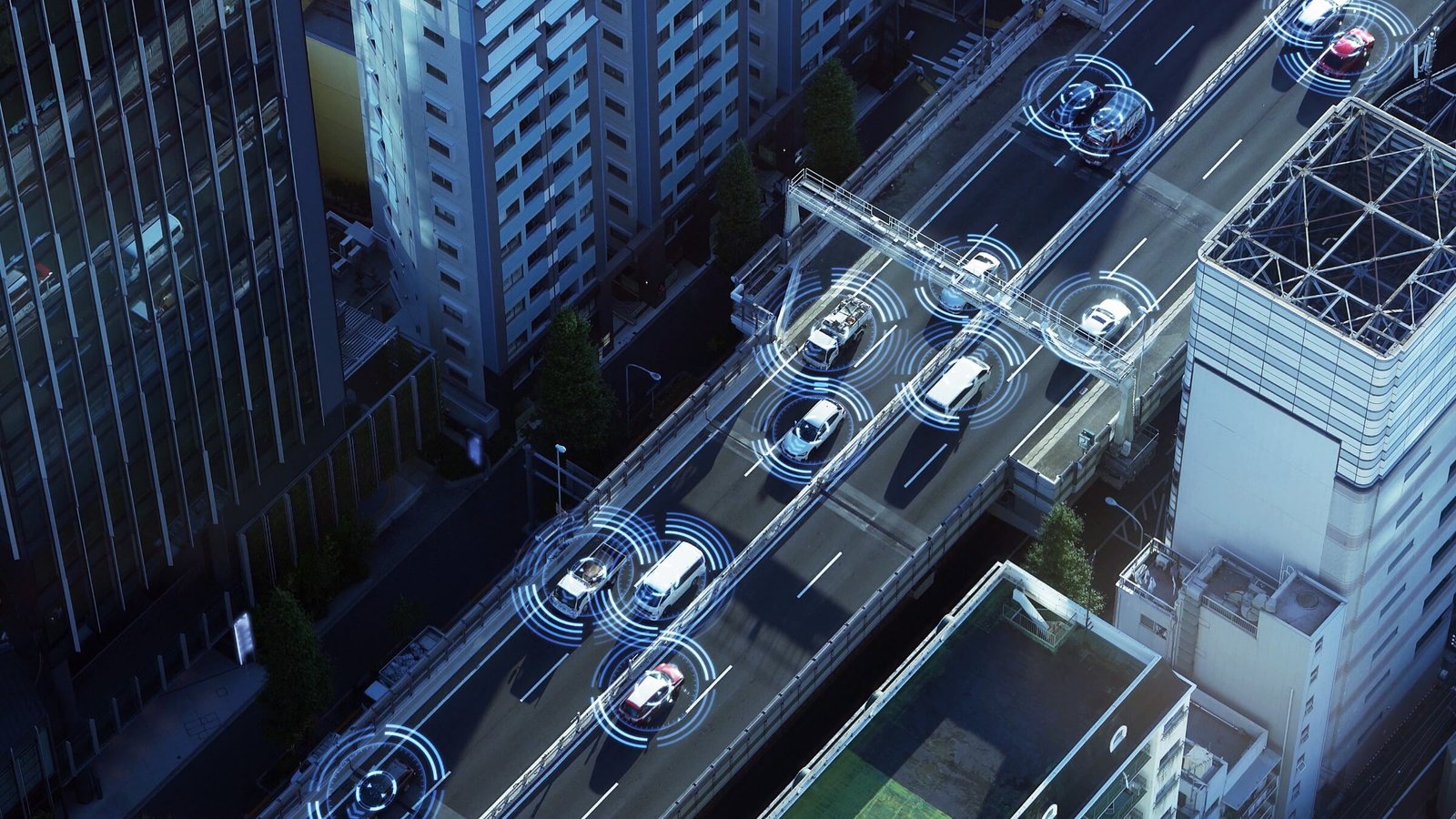
Although modern cars equipped with radar, lidar, cameras and powerful computers could already drive themselves if the road infrastructure is in order, this is still prohibited in the European Union, the driver is still responsible for driving. But still, what are new cars capable of?
There can be so many more luxurious models or mid-range flagships. Here, the Kia EV9, equipped with a third-level autonomous driving system, can move smoothly and safely in the center of its lane without driver intervention, maintaining the set speed or a safe distance from the car in front.
The second-generation Highway Driving Assist system also allows you to change lanes automatically when it is safe to do so. Even if the car turns itself, in theory you should keep your hands on the wheel, but it allows you to perform another action without warning in a dozen seconds: turning a bottle of water, unpacking a snack.
Such systems can be very useful in urban traffic jams: the car locks onto the vehicle in front, maintains speed when it slows down – does the same when it accelerates – always maintaining a safe distance. The car follows the lines and rolls into the center of the lane.
You have to keep your hands on the steering wheel, but the technology makes driving in heavy traffic easier, so it doesn’t require as much effort and you can communicate with passengers effortlessly. Buyers aren’t likely to buy big, roomy, travel-friendly cars like the Kia EV9 to drive themselves.
Will we have fully autonomous cars?
The Premium segment can offer even more. Here are more expensive Mercedes-Benz or Audi models with high-level, usually optional, auxiliary steering systems that can select a safe speed when approaching regular curves, roundabouts, or intersections. They use maps for this. However, the most advanced technologies are expected from the most expensive cars.
So, how can mid-range cars compete? Progress stems from competition. Coupled with rising transportation costs due to electrification, consumers are willing to pay higher prices for cars and naturally expect higher quality.
The Kia EV9, mentioned earlier, is one of the largest and most spacious seven-seat light electric vehicles on the European market. Equipped with a 99.8 kWh battery, it can travel 541 kilometers on a single charge, and its price exceeds €80,000, approaching the level of high-end models.
Of course, the most expensive models from manufacturers are inevitably the most luxurious. Therefore, technologically advanced South Korean manufacturers are committed to significantly simplifying the driving experience to justify the high price of electric vehicles.
Will we one day reach a point where cars no longer need to be driven, and we can comfortably sit in the passenger seat, enjoying movies, reading books, or simply relaxing? In some countries, testing of autonomous vehicles has been underway for some time, with some successes and others less than satisfactory results.
“I test-drove a self-driving car in Japan 15 years ago. The infrastructure there was very well-developed. But when it comes to public roads, I doubt most of us could manage. It’s not just about developing self-driving cars; it’s about transforming the infrastructure,” V. Milius commented.
latest posts published
Citroën ë-Jumpy won the prestigious Millésime Trophy

The purpose and function of the stabilizer

Maintenance of vehicles (transporting dangerous goods)
The Lithuanian jubilee elections for “Car of the Year” have begun
Volkswagen presented the updated T-Roc

An intelligent wildlife warning system for motorists
Features of electric car charging with a simple click
Four ways to identify a sunken car
In the new city – 2 kilometers of new cycle paths, pedestrian paths are being renovated