
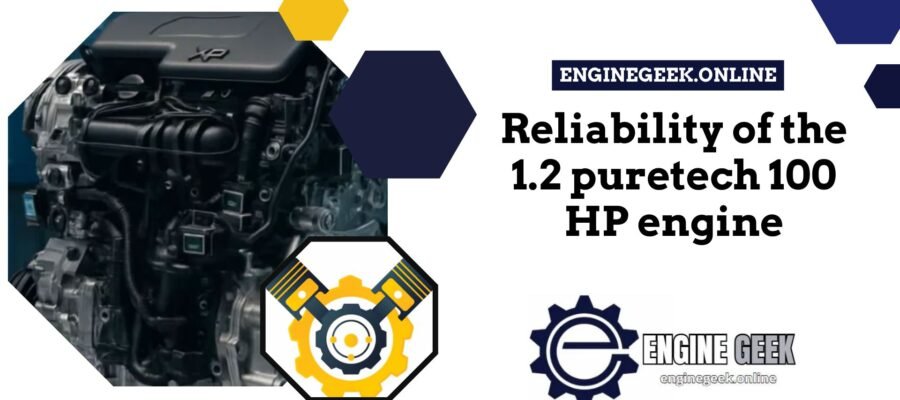
Symbol of downsizing and innovation at Stellantis, the 100 horsepower 1.2 PureTech engine embodies a mechanical paradox. This three-cylinder turbo, widely adopted by the Peugeot, Citroën, DS Automobiles and Opel brands, has established itself since its launch as a benchmark in terms of energy efficiency and pleasant performance. However, its history is marked by controversies linked to recurring technical accidents, in particular the premature wear of the submerged timing belt and excessive oil consumption, which arouse a certain distrust among motorists. In 2025, at a time when the latest technical developments and recalls are being integrated, it becomes crucial to dispel the vagueness about the real reliability of this engine.
The detailed technical approach reveals significant fixes made by Stellantis, aimed at strengthening the engine’s durability, especially on post-2019 versions. However, the longevity of the engine largely depends on scrupulous compliance with maintenance, the reduced frequency of which plays an essential role. In addition to the classic advice on draining at short intervals, to prevent failures it is necessary to pay particular attention to the timing belt, whose replacement is now recommended starting from 60,000 km, well below the threshold initially announced.
The issue is not limited to mechanics. Faced with the risk of engine failure, the costs of which can be prohibitive without an extended warranty, owners must also consider their insurance coverage. In this sense, choosing an all-risk formula, possibly accompanied by a guarantee against mechanical failures, makes travel safer and limits the economic consequences in the event of accidents linked to 1.2 PureTech.
1.2 PureTech 100 HP engine: design and technical features in detail
Presented by the PSA group, now Stellantis, the 1.2 PureTech engine is a 1,199 cm³ three-cylinder with aluminum architecture, turbocharged on versions with 100 horsepower and above. The initial objective was to combine power and sobriety in a small format while respecting rigorous environmental standards. Several innovations are based on this block:
- High pressure direct injection (200 bar) for optimized combustion and notable fuel savings.
- Low inertia turbochargerimproving responsiveness and acceleration response time.
- Variable distribution on the suction side to regulate the filling of the cylinders based on the engine rpm.
- Submerged timing belt in oil, believed to offer better longevity but the source of much debate in terms of reliability.
- Aluminum block coupled with cast iron linerscombining lightness and mechanical strength.
The reduction of internal friction and thermal optimization allow consumption to be reduced by 18% compared to the old naturally aspirated 1.6 VTi, with emissions of 104 g/km of CO2. These performances position this engine among the most innovative at the time of launch. However, these technical advances have encountered reliability limitations depending on the versions and years of production.
Summary table of the technical characteristics of the 1.2 PureTech 100 HP engine
| Characteristic | Description |
|---|---|
| Displacement | 1,199 cm³ |
| Architecture | 3 cylinders in line, aluminum block |
| Energy | 100 horsepower (common variant) |
| Injection | Direct high pressure (200 bar) |
| Turbocharger | Low inertia, multi-stage |
| Distribution | Submerged belt to be replaced approximately 60,000 km |
| Oil consumption reported | Variable depending on the version, up to 1 L/1000 km on older models |
Recurring problems affecting the reliability of the 1.2 PureTech 100 HP
Despite its intrinsic qualities, the 1.2 PureTech revealed several flaws that have seriously compromised its reputation:
- Premature wear and breakage of the submerged timing beltpotentially causing serious engine failure.
- Excessive oil consumption attributed to piston ring defects or engine fouling, especially on the first generations (until 2016).
- Clogging of valves and pistons related to direct injection, causing performance degradation over time.
- Electronic problems or engine management, causing power losses and overheating.
These problems mainly manifest themselves on models produced before 2019, a period during which Stellantis launched several recall campaigns and technical corrections. Rigorous maintenance and increased vigilance on key points are required to limit risks.
List of symptoms to pay attention to to avoid failures
- Abnormal noises when cold during starting.
- Engine light or oil pressure warnings appear.
- Sudden increase in oil consumption.
- Noticeable loss of power during acceleration.
- Unusual engine overheating under normal conditions.
Table of production periods and associated risks
| Production period | Big problem | Recommended measurements |
|---|---|---|
| 2014-2016 | Excessive oil consumption, fragile belt | Reinforced maintenance, 60,000 km belt change |
| 2017-2019 | Improvements underway, risks moderate | Maintain rigorous maintenance and monitoring of the belt |
| 2020 and beyond | Effective fixes, better reliability | Compliance with standard maintenance intervals |
Optimal maintenance and advice to prolong the life of your 1.2 PureTech 100 HP
The experience of professionals highlights specific maintenance practices to maximize the robustness of this often abused engine. This protocol recommends:
- Regular oil changes with high quality synthetic oil (PSA B71 2290 standard)ideally every 10,000-15,000 km depending on use.
- Checking the oil level every 1500-2000 km to anticipate any unusual variations.
- Preventive replacement of the timing belt at 60,000 – 80,000 km, well beyond the original recommendations.
- Regular inspection and cleaning of the refrigeration circuit and valves to limit blockages.
- Maintenance of spark plugs and filters at reduced intervals (every 40,000 km for spark plugs).
These actions, strictly applied to Peugeot, Citroën, DS Automobiles and Opel models, help avoid premature breakdowns. Lax maintenance or limited monitoring by manufacturers proves insufficient.
Recommended maintenance table for the 1.2 PureTech 100 HP engine
| Maintenance | Recommended frequency |
|---|---|
| Change engine oil + filter | 10,000 – 15,000 km |
| Checking the oil level | Every 1500-2000 km |
| Timing belt replacement | 60,000 – 80,000 kilometers |
| Candles | 40,000 km |
| Air filter | Annual inspection or 20,000 km |
| Engine descaling | Every 60,000 km (estimate) |
1.2 PureTech engine in 2025: what alternatives and what future?
With the progressive disappearance of conventional combustion engines in the automotive sector, the place of the 1.2 PureTech in catalogs such as those of Peugeot and Citroën tends to decrease. A direct competitor of compact petrol engines from Toyota, Ford or Volkswagen, it now has to deal with the increase in power of hybrids and electrics. However, for drivers connected to this gasoline engine, several options are possible:
- Prefer recent post-2020 modelsincluding the latest technical fixes.
- Consider performance packages and extended warranties – such as the Prodrive Performance Pack – which better covers mechanical risks.
- Consult specialized resources regularly to anticipate updates and reminders, like on Garage Premium.
- Compare with petrol or hybrid alternatives from Renault, Nissan or Mazdawhose reliability is constantly improving – see also our analysis.
- Plan trips and interviews conscientiouslyrelying on navigation tools such as Michelin Route to avoid mechanical stress during the journey.
Brief comparison table – 1.2 PureTech engine vs petrol alternatives 2025
| Criteria | 1.2 PureTech 100 hp | Toyota 1.0 Turbo | Ford 1.0 EcoBoost | Volkswagen 1.0 TSI |
|---|---|---|---|---|
| General reliability | Average, improving after 2020 | Well | Well | Well |
| Consumption (l/100km) | 5.5 – 6.0 | 5.0 – 5.5 | 5.2 – 5.7 | 5.1 – 5.6 |
| Maintenance cost | Moderate to high (belt needs to be replaced regularly) | Moderate | Moderate | Moderate |
| Hybrid presence | Yes, mild hybrid versions | Yes | Yes | Yes |
| Average used price (2025) | Reduced (significant discount due to reputation) | Stable | Stable | Stable |
FAQ on reliability and maintenance of the 1.2 PureTech 100 HP engine in 2025
- Is the 1.2 PureTech 100 HP engine reliable today?
Versions after 2019 benefit from improved reliability thanks to technical fixes. Good maintenance remains essential. - What are the main known defects?
The most common are premature wear of the immersed timing belt, excessive oil consumption and clogging. - At what mileage should the timing belt be replaced?
Stellantis recommends preventive replacement around 60,000-80,000 km depending on use, well before the previous thresholds of 180,000 km. - Which models are most at risk?
Engines produced between 2013 and 2019, including the 110 and 130 horsepower PureTechs. Versions after 2020 fix these flaws. - Can a used vehicle with this engine be purchased without risk?
Yes, as long as you choose a recent model, have a complete maintenance history and prefer the correct versions. Also see our advice on buying used cars.
latest posts published
Citroën ë-Jumpy won the prestigious Millésime Trophy

The purpose and function of the stabilizer

Maintenance of vehicles (transporting dangerous goods)
The Lithuanian jubilee elections for “Car of the Year” have begun

Volkswagen presented the updated T-Roc

An intelligent wildlife warning system for motorists

Features of electric car charging with a simple click
Four ways to identify a sunken car

In the new city – 2 kilometers of new cycle paths, pedestrian paths are being renovated