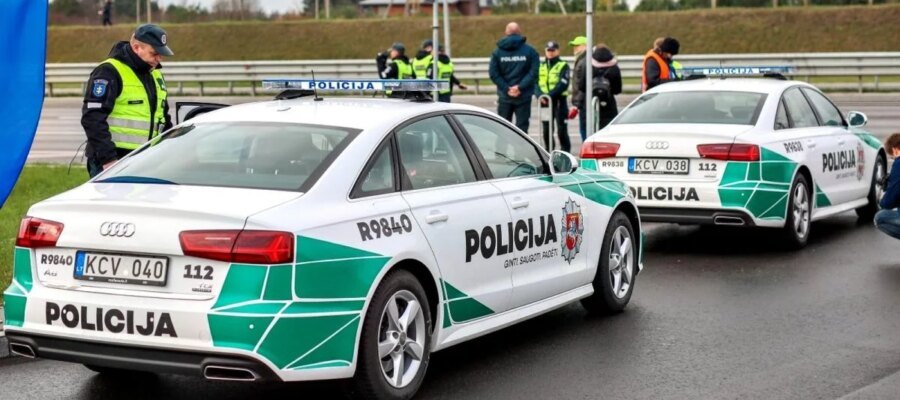
Anyone who drives any vehicle has had to deal with police officers at least once in their life. Sometimes that communication is pleasant, but it usually causes negative emotions. This is particularly evident when a driver who has committed a traffic offense is stopped. Many witnessed conflicts between drivers and police officers. Questions are often raised even when it appears officers are simply stopping a moving car. In this case, the question arises: how should the officer who stops the car behave and how can the driver behave. Requesting comment, we turned to the Lithuanian Traffic Police Service. Officials commented on the situation as follows.
Rights of police officers and duties of drivers
Police officers have special rights that give them relatively broad powers. If there is suspicion that an administrative violation of the law has been committed or a crime is being committed, officers have the right to check the people and vehicles involved. They can also control transportation into and out of the territory of companies, institutions, organizations, goods and objects in vehicles belonging to natural or legal persons and inspect the transportation, the person and his baggage at all types of checkpoints.
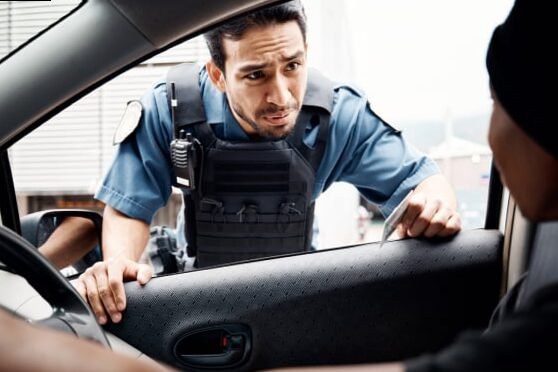
If a suspect or criminal hiding from law enforcement is being chased, officers can stop and attempt to enter vehicles at any time of day. If officers are not obeyed, vehicles may be entered by force. True, on such actions within 24 hours. it is necessary to inform the public prosecutor.
Both during raids and on a normal day, officers can check the driver of a vehicle if there is a suspicion that he is under the influence of alcohol, narcotics, psychotropic or toxic substances or under the influence of drugs. Such a person and anyone who is not entitled to drive or is unable to do so due to a medical condition may be prevented by the authorities from driving a vehicle.
Officials also have the right to prohibit the circulation of vehicles whose condition or construction does not comply with applicable rules and regulations.
So, as we can see, the law gives a lot of power to police officers.
Unfortunately, they sometimes tend to abuse that power. Can an ordinary citizen avoid being stopped or refuse to have his car checked? What can you ask the officer? What must an official submit when acting in accordance with the above rules?
A motorist cannot stop only if the officer who stopped him makes him suspicious: he is stopped late in the evening or at night on a country road, the police car is not visible, the officer’s distinctive signs are not visible, etc. True, in such a case, it is necessary to urgently notify the police that there was an arrest, because the officer who stopped in a specific place aroused suspicion.
Officers can inspect the car at any time, having previously indicated to the stopped driver the basis on which it will be carried out. Unfortunately, there is no stopping him from doing so. Instructions must always be followed, but usually cars are checked thoroughly only in suspicious places – near stations, at the border. In the city, control is only carried out through measures or when suspicions arise.
While carrying out official duties, a police officer must appear. The status of a police officer is demonstrated by the officer’s clothing (uniform), insignia, and certificate of service. If the person requests it, the police officer must provide the certificate of service. The official cannot refuse to show the certificate.
If a person questions the fine imposed or the officer’s behavior seems inappropriate to him, who can he turn to in this case?
A person can complain in two cases: when the official made the wrong decision and imposed the wrong fine, or when the official behaved rudely. In the first case it is necessary to file a complaint with the court, because only he can cancel the fine imposed. Where to apply is usually indicated on the fine receipt or the appeal procedure is explained by an official. You can complain about an officer’s inappropriate behavior to his management.
When asked, the official must say which service he represents. He doesn’t have to say the boss’s name, but when asked he usually says it.
latest posts published
Citroën ë-Jumpy won the prestigious Millésime Trophy

The purpose and function of the stabilizer

Maintenance of vehicles (transporting dangerous goods)
The Lithuanian jubilee elections for “Car of the Year” have begun
Volkswagen presented the updated T-Roc
An intelligent wildlife warning system for motorists
Features of electric car charging with a simple click
Four ways to identify a sunken car
In the new city – 2 kilometers of new cycle paths, pedestrian paths are being renovated