
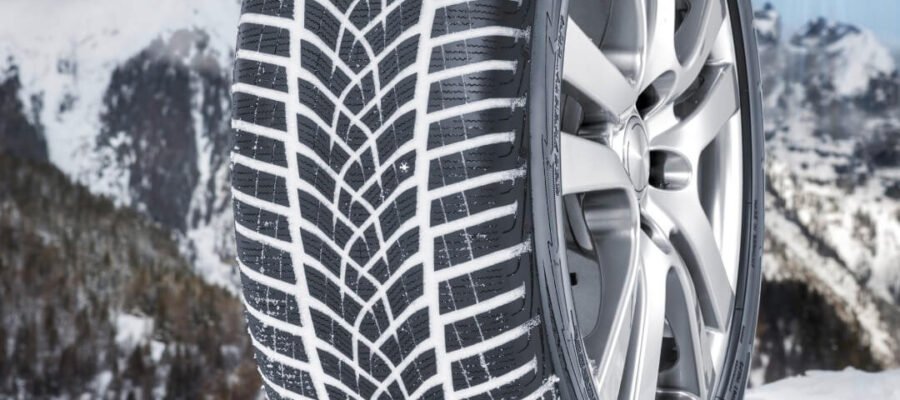
Did you buy winter tires just one or a few seasons ago and leave them in perfect condition for the summer? However, the expert recommends checking them carefully: if they have been stored improperly, for example on a sunny balcony, they may already be unsafe to use.
The most important rule is to store tires in a cool place where there are no large temperature changes. The rubber of winter tires is not suitable for them or for the heat: in such conditions it loses its essential oils and, at the same time, the usual adhesion force to the road surface. In addition, the position in which the tires were stored is also important: with rims they should be stored on top of each other, and without them – placed vertically. Otherwise, due to gravity or the rim edge, they can deform and cause annoying vibrations on the road.
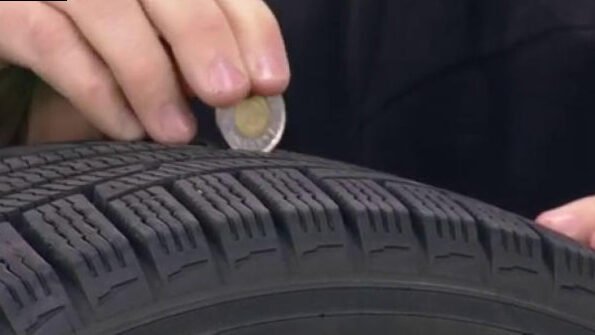
Mistake 2: Not replacing the entire set of tires
Tire manufacturers recommend retreading all four tires at the same time, regardless of whether you are replacing a summer or winter set. If you buy just a new pair, it is likely that the tread depth of the new and old tires will be different, it will be more difficult to balance them and ensure the same load, and it will also decrease the comfort of a smooth ride. If, however, you only buy two new tyres, make sure they are compatible with the ones you already own: they have the same size, speed index and other technical parameters.
According to the expert, there are still those who believe that new tires should be mounted on the front axle and old ones on the rear axle. It is believed that with a greater load, new ones will wear out faster and resemble old ones. Unfortunately, this puts safety at risk: the driver, feeling the grip of the new tires more, could underestimate the reduced maneuverability of the rear wheels, “covered” by the old tyres, on a slippery road or in a sharp curve.
Mistake 3: Underestimating the dangers of the Lithuanian winter
Even though our winters are no longer what they were ten years ago, they are still the most difficult when it comes to tire challenges, i.e. unpredictable and constantly changing conditions. Negative temperatures in the morning and evening, frosts or even rain during the day, and where there are still short but strong colds – all this means that for Lithuanians, for whom safety is the most important thing, it is still worth choosing Scandinavian-type tires, even if we have only a few days of Nordic winter.
These are mainly tires with a soft rubber compound. It is they who have the best grip on icy and snowy road surfaces, and also ensure adequate braking speed at temperatures below 10 degrees. Meanwhile, solid compound tires are suitable for driving only on well-swept, dry, snow-covered or wet, but not icy, roads. Those who spend most of their time traveling in the countryside or remote areas can choose studded tires, but it is worth knowing that their use is banned in some countries, for example in Poland, Germany or the Czech Republic.
Mistake 4: Only delve into the tire markings
For several years now all new tires in Europe have been sold with labels providing information on wet grip, rolling resistance and noise level. According to the interviewee, this marking is important and necessary, but it often misleads consumers: just seeing the letter A, many people think that they are choosing the best product and do not examine or consult consultants about the subtleties of other tires.
The expert gives an example: it is easier for manufacturers to reduce rolling resistance and fuel consumption by thinning the thickness of tire rubber, which also means shortening the tread depth. The latter is extremely important on slippery roads. Therefore, in some cases, it is better for motorists who will travel a lot with them to purchase tires marked with the letter B. Likewise with the declared decibels of the noise produced – some cheaper and lesser-known tire manufacturers achieve the required level by reducing the sound emitted into the environment by directing it into the interior of the passenger compartment.
Mistake 5: Wasting not only time, but also advice
The Bridgestone representative also notes that only a small number of domestic drivers looking for new winter tires take care of them in advance, and about more than half of them buy new sets already in the first half of November.
According to the interlocutor, such drivers, waiting in long queues, lose not only their time, but, most importantly, the opportunity to receive detailed professional advice. Quickly, sellers no longer have time to discover the exact expectations, driving skills and habits of the buyer. Therefore, the tire expert advises last-minute buyers to at least choose tire sales outlets authorized and approved by the manufacturer and globally recognized brands: this will reduce the risk of purchasing a product that is unsuitable for their trips and their car.
latest posts published

Citroën ë-Jumpy won the prestigious Millésime Trophy

The purpose and function of the stabilizer

Maintenance of vehicles (transporting dangerous goods)

The Lithuanian jubilee elections for “Car of the Year” have begun

Volkswagen presented the updated T-Roc
An intelligent wildlife warning system for motorists

Features of electric car charging with a simple click
Four ways to identify a sunken car
In the new city – 2 kilometers of new cycle paths, pedestrian paths are being renovated