
Amendments to Lithuanian road safety law, which came into effect in May 2018, stipulate that vehicles no longer suitable for road use (M1 category passenger cars and N1 category vehicles under 3.5 tons and with 9 seats or less) can only be deregistered upon presentation of a scrapping certificate. If the owner cannot provide a scrapping certificate and the vehicle has not been used since May 2004, a written declaration must be submitted.
Under current procedures, vehicles are automatically removed from the vehicle register if their road safety certificate (MOT/TÜV) or liability insurance expires for more than 180 days, or if taxes are unpaid.
A certificate of destruction will be required
“The obligation to deregister an unroadworthy vehicle only after presenting a certificate of destruction will have a positive impact on the entire system of collection and management of unroadworthy vehicles. It should also encourage illegal car dismantlers to come out of the shadows,” says Alfredas Skinulis, head of the Association of Manufacturers and Importers (GIA).
According to Vladimir Jankoit, head of the Association of End-of-Life Vehicle Managers (ENTPTA), due to the change in the car write-off procedure, such risks will be reduced even when automatically written-off cars are left unattended in yards or common areas or handed over to illegal buyers and scrappers.
“Record” statistics.
According to data from “Regitras”, last year 7.3 thousand were canceled after presenting a certificate of destruction. cars, and during this year (November data) – 5.8 thousand. cars. Upon presentation of the vehicle scrapping certificate, registration document and license plates, the cancellation is carried out at the “Regitras” branch, not automatically.
In 2016, 144.2 thousand were automatically cancelled. passenger cars, and this year alone – 136.6 thousand. of these vehicles.
According to “Regitra”, last year about half (70.1 thousand) of passenger cars were automatically deregistered after the expiration of the temporary registration period (when temporary license plates are issued for removal of the vehicle, as well as cases when, after selling the car and changing owner, the latter does not register the car in his name within 10 days).
Cars are automatically deregistered for other reasons as well: after receiving information from the police that the vehicle has been stolen, seized or otherwise illegally possessed, after the death of the driver (owner), or after receiving a notice from a foreign authority about the car’s registration, confiscation or termination of operation, etc.
Residents will feel more comfortable
“The new procedure will be beneficial for residents, as the administrative burden will decrease for them. After reinsuring or registering the car, you will no longer have to pay money to the registry office,” comments V. Jankoit.
For example, in 2016, a total of 100.4 thousand was paid to the “Registra” for the restoration of vehicle registration after the automatic cancellation of cars due to failure to fulfill obligations. euros, and this year – 90.3 thousand. euro.
From May next year, the vehicle’s public traffic permit will only be suspended if the car does not have a valid mandatory technical inspection, is not insured by mandatory civil liability insurance or if taxes determined by the state have not been paid. After eliminating the causes mentioned, the vehicle will be able to circulate in public traffic again.
According to the legislation, the implementation of which is supervised by the authorities under the Ministry of the Environment and the police, the car owner must take care of waste management from the old car. This can be done using the system of collection and management of various waste, including cars, developed by GIA with its partners.
Unused cars can be taken to car dismantlers free of charge or for a fee and information on this can be found at www.atliekos.lt
End-of-life vehicles must be dismantled safely and correctly, as many car parts, such as hydraulic or oil-lubricated shock absorbers, batteries, fuel and oil filters, used oil, are classified as hazardous waste. How many old cars are dismantled in Lithuania according to ENTPTA calculations, about 50-60 thousand are dismantled every year in Lithuania. tons of old cars, of which about 20% (10-12 thousand tons) is generated as worthless waste of plastic, rubber, glass, interior decorations and other car parts. To protect nature and human health it is necessary to recycle this waste.
latest posts published
Citroën ë-Jumpy won the prestigious Millésime Trophy

The purpose and function of the stabilizer

Maintenance of vehicles (transporting dangerous goods)
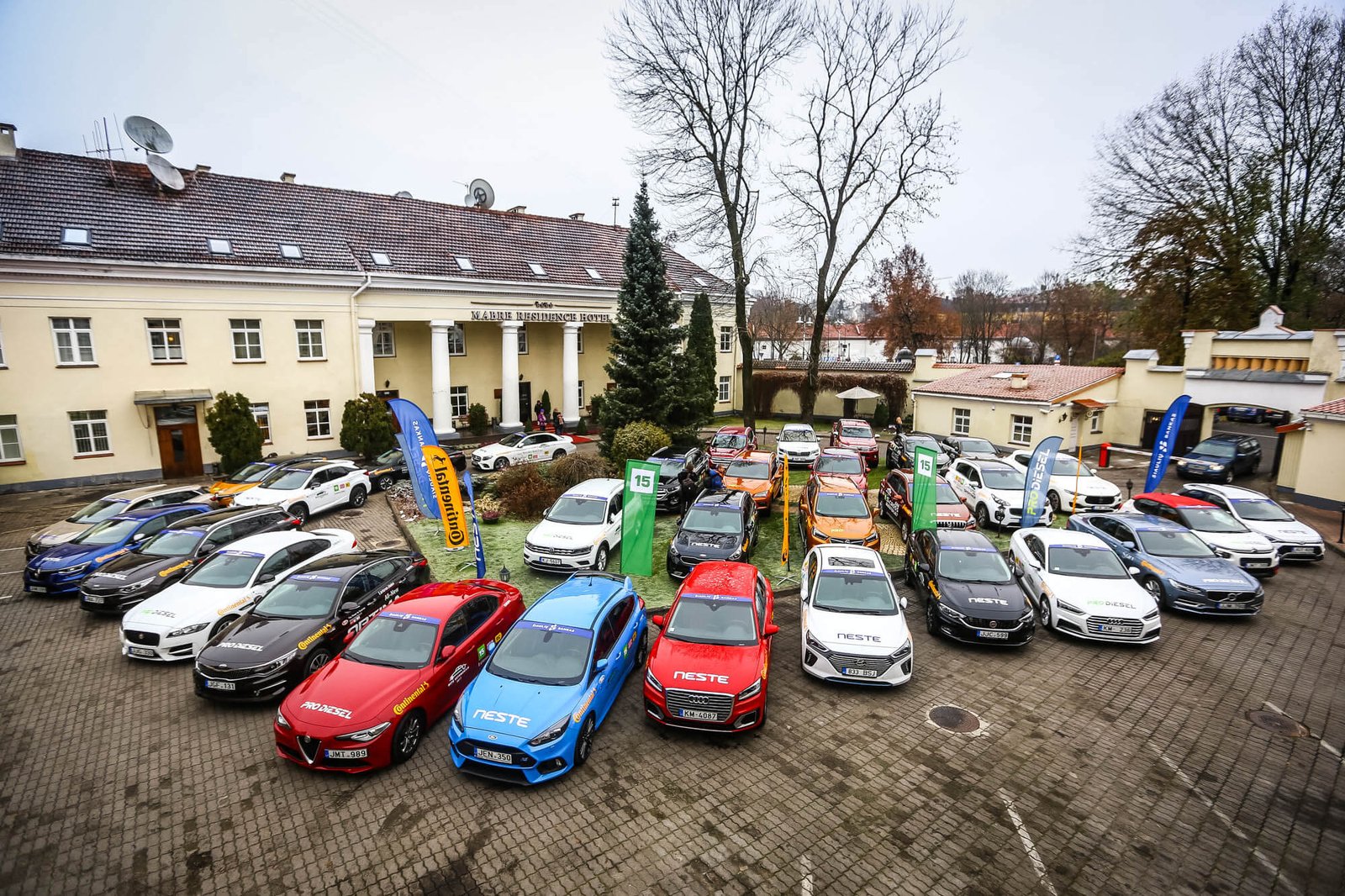
The Lithuanian jubilee elections for “Car of the Year” have begun
Volkswagen presented the updated T-Roc

An intelligent wildlife warning system for motorists
Features of electric car charging with a simple click
Four ways to identify a sunken car
In the new city – 2 kilometers of new cycle paths, pedestrian paths are being renovated