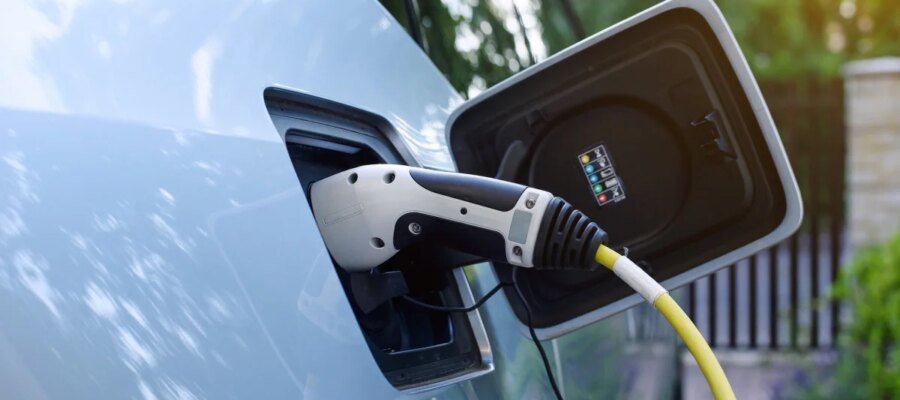
With more and more automakers entering the electric vehicle market, increasingly fierce competition is forcing us to seek technological solutions that can ensure better everyday usability and meet the diverse needs of drivers. In just a few years, manufacturers have made tremendous progress in the efficiency and range of electric vehicles on a single charge, and now another area is rapidly modernizing: fast charging.
New fast charging technologies
Observing the dynamics of the electric car market, it is easy to see how manufacturers are paying more and more attention to this segment. Motorists are already being offered electric models for small cities, compact SUVs, large luxury sedans and even electric sports cars. Therefore, form or purpose becomes less and less a factor limiting choice.
For some time, the practicality of electric cars has also been limited by the relatively short distance they can travel on a single charge. If ten years ago the first generation Nissan Leaf, considered one of the pioneers of electric cars suitable for mass consumption, offered motorists a range of just over 100 kilometres, today the practical and dynamic Kia EV6 family SUV, depending on the version, allows you to travel from 371 to 528 kilometers on a single charge.
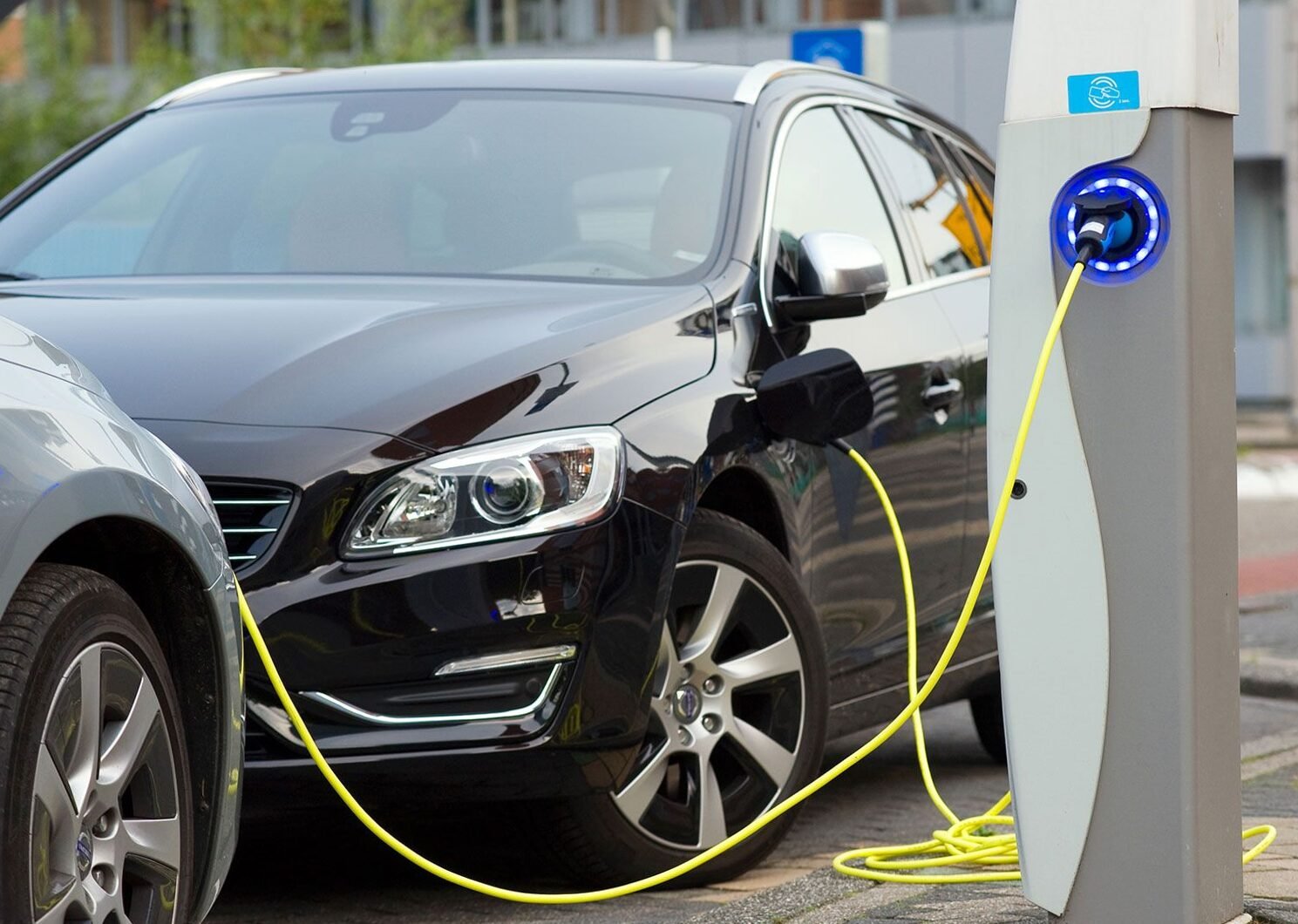
The vast majority of latest generation electric cars guarantee the ability to travel at least 250 kilometers on a single charge. After solving the travel distance issue, manufacturers turned their attention to another factor: charging speed.
“The number of electric cars that can accept high charging power is increasing. Previously the maximum charging power was 150 kW, but now there are several models that can accept much higher power. For example, the Porsche Taycan, which has a charging power of 270 kW, but it should be noted that it cannot constantly accept such power and after reaching a certain level, the received power decreases,” notes the commercial specialist of the electrification technology company ABB E-mobility Goda Montvidaitė.
One of the technical solutions that enables fast charging is the 800 V voltage system. Not only the aforementioned luxury Porsche Taycan, but also the mass-market Kia EV6 already has one.
“The main advantage of such a system is much faster charging, compared to the 400 V system used by many electric cars. Thanks to the 800 V system, more power can be transmitted without increasing the current, which is important for energy losses and the overall efficiency of the system. If an electric car could receive a constant power of 350 kW, it would take about 12 minutes to fully charge the battery,” explains G. Montvidaitė.
Looking at the practical advantages of the 800V system, everything can be illustrated with real numbers. For example, to continue the journey and cover another 100 kilometers, the driver of the Kia EV6 will spend only 5 minutes at a fast charging station, or similar to the time it takes to refuel an internal combustion engine, and from 10 to 80%. will replenish energy reserves in just 18 minutes.
At the charging station, as at the petrol station
It is clear that the possibilities of electric cars are improving very rapidly, both in terms of distance to cover and charging. However, the ability to take advantage of these technological advantages depends largely on the infrastructure.
“When creating and installing stations, they are expected to be relevant not only today, but also in the future. This means that when new electric cars are developed and their charging capacity increases, charging stations are already ready for this. It can be said that charging stations are a step forward, because there are some with a capacity of 350 kW, but today there are still no electric cars that can accept such charging power,” notes G. Montvidaitė.
Another aspect related to the fast charging of electric cars is the ability of existing and future electricity networks to provide, for example, the maximum charging capacity of 350 kW currently offered. This may require large investments and other factors may limit the possibilities.
For this reason, there may be reasonable doubts as to whether purchasing a technologically advanced, high-charging-capacity electric car will allow the use of these features where electrical absorption theoretically does not allow it.
“One of the solutions is energy storage. For example, if in a certain place it is not possible to increase the power up to 350 kW, an energy accumulator can be installed there. In this case the electric car can be charged to the maximum capacity and because of this the energy will not be used by the limited electricity grid, so consumers will not feel any inconvenience,” says G. Montvidaitė about the possible solution.
It can be said with certainty that such energy depots will resemble ordinary gas stations, where fuel is stored in special containers and transferred to cars via fuel dispensers. Therefore, advanced electric cars such as the Kia EV6, the Audi e-tron GT or the Porsche Taycan are rapidly approaching the moment when the use of electric cars will become even more similar to the currently dominant vehicle with an internal combustion engine.
Only if battery charging soon begins to take place in similar time slots to visiting a traditional petrol station will the difference in environmental impact between electric cars and those using fossil fuels remain enormous.
latest posts published
Citroën ë-Jumpy won the prestigious Millésime Trophy

The purpose and function of the stabilizer

Maintenance of vehicles (transporting dangerous goods)
The Lithuanian jubilee elections for “Car of the Year” have begun
Volkswagen presented the updated T-Roc

An intelligent wildlife warning system for motorists
Features of electric car charging with a simple click

Four ways to identify a sunken car

In the new city – 2 kilometers of new cycle paths, pedestrian paths are being renovated