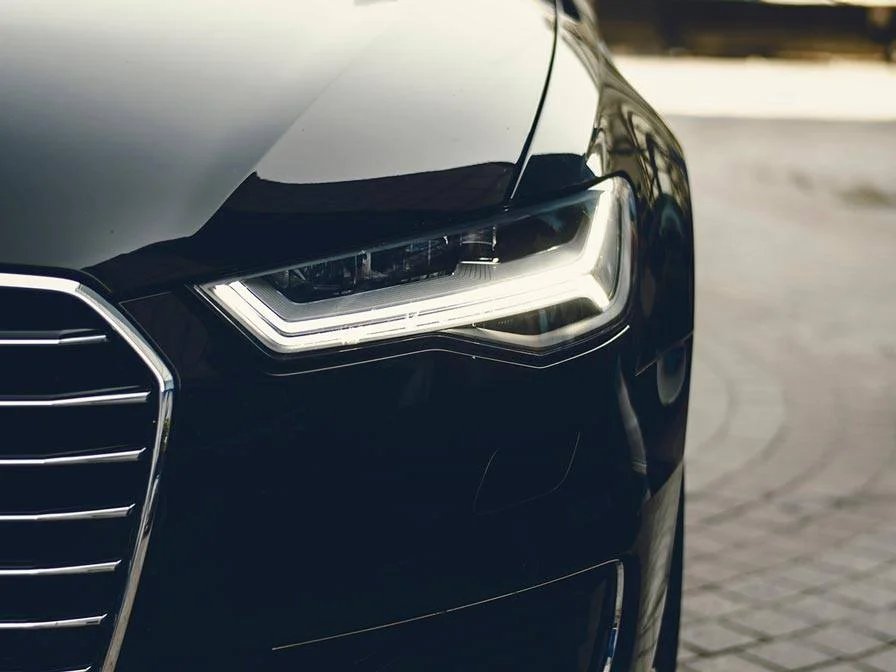
Dynamic design, exceptional performance, and numerous electronic innovations: Audi experts will unveil the Audi Sport quattro concept car at the 2014 Consumer Electronics Show (CES) in Las Vegas, USA, on January 6th. This concept car, seemingly from the future, is breathtaking.
This concept car is not only a new showcase for Audi, but also embodies the company’s vision for the future of automobiles and its latest technological achievements. The new model shares many similarities with the legendary Audi Sport quattro, which also debuted as a concept car in 1983.
The development team hopes that the new model will not only continue the success of its predecessor but also set new benchmarks in several technological fields.
The Sport quattro was already presented to Europeans at the Frankfurt Motor Show last autumn.
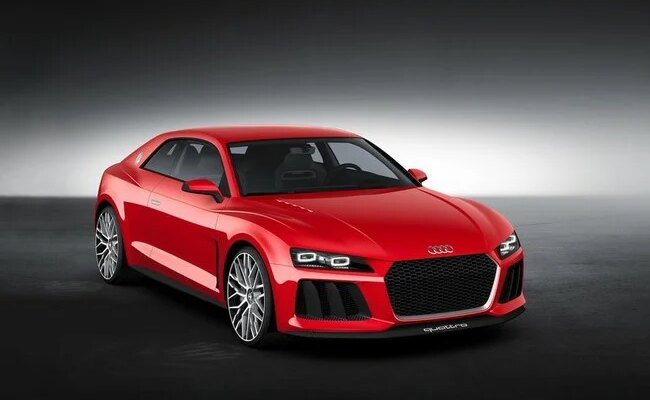
The new Audi concept is an eye-catching red sports coupé that reproduces the appearance of the legendary Sport quattro and complements it with modern design solutions, such as the huge R21 wheels and the huge wheel arches that accommodate them, as well as small protrusions behind the front and rear axles that underline the current sportiness. Body length – 4602 mm; width – 1964 mm, height – 1386 mm and wheelbase – 2784 mm. These body proportions clearly demonstrate that before us is a wide but low sports car of the future.
The main highlight of the front are the recognizable Quattro-style dual headlights with segmented matrix LEDs and laser light sources. The Matrix LED system emits low beam, while the laser emits high beam.
Laser light sources are very small: their diameter is only a few microns. However, the light element they consist of reliably forms a homogeneous light beam up to 500 m long, which is 3 times brighter and illuminates twice the distance compared to currently used LED high beams. This lighting technology is borrowed from the R18 e-tron quattro racing car that just made its debut.
The relationship with the legendary Sport quattro is betrayed by the angular and set-back rear pillars. The broad-shouldered body, sitting on huge wheels, simply radiates unbridled power and dynamism. The special combination of sharp edges and shiny surfaces gives the car a compact and athletic appearance.
The single-frame hexagonal radiator grille between the innovative lights accentuates the front of the car and at the same time gives an idea of how the next generation of Audi sports models will look from the front. The lower part of the grille is almost vertical, while the upper part takes the shape of the bonnet. The grille itself is slightly narrower than usual – this design decision emphasizes the width of the car.
The main highlights of the rear are the wide fenders and the recognizable tapered tailgate.
The rear bumper is interestingly complemented by a sporty diffuser with honeycomb grille and two massive oval tailpipes. The square rear lights are another highlight of the Sport quattro’s legendary design. The trunk, reinforced with the rigidity beams typical of racing cars, can hold up to 300 liters of cargo.
The exterior of the Audi Sport quattro laser light concept is full of interesting and clever little design details, like an automatic door handle that helpfully retracts when sensors detect the driver’s hand reaching to open.
All the most important information is displayed on the large TFT screen of the Audi Information Computer, which functions like a dashboard. This computer with the most advanced Tegra 30 processor was developed in collaboration between specialists Audi and Nvidia. You can choose one of the two main operating modes of your computer. In MMI mode, navigation maps and playlists are displayed, while in normal mode, the car’s speedometer and standard readouts are displayed.
Almost all functions of the Audi Sport quattro laserlight concept can be controlled via the additional MMI terminal in the center console. Its main means of control is a large rotary and push controller with touch surface. Additional function buttons are conveniently placed next to the controller.
Driven by a powerful tandem of petrol and electric engines, the Audi Sport quattro laserlight plug-in hybrid concept develops 515 kW (700 hp) and a total torque of 800 Nm. The car is equipped with an 8-speed tiptronic gearbox and quattro all-wheel drive with sports differential on the rear axle.
The manufacturers indicate that this concept model consumes on average 2.5 liters of petrol per 100 km of road and emits 59 g of CO2 per km of road.
The main engine is a 560 HP 4.0 TFSI V8 capable of developing an impressive 700 Nm torque with COD function that allows you to disconnect unnecessary cylinders at low engine loads and start-stop system. Further powertrain functions are performed by a 110 kW electric motor with a disc structure installed between the petrol engine and the gearbox, capable of developing up to 400 Nm of torque, which is powered by a 14.1 kWh lithium-ion battery installed at the rear. Audi’s demonstration concept can travel up to 50 km on electric power alone. The running battery is charged using an Audi wallbox type charger.
When the car drives in sport mode, the electric drive mechanism ensures an additional increase in power and a continuous, smooth supply of electricity to the internal combustion engine. Audi Sport quattro laser light 100 km/h. reaches speed in 3.7 seconds. and has a speed of 305 km/h. maximum speed.
Many elements of the bodywork and chassis are made of light alloys. The doors and fenders are made of aluminum, while the roof, hood and tailgate are made of carbon fiber. The mass of an empty car is 1850 kg.
latest posts published
Citroën ë-Jumpy won the prestigious Millésime Trophy

The purpose and function of the stabilizer

Maintenance of vehicles (transporting dangerous goods)
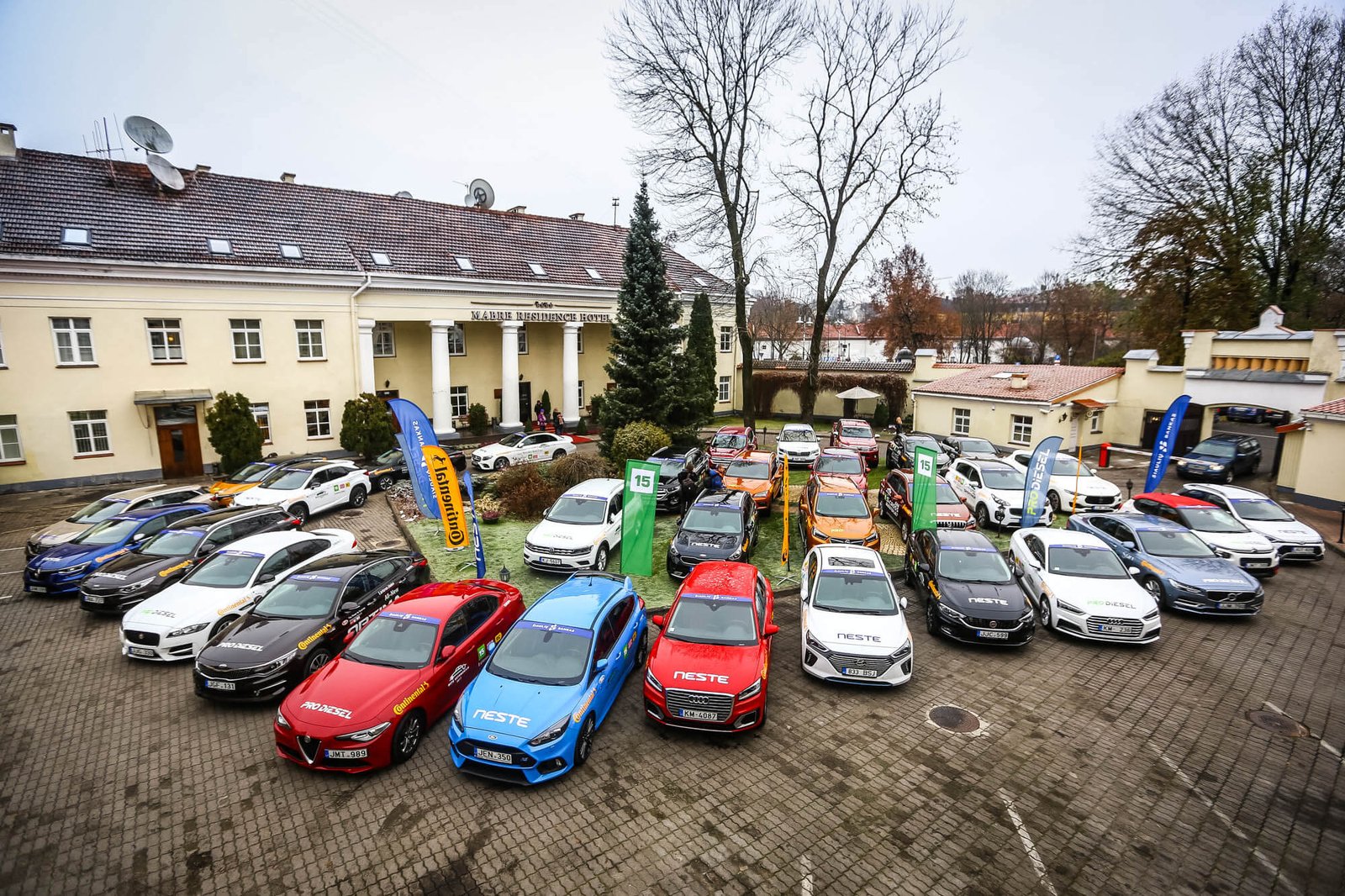
The Lithuanian jubilee elections for “Car of the Year” have begun
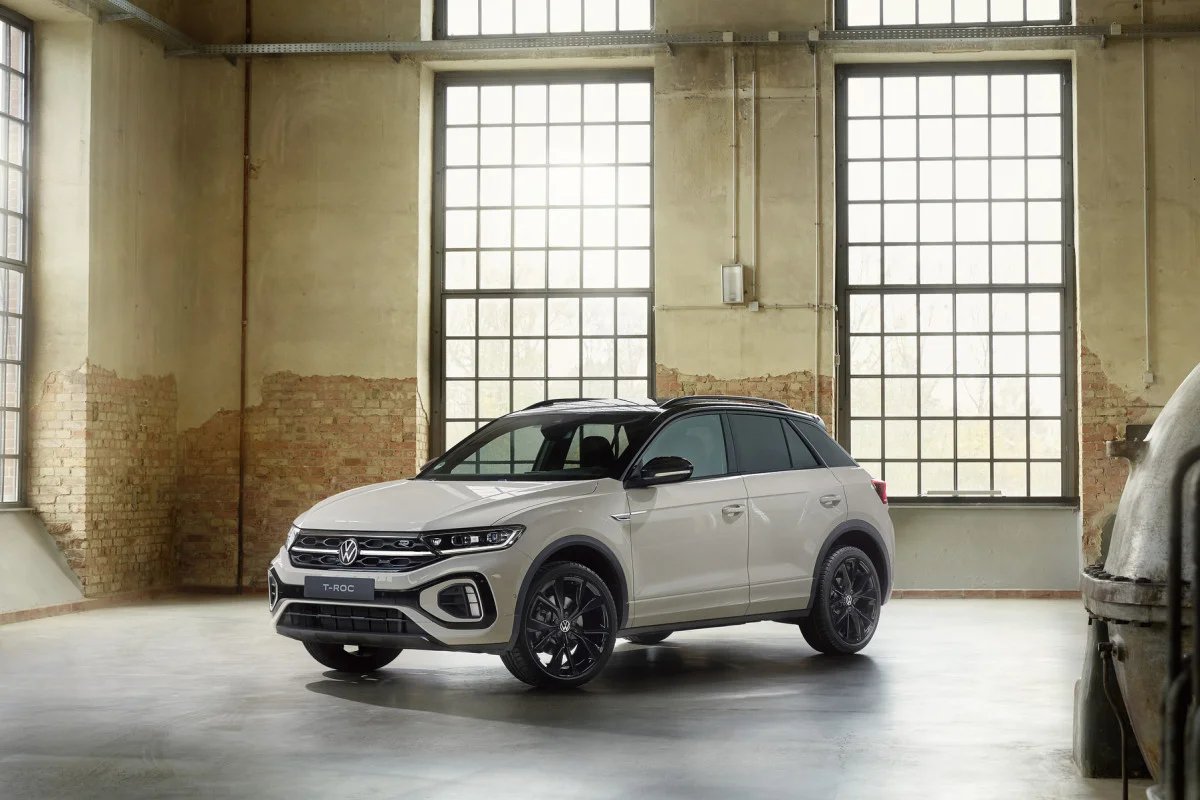
Volkswagen presented the updated T-Roc

An intelligent wildlife warning system for motorists

Features of electric car charging with a simple click

Four ways to identify a sunken car
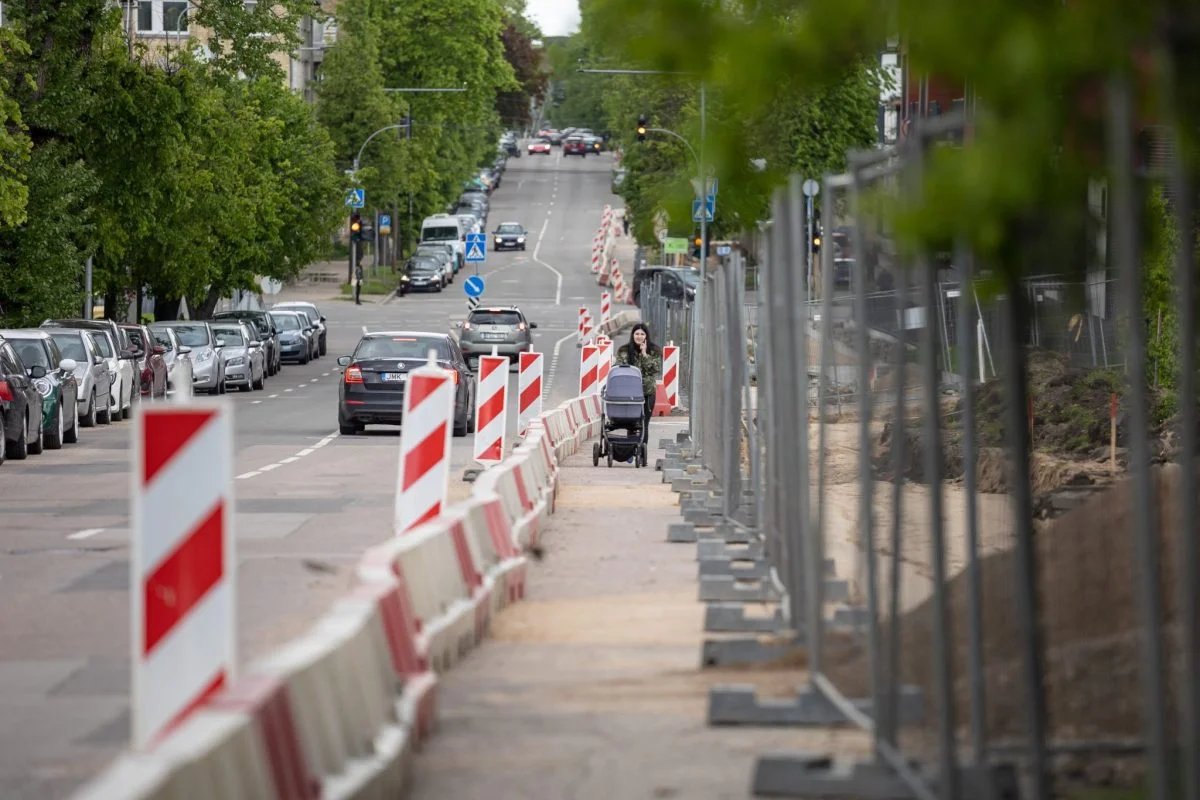
In the new city – 2 kilometers of new cycle paths, pedestrian paths are being renovated