
Lithuania remains one of the fastest growing new car markets in the entire European Union. However, even the significant growth in new car registrations does not significantly affect the qualitative composition of the overall car fleet. Regarding the number of new cars per thousand inhabitants, Lithuania is still in third to last place. Only Bulgarians and Romanians have an older fleet in the EU.
New car sales grew throughout the year
In 2016, a total of 23,113 new cars were sold in Lithuania, of which 20,230 were for personal use (M1) and 2,793 for commercial use (N1). in 2016 May became the record holder. During this period, sales increased by more than 47%. surpassed in May 2015 sales.
“We are observing quite sustainable market growth. Such trends are really welcomed by representatives of the automotive industry. We would like them to continue. Only then could we hope for an improvement in the conditions of Lithuanian parking, which is extremely poorly rated,” says Rokas Knyva, CEO of LAA.
Cars of the Volkswagen brand remained the most popular in the country’s domestic market. They sold 2,913 units, although their market share (14.9%) decreased compared to 2015. Last year Volkswagen overtook Toyota (2,689 units, an annual increase of almost 32%), which ranked second in the market in terms of new car sales, Škoda (1,924 units) was third in the market and Nissan was in fourth place with 1,447 units. Renault’s sales increased significantly (1,332 units). The sales of these five manufacturers together accounted for more than 53%. new car market in Lithuania.
Taking into account international trends and various economic development factors, LAA expects further sustainable growth in the new car market. The association’s experts predict that in 2017 the growth in sales of new cars should reach 12.2% and that of light trucks – 11%. The entire market is expected to grow by around 12%.
The parking age does not change
JV “Regitra” also foresees further growth of the new car market. However, the director of the operations department, Darius Jurgutis, notes that the age of the Lithuanian car fleet continues to remain almost unchanged. The age of the average vehicle is up to fifteen years. According to him, this is due to the fact that cars purchased in the country are very often re-exported.
“Lithuania is convenient for re-export due to its geographical location, and it is clear from the data that it prevails. At the same time, this and other trends allow us to conclude that a new car is still not so common for Lithuanian residents, and by promoting its use on the territory of our country, there are opportunities to create a new vehicle as an interface for safer traffic, a cleaner environment, a more economical and responsible driver,” says D. Jurgutis.
He underlines that the demand for hybrid and electric vehicles is also growing in the country. Car registration data shows that they are mainly chosen by residents of large cities.
“The data shows a gradually and steadily growing demand for electric cars in large cities of Lithuania, where adequate infrastructure has been created and where there is a need for privileges in public traffic. Therefore, it would be useful to discuss their popularization in formulating transport policy and improving public traffic,” says D. Jurgutis.
In Latvia they sell more, in Estonia less
In 2016, the markets of neighboring Latvia and Estonia developed unevenly. In Latvia, registration of new personal cars grew by almost a fifth (18.8%), while in Estonia there was a more moderate increase (10.2%).
However, R. Knyva notes that these data can be somewhat misleading. Over the past five years, Estonia has been the leader in the number of new cars per thousand inhabitants. in Estonia in 2016 almost 20 new cars were registered per thousand inhabitants, in Latvia – 9.4 and in Lithuania – only 7.9.
According to LAA data, in the overall EU context, Lithuania remains in third-to-last place in terms of the number of new cars per thousand inhabitants, surpassing only Romania and Bulgaria.
“For some time now, many very interesting financial instruments can be found on the market that help to purchase new vehicles. Unfortunately, the volume of transactions of natural persons still does not correspond to the real market opportunities. Lithuanian residents are traditionally more willing to take the risk of carrying out transactions of dubious value between natural persons, hoping to avoid at least part of the taxes imposed by the state. In this way, the competitive environment in the market is distorted, and possible benefits often turn into long-term losses,” says R. Knyva.
The EU market is constantly growing
The recovery of the new car market is observed across the EU. in 2016, 14,641,356 new cars were sold for personal use, equal to 6.8%. more than in 2015
“The EU market has regained signs of stability, but the results of 2007 have not yet been achieved. The potential for further growth undoubtedly exists. Recently there has been a deliberate shift towards the technologies of the future: electric propulsion, more efficient plug-in hybrids, self-driving transport and other intelligent management technologies are also starting to make their way into the mass consumption segment,” emphasizes R. Knyva.
in 2016 the “young” European markets showed the greatest growth in the EU: Hungary (+25.1%), Croatia (+23.5%), Cyprus (+22.2%), which are not far from Lithuania (18.9%) and Latvia (18.8%). Double-digit market growth was recorded in 15 EU countries, while only the Dutch market recorded a decline.
Sales of new cars were also growing in the most important European markets: Germany (3,351,607 units, +4.5%), the United Kingdom (2,692,786 units, +2.3%) and France (2,015,177 units, +5.1%), while a double-digit increase was recorded in Italy (1,824,968 units, +15.8%).
latest posts published
Citroën ë-Jumpy won the prestigious Millésime Trophy

The purpose and function of the stabilizer

Maintenance of vehicles (transporting dangerous goods)
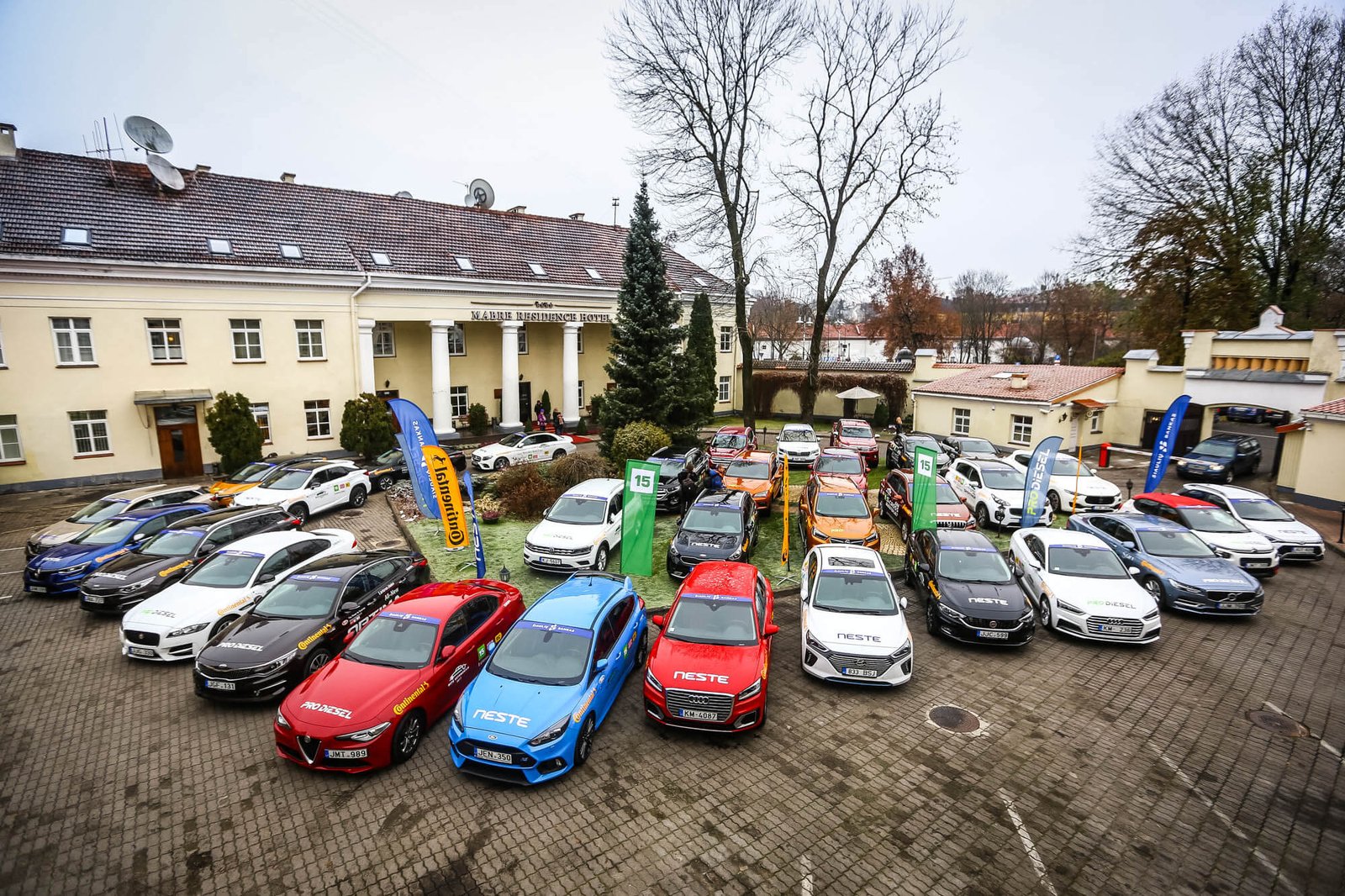
The Lithuanian jubilee elections for “Car of the Year” have begun
Volkswagen presented the updated T-Roc

An intelligent wildlife warning system for motorists
Features of electric car charging with a simple click
Four ways to identify a sunken car
In the new city – 2 kilometers of new cycle paths, pedestrian paths are being renovated