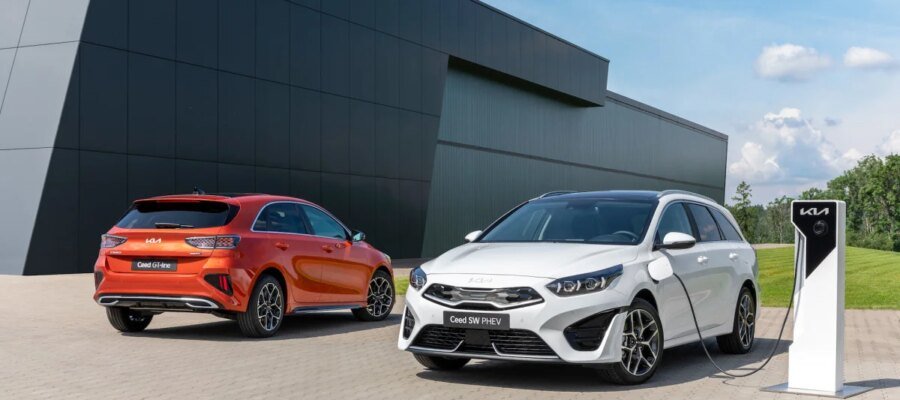
The best-selling Ceed models across Kia’s entire lineup will look even more effective and modern in 2021 with new dynamic design details. The five-door sedan, sporty station wagon and practical coupé-style model will feature an all-new front design, unique sporty details at the rear, elegant alloy wheels, new body colors and a refreshed interior.
Updated Ceed models will appear on the market at the end of 2021. quarter, and the hugely popular XCeed, which has become a sporty alternative to traditional SUVs, will receive similar changes next year. New powertrains and transmissions will also be offered in response to customer needs and market changes.
Bold and modern design

From the outside, the updated design symbolizes vitality and gives the cars modernity and dynamism. On the completely redesigned front end, the eye is drawn to the new Kia logo, which is a simplified version of the company name. This style appropriately conveys the new philosophy of the inspiring movement.
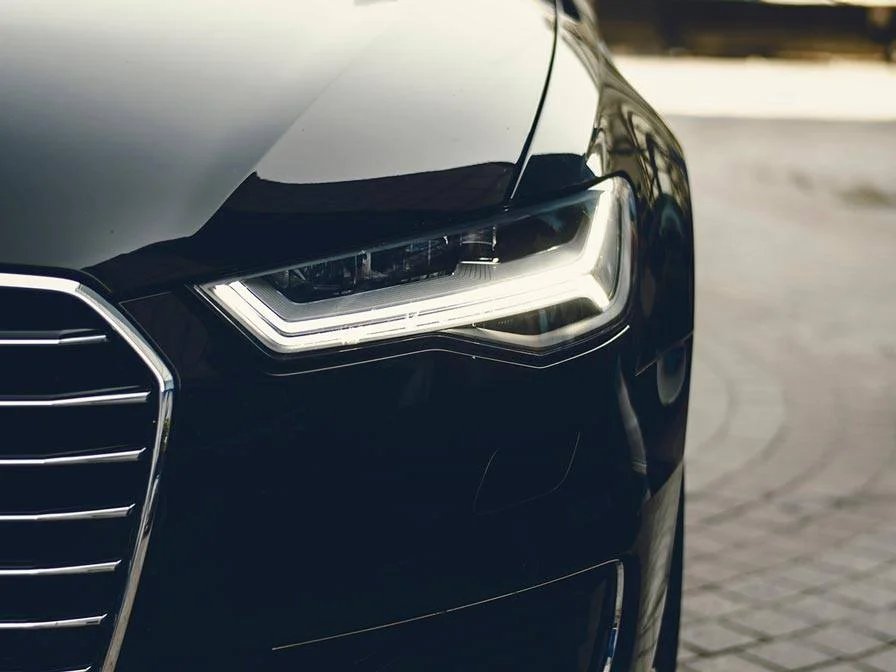
All Ceed models will now be equipped with new Full LED headlights, which improve the safety and visibility of the car to other road users. The integrated LED fog lights and high and low beam modules are surrounded by three light arrows.
Looking at the profile it is impossible not to notice the new design of the light alloy wheels which match perfectly with any type of bodywork. Six expressively styled kits will be offered, three of which will make their first appearance as part of the model range. Base models will feature 16-inch silver alloy wheels, 17-inch gloss black GT-Line trim level alloy wheels, and the GT trims will feature 18-inch ultra-sport alloy wheels with red trim.
In the updated Ceed models, passengers will be impressed by the highest quality interior decoration, soothing and refined colors, pleasant to the touch materials and convenient layout of equipment. The panoramic roof will appeal to those who don’t want to lose contact with nature while in the car. The natural lighting it provides will also enhance your sense of space and provide further inspiration when undertaking longer journeys.
Inspiring connectivity options
The most important piece of equipment on the driver’s side is the 12.3-inch screen of the digital instrument cluster. Next to it is a 10.25-inch frameless central monitor, through which the multimedia equipment, navigation and all connectivity functions are controlled.
Among the Ceed’s new connectivity options is a more efficient Bluetooth interface, which will be activated using a new voice recognition feature. Navigation equipment can now be connected to an external calendar, and a new special mode will allow the owner to monitor the car even when another person is driving it. Augmented reality objects will make the last kilometers to your destination easier.
Passengers will be able to enjoy the benefits of Android Auto and Apple CarPlay by wirelessly connecting their smartphones to the car’s system.
Advances in care systems
After improving the safety equipment, some of the conventional systems were replaced with more advanced ones, for example, active prevention technology was installed instead of the invisible zone monitoring system. If there is a risk of collision with a vehicle in the other lane while turning the turn signal and preparing to maneuver, the driver will be warned by the new Collision-Avoidance Assist (BCA) blind spot monitoring and collision avoidance assist. If the risk of collision still persists after the warning, the equipment will take control to avoid the accident.
The improved Driver Attention Warning (DAW+) will now also detect the position of the vehicle in front. Warnings will appear on the screen to inform the driver that the car in front has moved. This is especially useful when you are stopped at an intersection or moving slowly in a traffic jam.
The models in the Ceed range, as previously, will be equipped with all the most important auxiliary systems. Among them will be help to avoid a collision with an obstacle ahead, protecting not only cars, but also pedestrians and cyclists. All cars will also feature lane keeping assist, intelligent speed warning and top speed limit assist, as well as automatic high beam switching.
Driving will also be facilitated by other recent improvements in assistance systems: they will be implemented in all models in the Ceed range. The new Highway Drive Assist (HDA) includes Navigation-Assisted Smart Cruise Control (NSCC), which uses data from the navigation system. Automatically adjusts the car’s speed based on the turning trajectory, as well as when entering the highway from the acceleration lane or turning onto a side road. Lane Follow Assist (LFA) can be activated independently of Smart Cruise Control (SCC). This equipment is also suitable for models with manual transmission. Previously, these systems were directly connected, so when the driver pressed the brake pedal, not only the cruise control system, but also the lane keeping equipment stopped working at the same time. With the new configuration, lane keeping assistance will also be available in cases where the driver does not need to maintain a constant speed.
Parking maneuvers will be simplified by the Rear-View Monitor (RVM), which has the ability to switch to a reversing camera, and an auxiliary system that detects the risk of collision with vehicles approaching from behind. After parking the car in the desired place and opening the door, the Safe Exit Warning (SEW) system, having detected an approaching vehicle, will warn passengers about this.
The assistance system, which detects the risk of collision from the left or right when reversing, will also be useful in parking and on narrow streets. The equipment will initially issue a warning, and if the driver does not react in time, it will activate emergency braking to avoid a collision.
New generation power plants
Buyers of the updated models in the Ceed range will be offered a wide choice of next-generation powertrains, including plug-ins or mild hybrids. The power range from 100 to 204 hp will satisfy the needs of drivers of all styles.
Kia’s variable valve management applied to Smartstream engine technology results in optimal technical characteristics. The continuously controlled valve opening time combined with the low-pressure exhaust gas recirculation device allows for a significant reduction in fuel consumption. Exhaust gas recirculation technology returns part of the heated exhaust gases to the combustion chamber, where they are cooled. This helps reduce the emission of all harmful gases, especially nitrogen oxides.
The previous 1.4-litre T-GDi petrol engine has been replaced by a new 1.5-litre T-GDi Startstream engine, mated to a 7-speed dual-clutch gearbox or a 6-speed manual gearbox. The maximum developed capacity of the new unit reaches 160 HP. The new petrol engine is installed either with an electric motor and small battery, or separately, while the 136 hp diesel engine will be offered together only in mild hybrid versions and will be installed simultaneously with an intelligent manual transmission (iMT) or a dual-clutch transmission.
For the first time, the updated dual-clutch Ceed models feature the smaller 1-litre turbocharged petrol engine, which will also feature mild hybrid technology. Such a technologically advanced version will allow users to further reduce CO2 emissions.
The plug-in hybrids will be equipped with a 1.6-liter GDi petrol engine with a capacity of 141 hp, combined with a six-speed dual-clutch gearbox. The powertrain used for the first time in the Ceed model range is equipped with an 8.9 kWh battery with a single charge in electric mode in the city, which allows a range of up to 57 km.
The top-of-the-line GT models will feature a 1.6-liter T-GDi engine with a unique exhaust note. Paired with a seven-speed dual-clutch gearbox, the engine develops an impressive 204 hp.
Ceed mild hybrids with diesel engines will be the first Kia models for the European market to feature the new intelligent manual transmission (iMT). Developed exclusively for mild hybrids, the gearbox’s electronically controlled clutch will reduce fuel consumption and CO2 emissions, while still leaving the driver with the feeling of being as involved in the car as with a conventional manual gearbox.
Ceed models will also be available with a standard six-speed manual gearbox, as well as a six- or seven-speed dual-clutch gearbox.
The updated models of the Ceed range will be assembled at Kia’s plant in Žilina (Slovakia) starting in August and the first cars will be delivered to customers in Europe at the end of 2021. at the beginning of the quarter.
latest posts published
Citroën ë-Jumpy won the prestigious Millésime Trophy

The purpose and function of the stabilizer

Maintenance of vehicles (transporting dangerous goods)
The Lithuanian jubilee elections for “Car of the Year” have begun
Volkswagen presented the updated T-Roc

An intelligent wildlife warning system for motorists
Features of electric car charging with a simple click

Four ways to identify a sunken car
In the new city – 2 kilometers of new cycle paths, pedestrian paths are being renovated