


specifications and use in industrial structures
December 15, 2025 | by EngineGeek Editorial
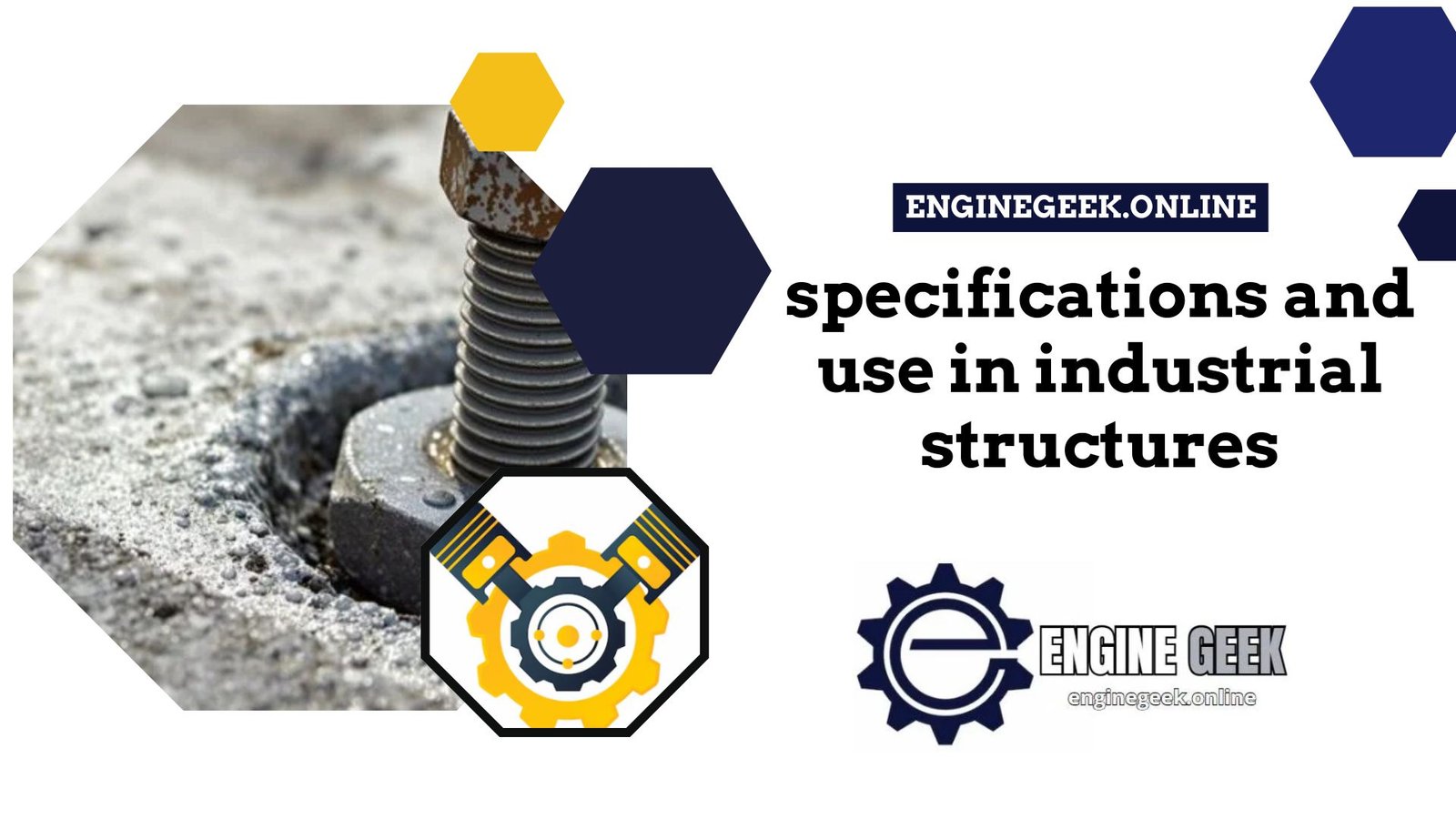
Anchor bolts connect structural components to concrete foundations in industrial buildings. You will need to select the appropriate type based on load requirements AND environmental conditionswith diameters ranging from M6 to M16. Install them correctly maintaining minimum distances from the edges (three times the diameter of the bolt) and using the torque specifications correct. For corrosive environments, choose A4 stainless steel; for internal applications the galvanized variants are sufficient. Correct specification ensures thestructural integrity and compliance with Eurocode 8 and ACI 318 standards.
Main results
- Industrial anchor bolts require precise diameter selection (M6-M16) based on tensile and shear force calculations.
- Stainless steel anchors are optimal for uncracked concrete, while galvanized variants are suitable for dry indoor environments.
- The minimum edge distance should be three times the bolt diameter to ensure structural integrity.
- Correct installation requires clean surfaces, precise drilling and application of calibrated torque.
- Anchor bolts in industrial structures must meet Eurocode 8 and ACI 318 for seismic performance.
Understand the types of lag bolts and their applications
Anchor bolts serve as critical connectors structural engineeringfunctioning as the primary interface between concrete substrates and the elements they support.
You’ll find them in various configurations to meet specific installation requirements.
For your non-cracked concrete applications, stainless steel anchor bolts offer optimal performance, while the variants galvanized they are more suitable for indoor and dry environments.
Choosing the appropriate bolts depends on load requirements and environmental conditions.
Diameters ranging from M6 to M16 meet various structural needs, with some dimensions specifically approved seismic applications.
Installation guidelines require precise drilling of holes to the specified dimensions, thorough cleaning, and proper insertion to activate the expansion mechanism.
Always ensure that the anchors you select meet the requirements E standards to ensure structural integrity and safety in industrial environments. Furthermore, types of anchors they play an essential role in improving the robustness of industrial buildings.
Critical load capacity and material considerations
THE load-bearing capacity of any structural connection represents a fundamental design parameter that determines the overall integrity of the system.
When you select the anchor studsseveral load factors need to be considered, including whether the concrete is broken or not brokenbecause it significantly affects performance. Non-cracked concrete installations allow for higher capacities, while cracked concrete applications require specialized design considerations.
The selection of materials directly influences the performance of the anchors, variable diameters M6 to M16 which dictate the resistance to tensile and shear forces. Studs in industrial applications they therefore require particular attention to optimize their efficiency.
For industrial applications, larger diameters they are essential when it comes to moving heavy loads. Anchorage specifications must comply with standards such as Eurocode 8 and ACI 318, especially for seismic conditions.
Remember that eligible expenses include safety factors depending on whether the application involves a static or dynamic load, ensuring operational reliability under stress.
Correct installation techniques for maximum strength
During installation anchor boltsTHE adequate technique It directly influences their ultimate load capacity and long-term performance.
Start by thoroughly cleaning the concrete surface to remove all dust and debris, creating an optimal base for the installation.
Select anchor bolts with appropriate dimensions (diameter (M6-M24) and length) based on specific load requirements and concrete thickness.
Installation instructions recommend drill a hole corresponding to the diameter of the bolt with a depth equal to at least 1.5 times the diameter for adequate insertion.
Insert the anchor bolt fully into the hole, using a hammer to ensure proper placement and alignment.
Finally, apply the correct torque with a torque wrench calibrated according to the manufacturer’s recommendations.
This methodical approach delivers maximum resistance and reliable performance under structural loads. Also, choose the right one materials and standards for your installation can significantly improve the life and effectiveness of the anchor bolts.
Dimensional requirements and edge distance calculations
Proper installation techniques lay the foundation foreffectiveness of anchor boltsBut precise dimensional calculations determine their structural integrity. When selecting anchor bolts, you will need to exactly match the diameter to the hole drilled, typically between M6 and M24 depending on the load requirements of your application.
Critical dimensional specifications include maintaining a minimum distance from the edge at least three times the diameter of the bolt than any concrete edge. This prevents the concrete from sagging during loading.
Likewise, thespacing between anchors (center distance) must be at least double the diameter of the bolt to avoid installation interference.
Yours burial depth calculations must take into account both the load requirements and the type of concrete. Remember that deeper burial generally generates greater load resistance.
Always consult the local building standards and manufacturer guidelines to verify minimum dimensions for your specific industrial application.
Environmental factors and compliance with safety regulations
Because industrial environments vary greatly in their exposure conditions, careful consideration of environmental factors and compliance with relevant laws and regulations are essential when selecting anchor bolts.
You must select the appropriate material based on specific conditions: galvanized bolts should be used for indoor applications, while A4 stainless steel bolts should be used for outdoor applications or corrosive environments (CRC IV). Material selection directly impacts safety and environmental performance.
Your installation must comply with seismic standards, such as Eurocode 8 and American Concrete Institute (ACI) 318, to ensure the anchor bolts can withstand dynamic seismic loads.
Safety regulations require anchor bolts to meet specific load-bearing capacity requirements in both static and dynamic applications.
Never overlook the importance of regular compliance checks: stay informed about the latest standards and certifications to ensure structural integrity.
This systematic approach to anchor bolt selection ensures optimal performance while meeting all legal requirements.
RELATED POSTS
View all


Discover the benefits of the 3008 engine in 2025
December 16, 2025 | by EngineGeek Editorial

Customize your motorcycle helmet: techniques and inspirations
December 15, 2025 | by EngineGeek Editorial

Much cheaper tractors – the new era of tractors is not far away
January 23, 2026 | by EngineGeek Editorial