


ENGINEGEEK / GUIDE LIBRARY
F1 engineering, one system at a time.
New to the technical side of Formula 1? Pick an idea below and follow the diagrams, plain-English explanations and primary sources. The 2026 rules are our starting point.
Start with the big picture
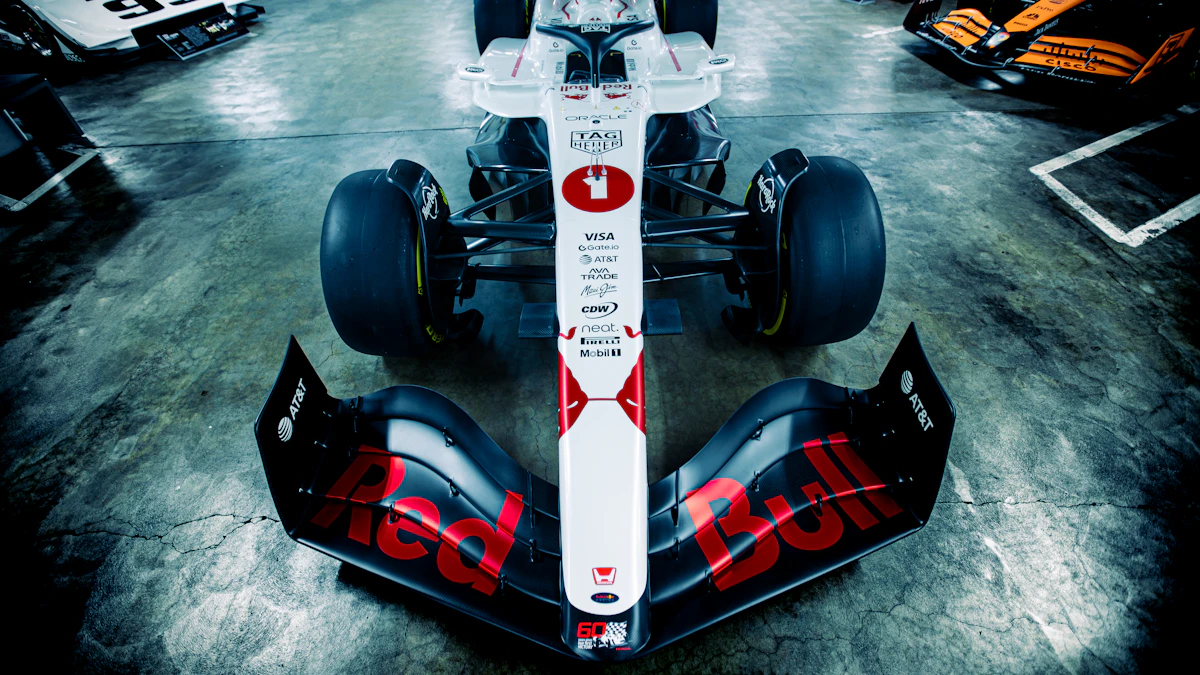
START HERE · AERODYNAMICS
Downforce and drag
What the wings and floor do, and why extra grip can cost straight-line speed.
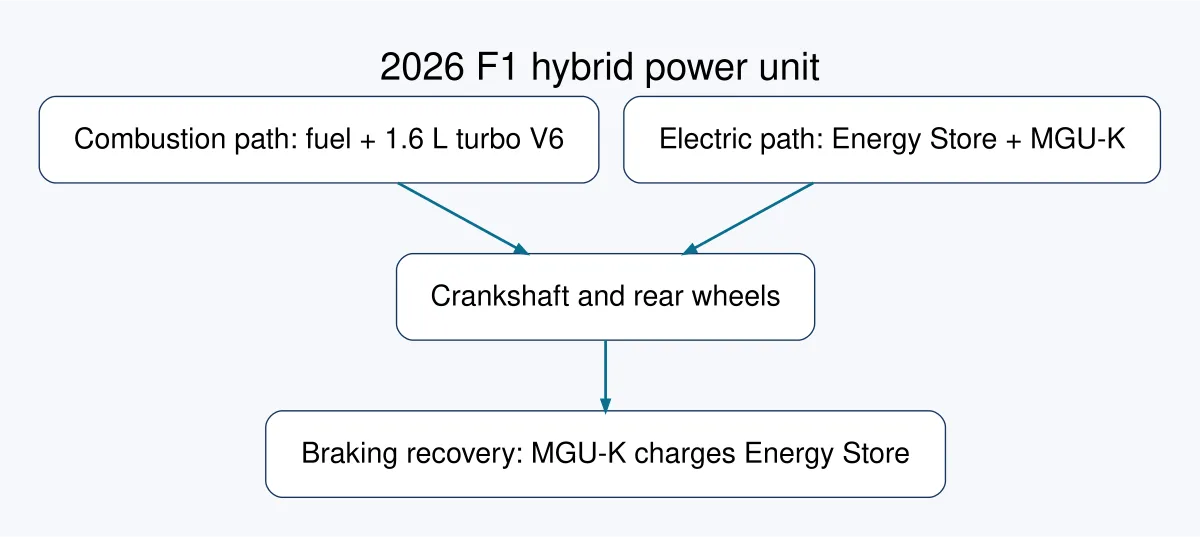
START HERE · POWER UNIT
The hybrid engine
Follow fuel, electricity and recovery through the turbo V6, MGU-K and Energy Store.
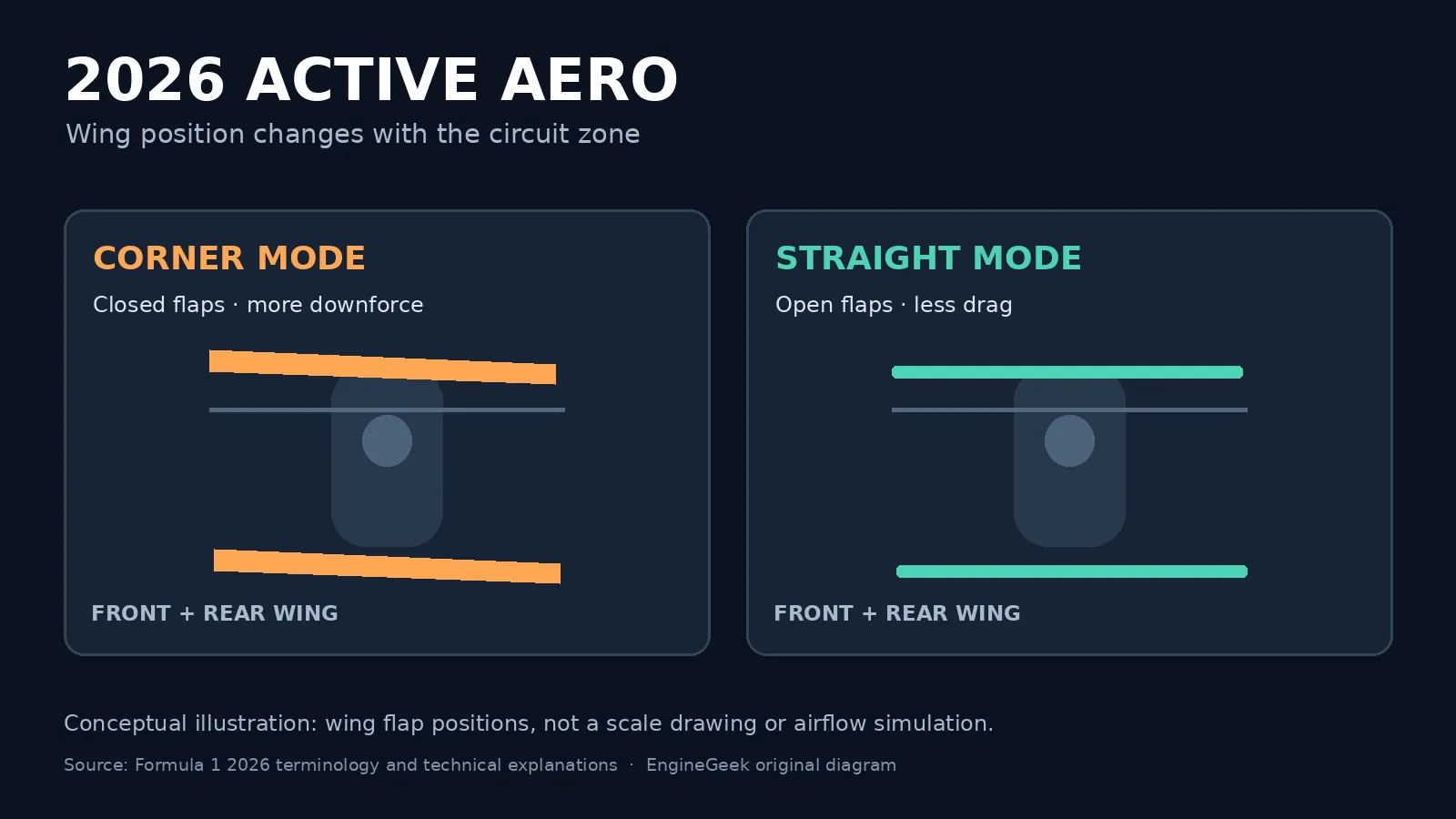
2026 RULES · WINGS
Active aero vs DRS
See what moves on the car and why Overtake Mode is a separate electrical system.
Go a level deeper
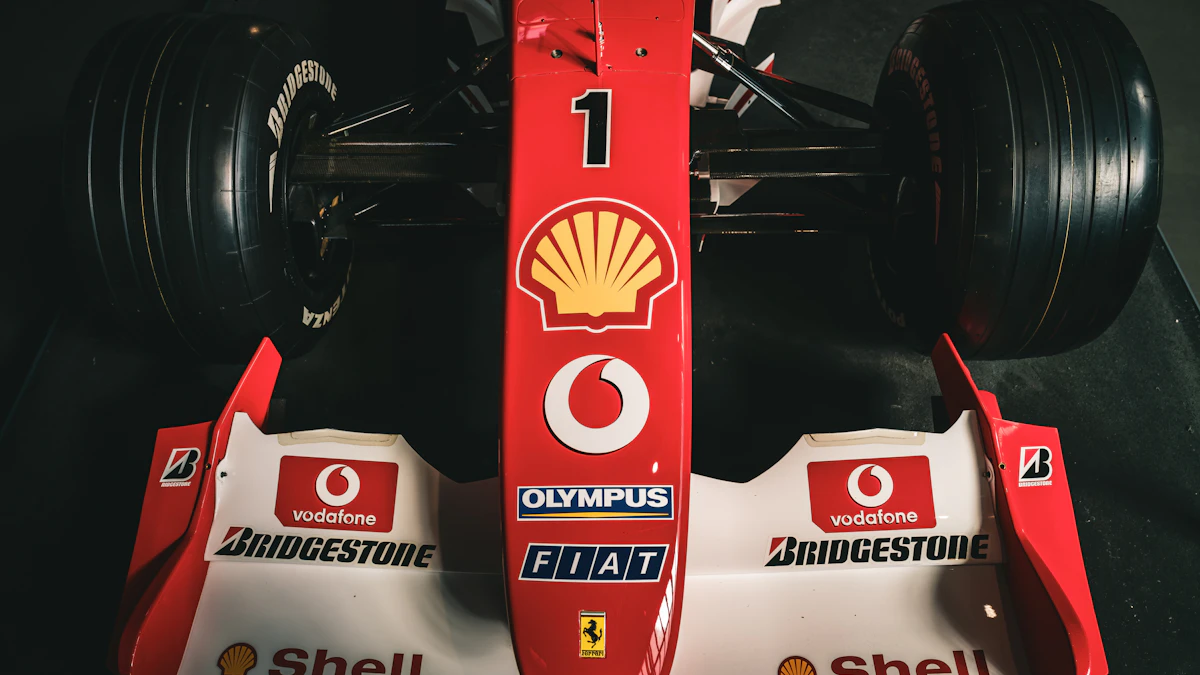
AERODYNAMICS · DETAIL
Front wing airflow
Learn how the front wing creates load and influences the air reaching the tyres and floor.
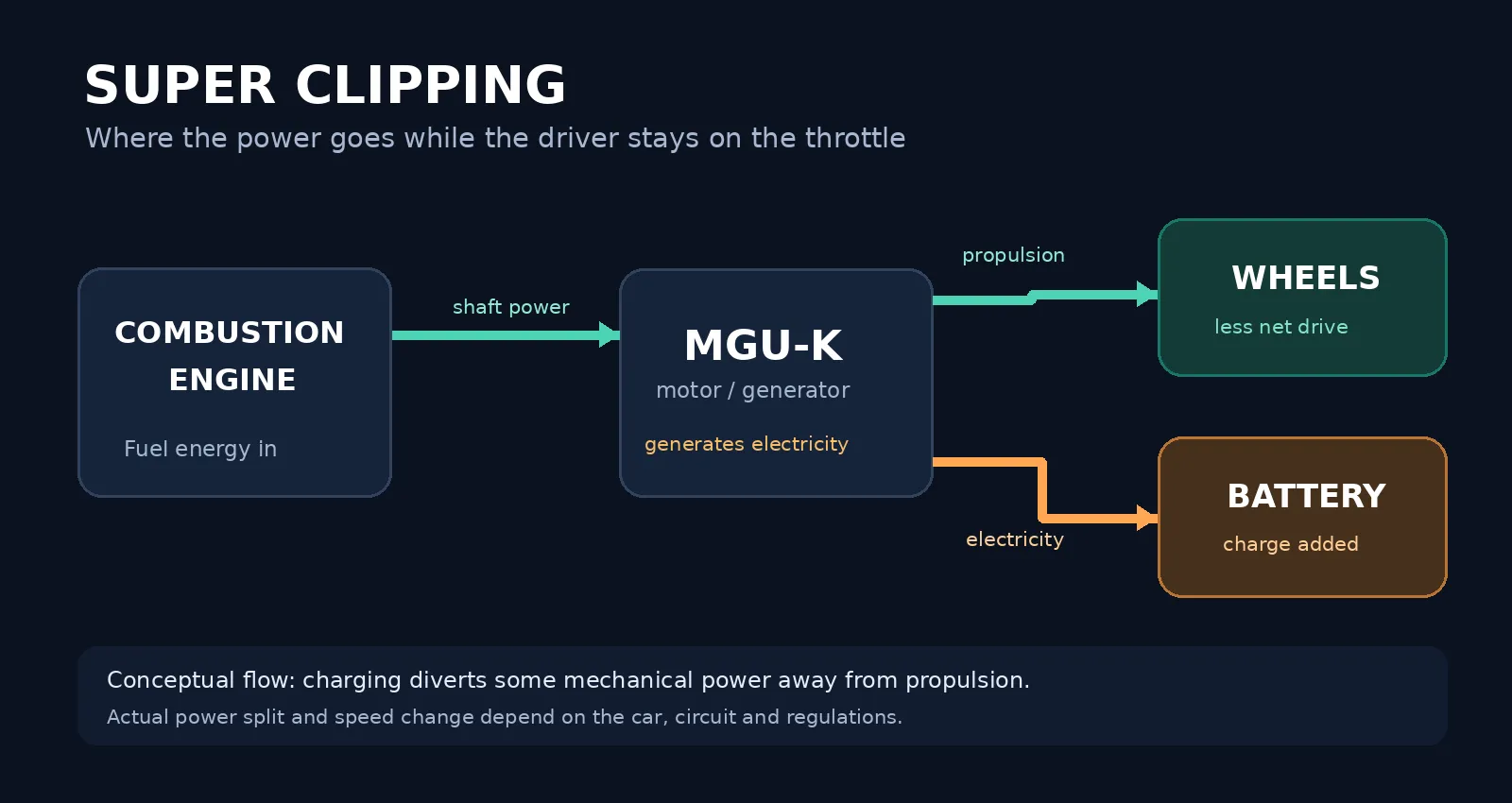
ENERGY · EXPLAINED
Super clipping
Why an F1 car may recover electrical energy even while the driver stays on the throttle.
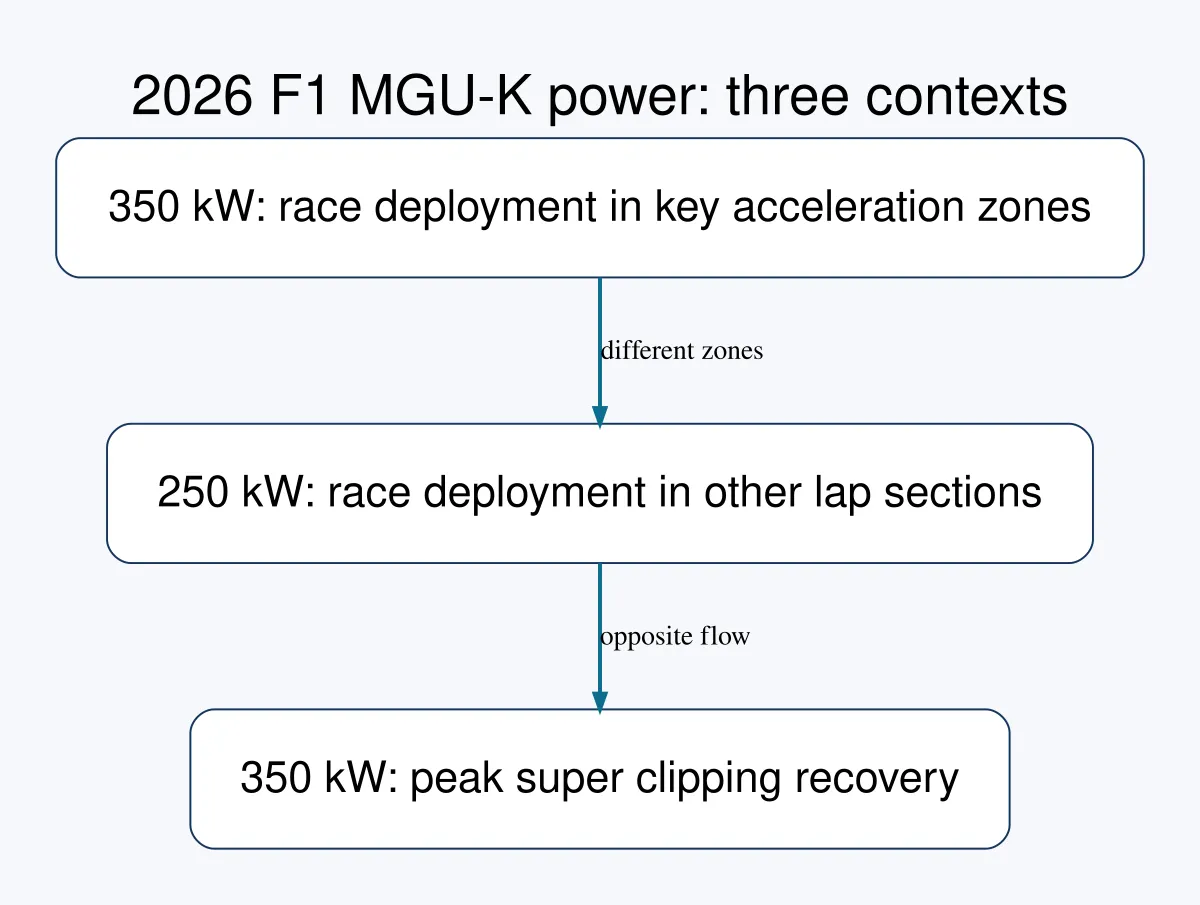
ENERGY · RULES
350 kW vs 250 kW
Separate race deployment zones from the peak power of super-clipping recovery.
Find a specific answer
Power units and energy
Aerodynamics
These topics connect: aero changes drag and energy demand, while the power unit determines how energy is deployed.
Fresh from EngineGeek
- 2026 F1 Hybrid Engine Explained: V6, MGU-K, Battery and Energy Flow
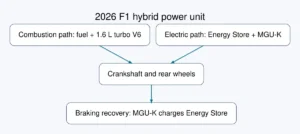 How the 2026 F1 hybrid power unit combines a turbo V6, MGU-K and Energy Store, and why 350 kW is not constant power.
 - F1 Front Wing Aerodynamics: How It Creates Downforce and What Changed in 2026
 How the F1 front wing creates downforce, manages tyre wake and balances the car, plus the 2026 active flap rules explained.
 - F1 Aerodynamics Explained: Downforce, Drag, Wings and the 2026 Floor
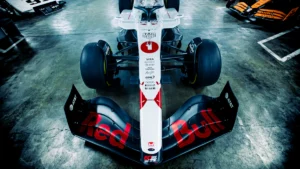 A practical guide to F1 aerodynamics: how wings, the floor and diffuser create grip, why drag matters, and what changed for 2026.
 - 350 kW vs 250 kW in F1 2026: MGU-K Zones and Super Clipping Explained
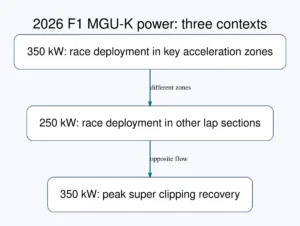 The FIA uses 350 and 250 kW for different 2026 F1 MGU-K limits. Compare race deployment zones with peak super-clipping recharge without confusing power and energy.
 - What Does 7 MJ of Recharge Mean in F1 Qualifying? Energy vs Power Explained
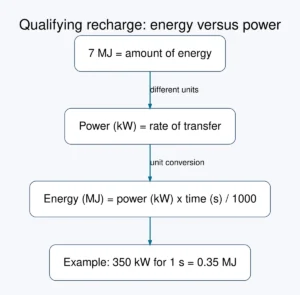 The FIA reduced qualifying recharge from 8 to 7 MJ while raising peak super-clipping power to 350 kW. Here is what those different units actually mean.
 - F1 Boost vs Overtake Mode in 2026: Power, Energy and the One-Second Rule
 Boost, Overtake Mode and Straight Mode do different jobs in a 2026 F1 car. Compare the one-second rule, 0.5 MJ allowance and the FIA’s race Boost limit.
How we work: We check technical claims against FIA rules and Formula 1 material, label conceptual diagrams and revise guides when regulations change. EngineGeek is independent and is not affiliated with Formula 1, the FIA or a team. Meet our editorial approach →
Illustrative photographs: Komorebi Photo and Pourya Gohari / Unsplash. Diagrams are EngineGeek explanatory graphics, not team telemetry.