


F1 Active Aero vs DRS: Straight Mode, Corner Mode and Overtake Mode
September 25, 2026 | by EngineGeek Editorial
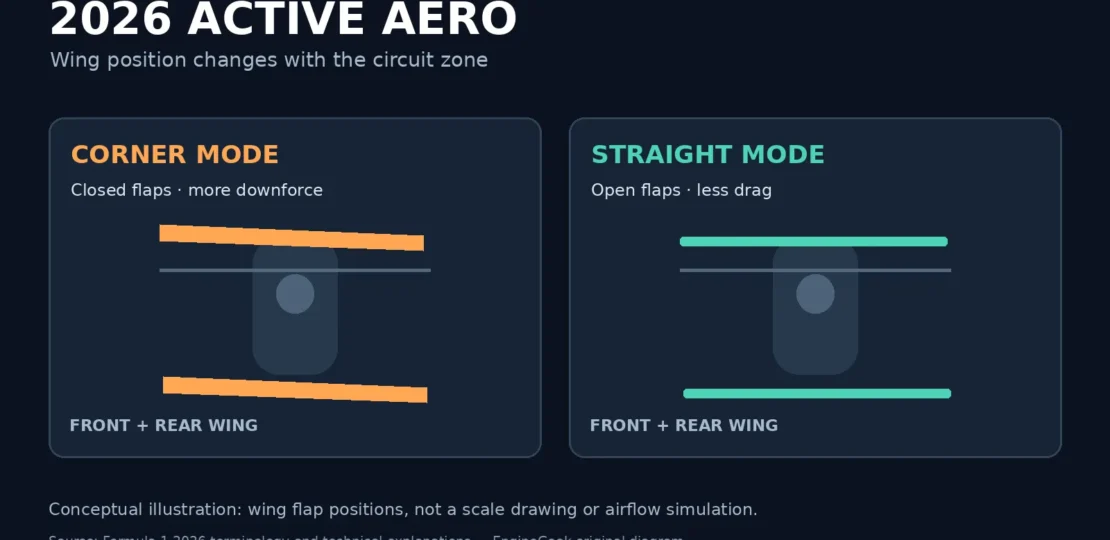
The 2026 F1 car can flatten elements of both its front and rear wings in designated zones. That is a different system from the old DRS rear-wing flap—and from the electrical Overtake Mode that helps a following car.
Short answer: Corner Mode keeps the active wing flaps in their closed, higher-downforce position. Straight Mode opens them to cut drag. Drivers can use Straight Mode in designated zones without needing to be within one second of another car. The one-second condition instead belongs to Overtake Mode, an electrical power tool. These distinctions follow Formula 1’s 2026 terminology guide.
Why move the wings at all?
A racing car needs aerodynamic load to corner quickly, but the same wing configuration can create drag on a straight. The 2026 system gives the car two permitted configurations: one for grip and one for lower drag. In Corner Mode, the flaps are closed to maintain downforce. On a designated straight, opening the front and rear elements flattens the wings and reduces drag. A lower-drag car can use its available power more efficiently at speed. This is a qualitative explanation; the gain varies with the car, speed, circuit and conditions.
Our diagram shows only the principle of the two flap positions. It is not a drawing of a specific team’s wing, a measurement of flap angle or an airflow simulation.
What changed from DRS?
| Question | DRS, through 2025 | 2026 active aero |
|---|---|---|
| What moves? | A flap on the rear wing. | Elements of the front and rear wings. |
| Where? | Designated DRS zones. | Designated Straight Mode zones. |
| Must the car be within one second in a race? | Usually yes, at a detection point. | No. Zone availability does not depend on following another car. |
| Primary mechanical effect | Lower rear-wing drag. | Lower drag with coordinated front and rear wing changes. |
The table describes the basic race-use distinction. Regulations and race-control instructions define exact activation and safety conditions. Calling Straight Mode “the new DRS” can be a useful shorthand for moving a wing on a straight, but it hides the front-wing change and the different eligibility rule. Formula 1’s official terminology update says movable front and rear wings replaced the DRS aerodynamic device.
How does a driver activate Straight Mode?
The driver manually opens the wings for each defined zone. The driver may close them manually; braking or lifting off the throttle also closes them automatically. Some zones have a distance-based automatic shut-off so a driver cannot carry the low-downforce setting into a particular corner. The FIA chooses zones with safety in mind. For example, Formula 1 reported that active aero was not used at the 2026 Monaco Grand Prix, leaving cars in Corner Mode for that weekend. Zone counts and locations therefore differ by circuit and can change.
Where does Overtake Mode fit?
Overtake Mode affects electrical energy use, not wing position. A driver who is within one second of the car ahead at the designated detection point can use an extra electrical power profile on the following lap. Formula 1 describes an additional 0.5 MJ recharge allowance for this tool. It can help sustain speed on a straight. Straight Mode, meanwhile, reduces aerodynamic drag and is available in its zones even when the driver is alone. A driver may benefit from both in the same part of a lap, but they are separate systems with separate rules.
Boost is a third term: the driver’s general energy-deployment button, usable according to available charge and the team’s power settings. Our Boost vs Overtake Mode guide compares the eligibility and power limits in detail. Super clipping describes battery harvesting while still at full throttle, which can occur with the active wings open. Neither term means that the wings have changed position.
A simple way to remember it
- Straight Mode / Corner Mode: the wings change position to trade downforce for lower drag.
- Overtake Mode: a qualifying following driver gains a different electrical power profile.
- Recharge / super clipping: energy flows back toward the battery.
These descriptions explain the 2026 concepts, not a universal prediction of lap time or a substitute for the latest event-specific FIA instructions.
Sources and editorial note
Primary references: Formula 1’s 2026 key terms; Formula 1’s terminology announcement; and its 2026 Monaco zone explanation. The side-by-side drawing is an original conceptual aid by EngineGeek. Last checked September 25, 2026.
RELATED POSTS
View all

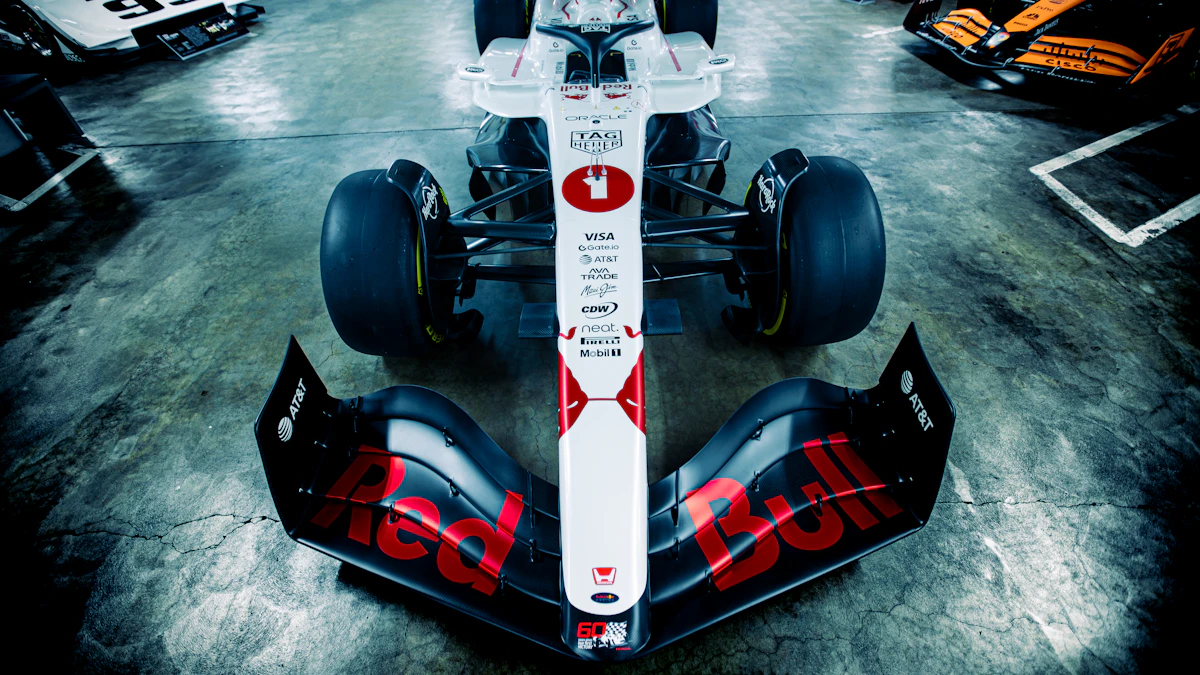
F1 Aerodynamics Explained: Downforce, Drag, Wings and the 2026 Floor
October 2, 2026 | by EngineGeek Editorial
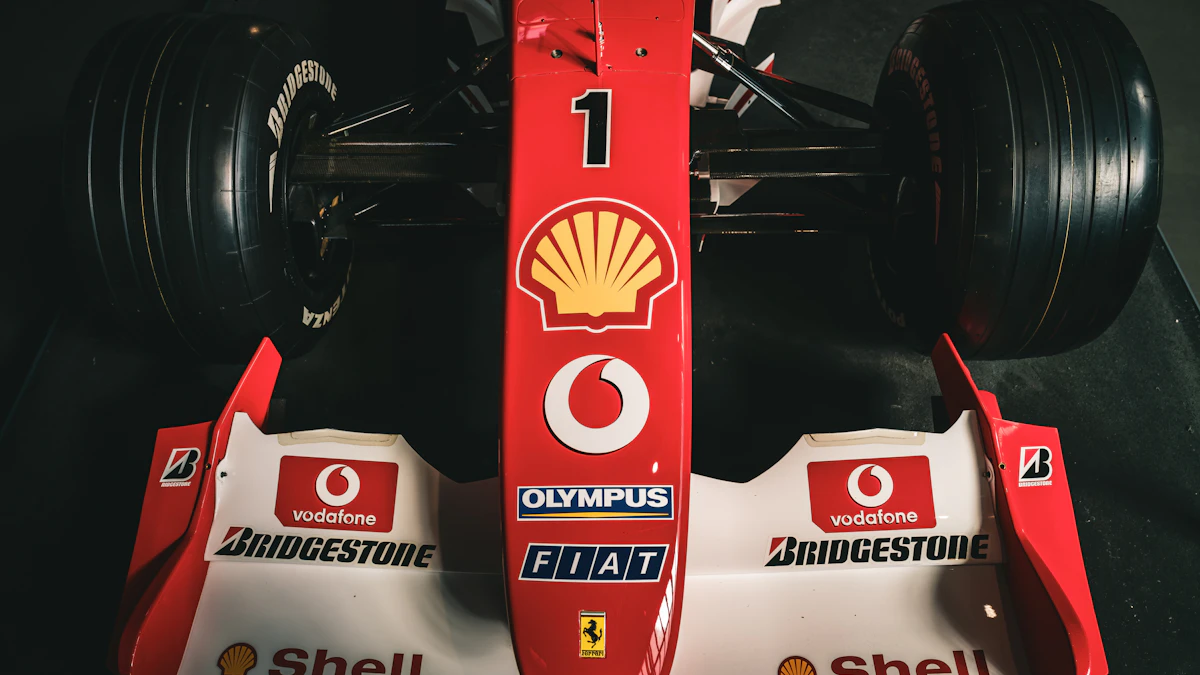
F1 Front Wing Aerodynamics: How It Creates Downforce and What Changed in 2026
October 2, 2026 | by EngineGeek Editorial