


F1 Aerodynamics Explained: Downforce, Drag, Wings and the 2026 Floor
October 2, 2026 | by EngineGeek Editorial
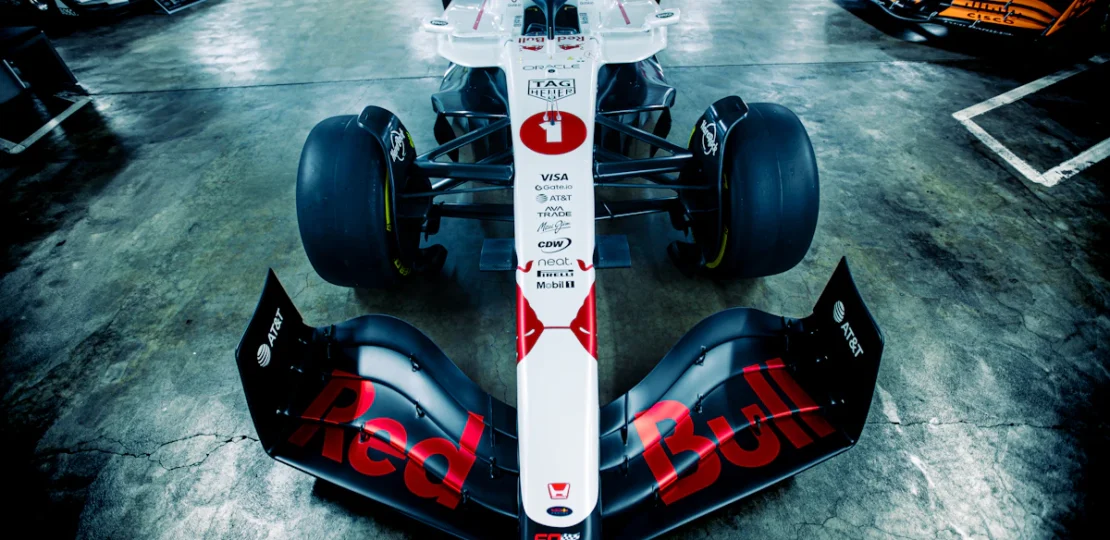
An F1 car needs grip in corners and efficiency on straights. Aerodynamics manages both by shaping the air around, through and under the car. The central trade-off is simple: surfaces that increase downforce often increase drag too. The best setup depends on the circuit and, from 2026, on how the car changes its wing position during the lap.
Downforce and drag: the two forces to understand
Downforce is the vertical aerodynamic force pushing the car toward the road. More load lets the tyres produce more cornering grip, within the limits of the tyres and setup. Drag is resistance to forward motion through the air; the power unit must overcome it, particularly on long straights. A wing is therefore not a free speed upgrade: its gain in corners has an associated straight-line cost.
Speed matters. Aerodynamic forces broadly rise with the square of airspeed under comparable conditions, so doubling speed can roughly quadruple force. That is an illustration, not a prediction for a real car: wing position, ride height, wind and airflow from another car also change the result. At low speeds, mechanical grip matters relatively more; at higher speeds, aerodynamic load becomes more significant.
Where does an F1 car generate downforce?
| Part | What it does to airflow | Why the driver feels it |
|---|---|---|
| Front wing | Creates front axle downforce and directs air around the front tyres. | Changes turn-in and the balance of grip at the front. |
| Floor and diffuser | Manage airflow underneath and at the rear exit of the car. | Help generate grip; ride height and disturbed airflow affect performance. |
| Rear wing | Adds rear downforce while also adding drag. | Supports rear stability through corners but can limit straight-line speed. |
| Active wing flaps (2026) | Switch between higher-downforce and lower-drag positions on designated sections. | Alter the corner-versus-straight compromise during a lap. |
The front wing works in disturbed air near the front tyres. For a closer look at its pressure, wake and movable 2026 flaps, see our front wing aerodynamics guide. Its job includes producing load at the front and managing the flow reaching the rest of the car. The floor and diffuser affect pressure and flow underneath. The rear wing produces load at the back, but its exposed position can create substantial drag. Teams tune these elements as a package: adding rear load without balancing the front can make a car reluctant to turn, while too little rear grip can make it unstable on corner exit.
What changed with the 2026 cars?
The 2026 rules changed the shape of the aerodynamic package. Formula 1 describes a simplified front wing, a flatter floor replacing the previous generation’s pronounced Venturi tunnels, and a larger diffuser. The beam wing under the main rear wing has gone. These changes alter how teams generate load; they do not mean that underfloor aerodynamics or ground effect disappears completely.
Front and rear wing elements now move between Corner Mode, the higher-downforce configuration, and Straight Mode, which opens the flaps to cut drag on specified straight sections. The FIA says that eligible drivers can use active aero at predetermined points regardless of their gap to the car ahead. This is distinct from the old DRS eligibility rule and from the separate electrical Overtake Mode. Read our active aero versus DRS guide for the operational differences.
Why do teams choose different wing levels?
A high-downforce setup can save time through sequences of corners and help braking and traction. A low-drag setup can gain on long straights, but may give away time through bends or make the tyres harder to manage. Circuit layout, available power, ambient conditions and the balance between the axles all matter. Formula 1’s McLaren aero specialist gives Monza and Monaco as contrasting examples of the straight-versus-corner compromise; the actual choice is more nuanced than simply selecting a large or small rear wing.
The 2026 active system reduces some of that compromise within a lap, but it does not erase it. A car still needs a stable balance with its flaps closed and when they open. Lower drag also matters for energy management: needing less force to push through the air on a straight can help a hybrid car use its available energy efficiently. Our MGU-K explanation covers the separate electrical side.
Dirty air and following another car
A leading car leaves turbulent, lower-quality airflow behind it. A following car’s aerodynamic surfaces may then receive flow different from the clean air they were designed around, costing downforce and changing balance. The 2026 rules aim to limit some of the airflow pushed outward around the front wheels and improve following, according to the FIA and Formula 1. This is a design aim, not a guarantee that every car will follow closely at every circuit.
Common questions
Is downforce the same as tyre grip?
No. Downforce adds vertical load, while the tyre converts that load into force at the road. Tyre compound, temperature, surface, suspension and load sensitivity all affect the result.
Does opening the wings make the car faster everywhere?
No. Straight Mode cuts drag on eligible sections, but also reduces downforce. Corner Mode restores the higher-load configuration for corners. The best lap depends on using each where the rules and conditions permit.
Did F1 remove the floor’s aerodynamic effect in 2026?
No. The floor is flatter than the 2022–2025 Venturi-tunnel concept, and the diffuser remains important. It is inaccurate to describe the new floor as aerodynamically inactive.
Sources and editorial note
Technical facts were checked against Formula 1’s 2026 aero explainer, the FIA’s 2026 rules overview, and Formula 1’s interview with a McLaren aero specialist. The table is our own explanatory comparison, not measured car data. Rules and terminology can change; check the FIA’s current documents for a formal regulatory interpretation.
RELATED POSTS
View all

F1 Front Wing Aerodynamics: How It Creates Downforce and What Changed in 2026
October 2, 2026 | by EngineGeek Editorial
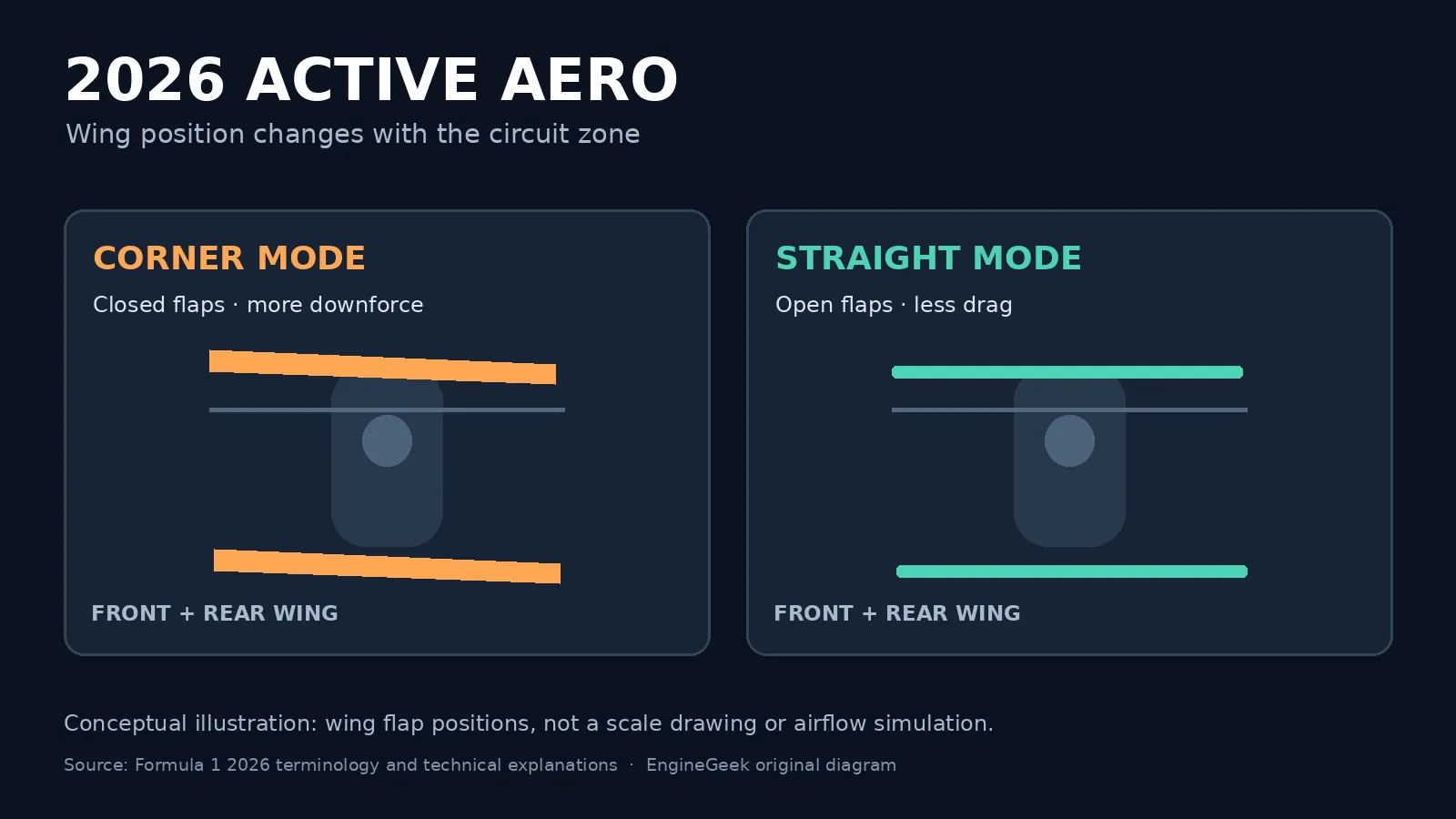
F1 Active Aero vs DRS: Straight Mode, Corner Mode and Overtake Mode
September 25, 2026 | by EngineGeek Editorial